Wednesday, September 12, 2012

True Culture and Civilisation of Man

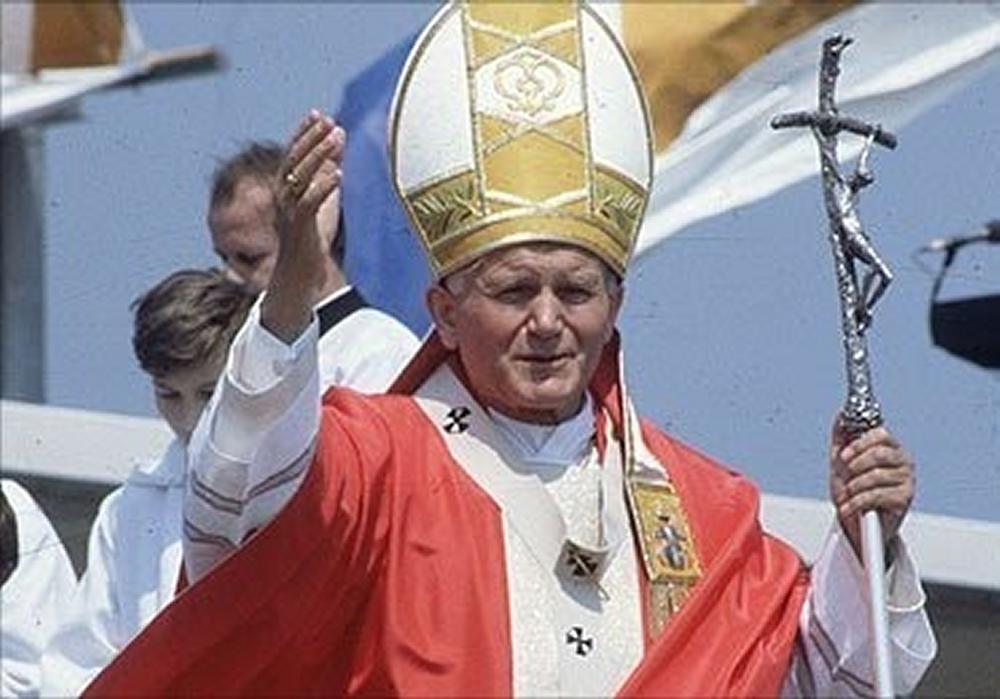
Pope John Paul II


THE CHRISTIAN ANTHROPOLOGY OF JOHN PAUL II: AN OVERVIEW [1]


by Fr Thomas McGovern


Over the past twenty years of his pontificate, John Paul II has deepened our understanding of the Gospel message in many ways. Yet it is perhaps in his discussion of Christian anthropology that the former Archbishop of Krakow has made his most original contribution to theological discourse. [2]


The Church in the twentieth century has responded with greater sensitivity to the anthropological dimension of theology. This has not happened by accident. Particular philosophers and theologians made valuable contributions to this enterprise which found expression in the documents of Vatican II, especially in the pastoral constitution on the Church in the Modern World, Gaudium et Spes, and the decree on religious freedom, Dignitatis Humanae. [3]


Vatican II was the first council of the Church to affirm a detailed Christian anthropology. The need to do so arose as a response to the materialistic conception of man which has dominated much of the twentieth century. This climate of materialism was fueled by three main currents. In the first place there was the materialism of modern science. The experimental method tended to the view that, since only what can be measured is real, only material reality exists. At the human level, advances in biology, influenced by the theory of evolution, had led to a depreciation of the spiritual dimension of man. Secondly, the influences of the Marxist philosophy of materialism, in a tyranny without precedent in human history, brought misery and death to countless millions. Finally, a more subtle materialism which has drugged the spirit of man, and which is expanding rapidly, is the practical materialism of the West. This is the fruit of the rapid development of technology, creating a wealthy society driven by consumerism. This society measures progress solely in terms of material wealth, and effectively reduces the practice of politics to the maintenance of favorable economic conditions. The driving principles of this rapidly expanding practical materialism are the primacy given to individual subjective rights, and the dominance of a liberal capitalistic outlook indifferent to social responsibilities at a global level.


It was these negative influences that inspired attempts to construct a more adequate Christian anthropology. Here it is only possible to mention a few of the major contributors to this project. In Crossing the Threshold of Hope John Paul II refers to the contributions of two Jewish thinkers, Martin Buber (1878-1965) and Emmanuel Lévinas (1906-95), who had drawn on the personalist tradition of the Old Testament and had influenced his own thinking. [4] In Buber’s perspective, man is a being made for relationships at three levels – with his fellow man, with the world, and with God. [5] Other philosophers such as Gabriel Marcel (1889-1973), Jacques Maritain (1882-1973), and Emmanuel Mounier (1905-50) made their own individual contributions to this personalist philosophy. Indeed it has been pointed out that the distinction which Marcel made between ‘being’ and ‘having’ had a profound influence on the anthropology of Vatican II as well as on the thinking of John Paul II. [6] Other valuable insights were added by the Gottingen Circle of Edmund Husserl (1859-1938), Max Scheler (1874-1928), and Dietrich von Hildebrand (1889-1977).


These personalist philosophies did not constitute a complete system, but rather expanded the framework of traditional Christian philosophy with a more profound exploration of the reaches of the human spirit. As John Paul II himself explains:


One cannot think adequately about man without reference, which for man is constitutive, to God. Saint Thomas defined this as actus essendi (essential act), in the language of the philosophy of existence. The philosophy of religion expresses this with the categories of anthropological experience. The philosophers of dialogue, such as Martin Buber and the aforementioned Lévinas, have contributed greatly to this experience. And we find ourselves by now very close to Saint Thomas, but the path passes not so much through being and existence as through people and their meeting with each other, through the “I” and the “Thou”. This is a fundamental dimension of man’s existence, which is always a coexistence. [7]


These insights of personalist philosophy are based on the light of Revelation – on the doctrine of man made to the image and likeness of God and on the Trinitarian theology of relationships. These were some of the insights and strands of thinking which, added to traditional philosophy, gave impetus to the articulation of a Christian anthropology in Vatican II and subsequently in the magisterium of John Paul II.


The Anthropology of Vatican II


The first part of Gaudium et Spes, the Pastoral Constitution on the Church in the Modern World, gives a brief but complete statement of the Christian doctrine about man. The early drafts contained three chapter headings as follows: ‘The Dignity of the Human Person’ (nos.12-22), ‘The Community of Mankind’ (nos.23-32), ‘Man’s Activity in the Universe’ (nos. 33-39). It is of interest to note, however, that at the insistence of one Cardinal Wojtyla, a fourth chapter was added on ‘The Role of the Church in the Modern World’ (nos. 40-45), which is a summary of the first three chapters. Indeed, according to Cardinal Garrone, who had overall responsibility for putting the document together, this fourth chapter was drafted by the Archbishop of Krakow himself. [8]


Chapter I is a very evocative reflection on the dignity of the human person in the light of his creation in the image and likeness of God. It is also a rich discourse on the vocation of man, the significance of human freedom and the nature of conscience. The christological conclusion at the end of this chapter (no.22), which has been repeated so often in the magisterium of John Paul II, is perhaps the best known passage of the whole document:


In reality, it is only in the mystery of the Word made flesh that the mystery of man truly becomes clear ... Christ the new Adam, in the very revelation of the mystery of the Father and of his love, fully reveals man to himself and brings to light his most high calling ... Human nature, by the very fact that it was assumed, not absorbed, in him, has been raised in us also to a dignity beyond compare. For, by his incarnation, he, the Son of God, has in a certain way united himself with each man. [9]


This positive affirmation is, of course, qualified by a description of the darker side of man’s history – the damage which sin has done to his very nature, and the consequences of this for his relationship with God and his fellow men. [10] Without the revelation of Christ it is not possible to understand man fully. Rather this very revelation is the deepest source of wisdom about man, his nature, and his destiny.


The second chapter tells us one of the most important truths about ourselves: ‘If man is the only creature on earth that God has wanted for its own sake, man can fully discover his true self only in a sincere giving of himself’[11] (no.24). This capacity for a relationship with God and with others is a reflection of the inner relational life of God himself which is the Trinitarian communion of the divine Persons. It is of particular importance for understanding the personal vocation to holiness of every man and the evangelizing mission of the Church.


Anthropology of Karol Wojtyla


Most people are already familiar with the significant stages and events in the life of the Holy Father as student, seminarian, priest, university professor, bishop and cardinal. His pastoral concern and philosophical interests led him to write Love and Responsibility – the work which reveals his distinctive anthropological perspective. This was first published in 1960, two years after he had been appointed auxiliary Bishop of Krakow. It is a profound meditation on human sexuality, love and marriage. Here his philosophical and theological convictions combine with his pastoral concern for the formation of young people in chastity and their preparation for marriage. It is here too that he articulates most clearly the ‘personalist norm’ which is fundamental to his anthropology, and which is a constantly recurring theme of his papal magisterium. [12]


Around this time also, in preparation of for Vatican II, he proposed that it would be opportune for the Council, in light of the aggressive advance of the varieties of materialism, to emphasize the transcendent spiritual order and the uniqueness of human personal existence in the created world. In other words, he concluded, ‘it is appropriate to delineate the question of Christian personalism’. [13] His experience of the brutality of the Nazi occupation as a student and seminarian, and, later, of the tyranny of Communist oppression, gave him a unique perspective on the fundamental truths about man that needed to be proclaimed and defended by the Church. In his own words:


The two totalitarian systems which tragically marked our century - Nazism on the one hand, marked by the horrors of war and the concentration camps, and communism on the other, with its regime of oppression and terror – I came to know, so to speak, from within. And so it is easy to understand my deep concern for the dignity of each human person and the need to respect human rights, beginning with the right to life. This concern was shaped in the first years of my priesthood and has grown stronger with time’. [14]


The Acta of the Council record that he made five contributions to the document on religious freedom (Dignitatis Humanae), and students of the history of this document affirm that it was deeply influenced by the Christian personalism of the Archbishop of Krakow. [15] At the third session of the Council, in September 1964, quoting St John’s text, ‘The truth will set you free’ (8:32), he requested that the relationship between truth and freedom should be emphasized more strongly, even to the point of affirming that there can be no freedom without truth. [16] How often would we hear him repeat the same thesis, especially in his encyclical Veritatis Splendor! [17] In his intervention on 22 October 1965, at the final session of the Council, he requested that the text of Dignitatis Humanae should underline a basic theme of Christian personalism – man’s responsibility in relation to the truth. If freedom and responsibility are not situated in the context of their truth, there is a danger of favoring religious indifferentism. [18]


Wojtyla’s role in the emergence of Gaudium et Spes was even more significant. [19] His longest and most important contribution was on 24 September 1964, when he addressed the question of the manner of communication and dialogue with modern culture.


It is appropriate that the Council speak in such a way that the world see we teach not only in an authoritative way, but that we seek together with it a just and balanced solution to the difficult problems of human life. The question is not whether we already know the truth well, but rather how to enable the world to find the truth and make it its own. [20]


The influence of his contributions was such that, as we have already noted, he was asked to draft the fourth chapter of the first part of Gaudium et Spes on ‘The Role of the Church in the Modern World’. In Crossing the Threshold of Hope he refers to his participation in the Council debates ‘as a unique occasion for listening to others, but also for creative thinking’. [21] He also records his debt of gratitude to Yves Congar and Henri de Lubac for the encouragement they gave him to pursue his particular line of thought. [22]


Cardinal Wojtyla also contributed to the 1969, 1971, and 1974 Synods of Bishops – and most incisively to the latter which was concerned with evangelization. As Cardinal Koenig, the emeritus Archbishop of Vienna, commented: ‘Everybody knows that, by an express decision of Pope Paul VI, Wojtyla was the real author of Evangelii Nuntiandi, which obviously was revised and touched up by the Holy Father as was his custom.’ [23]


Consequently, when he was elected to the papacy in 1978 he carried with him the experience of varied intellectual influences; but his own reflection was invariably focused on anthropological issues. This derived from his immersion in Thomistic philosophy, his use of the phenomenological method to capture and describe the richness of spiritual experiences, his personalist perspective on human flourishing, and his primary theological focus on the Incarnation as the key to the nature and destiny of man. [24]


One of the great themes of the papacy of John Paul II is the articulation of the true nature of the human person as a being made to the image and likeness of God. Again and again he returns to this theme in his magisterial writings, especially in his encyclicals Centesimus Annus (1991), Veritatis Splendor (1993), and Evangelium Vitae(1995). It is clear, too, that he is willing to draw on the resources of the phenomenological method to manifest in all its splendor the depths of the human spirit, and to clarify such fundamental topics as conscience, moral judgment, the mystery of freedom and responsibility, and the possibility of obtaining access through these manifestations of the human spirit to the very core of the person. His Love and Responsibility is a brilliant example of this approach, leading to profound insights into the nature of human sexuality, love and marriage. [25]


Like all students of his time, he was well formed in the philosophical principles of Thomist theology, accepting fully St Thomas’ definition of the person as a subject of intellectual and volitional actions. His philosophical approach, however, enabled him to study a dimension of the person not developed in Thomist ontology – the creative aspect of human action and interpersonal relations. Descriptive analysis of human experience through the phenomenological method allowed him deepen his understanding of the person as a being who entrusts himself to God.[26]


Anthropology of John Paul II


From the beginning of his pontificate John Paul II has taught that the truth about man is to be found in Christ. In his homily at his installation as pope, he encouraged the world not to be afraid of Christ, since Christ alone knows what is in every man. ‘I ask you … I implore you’, he said, ‘allow Christ to speak to man.’[27] Little by little an expansion of themes from Gaudium et Spes became a regular feature of his magisterium. In his very first encyclical, Redemptor Hominis (4 March 1979), the conciliar document is referred on at least seventeen occasions. Indeed we could say that the phrase from Gaudium et Spes, ‘Christ fully reveals man to himself and brings to light his most high calling’ has become the theme of his pontificate. [28]


Later he would himself point out that, in the encyclicals Redemptor Hominis and Dives in Misericordia (1980), he was trying to explicate the content of this idea from Gaudium et Spes, taking account of the anxieties and expectations of his contemporaries. Writing about this encyclical fifteen years later, he says that


The Council proposed, especially in Gaudium et Spes, that the mystery of redemption should be seen in light of the great renewal of man and of all that is human. The encyclical aims to be a great hymn of joy for the fact that man has been redeemed through Christ – redeemed in spirit and body. [29]


The central idea is that the Redemption, the task of salvation which the Church carries out in the world, consists in helping man to discover the full truth about his being and this truth is to be found only in Christ.


Man and Creation


Christian anthropology has two basic points of reference, each of which is a divine initiative. The first is the mystery of creation in which man is made ‘to the image of God’. The other is the mystery of Christ who, as we have seen, reveals man fully to himself. This is the anthropology of the Incarnation and the Redemption. The Christian definition of man has thus a point of departure and a point of arrival. Between these points the mystery of sin intervenes with the Fall and its consequences for man’s personal response to God.


After John Paul II had completed Redemptor Hominis, in preparation for the upcoming Synod of Bishops on the topic of the Christian family in October 1980, he devoted the traditional Wednesday catechesis to the exposition of his thinking on human sexuality and marriage. Over a period of five years, from September 1979, he would provide a profound theological reflection on the themes of chastity, marriage and celibacy in the context of the ‘nuptial meaning of the body’. [30] Here he drew on the creation accounts in Genesis, Christ’s teaching on marriage and celibacy, and the Pauline corpus covering the same areas. In his exegesis of the relevant scriptural passages, he brings to bear not only the findings of traditional Christian hermeneutics, but also the anthropological insights of Vatican II and the personalist philosophy he had already elaborated in Love and Responsibility.


Traditional theology tells us that man is made to the image of God because he possesses the faculties of intellect and will. In his analysis of the creation accounts, John Paul II insists that a capacity for relationship with God is of the very essence of man. God’s invitation to a shared life is a gratuitous, unmerited gift to man who from the beginning was made capax Dei. In these reflections, John Paul II offers many insights about the nature of human identity, the manner in which man is distinguished from the rest of creation by the reality of human work, and the relational mode of his personal being which manifests itself on three levels – with God, with the world, and with others through a communion of love and self-giving.


These are some of the basic principles of ‘the truth about man’ to which John Paul II frequently refers. But the implementation of this truth cannot be achieved without the moral energy that comes from God through participation in the divine life of grace. Only in the Church can one find this wisdom about man, and, at the same time, the gift of divine grace which renders possible a life in accord with this vision.


Human Work and Temporal Realities


By God’s will, knowledge of the world and the progressive dominion of its resources is achieved only through human work. Faith guides and stimulates this effort, but it cannot substitute it. This is a consequence of the Church’s recognition of the legitimate autonomy of temporal things. Human affairs have their own proper laws which God did not reveal to us with the principles of the faith. The discovery of these laws is essentially the role of the laity. As Gaudium et Spes points out:


Let them be proud of the opportunity to carry out their earthly activity in such a way as to integrate human, domestic, professional, scientific and technical enterprises with religious values, under whose supreme direction all things are directed to the glory of God...it is their task to cultivate a properly informed conscience and to impress the divine law on the earthly city. [31]


Man needs the society of others not just to live and nourish himself but, above all, to develop as a person. ‘Creating the human race in his own image and continually keeping it in being, God inscribed in the humanity of man and woman the vocation, and thus the capacity and responsibility, of love and communion. Love’, as John Paul II reminds us, ‘is therefore the fundamental and innate vocation of every human being.’ [32] But man is called to love in his unified totality, in soul and body. Christian revelation recognizes two specific ways of realizing this vocation of the human person to love – either through marriage or through the specific commitment to celibacy. Both vocations, John Paul II affirms, are expressions of the full truth about man as created to the image of God. [33]


Nevertheless, love is not just an inclination of spontaneous affection towards others. It is to will the good of others, and to give oneself to them in an unselfish way because the perfecting of love requires self-giving. John Paul II has repeatedly recalled those words of Gaudium et Spes: ‘If man is the only creature on earth that God has wanted for its own sake, man can fully discover his true self only in a sincere giving of himself.’ [34] And he highlights these ideas again in his Letter to Youth and in his document on the Christian family. [35]


Marriage and the Family


Throughout his papacy, John Paul II has given particular attention to the question of marriage and the family. The concerns of Love and Responsibility are repeatedly echoed through his pontificate, starting with his extensive catechesis on ‘the nuptial meaning of the body’, through Familiaris Consortio, his Letter to Families [36], his many addresses on the topic to interest groups, and, always, during his pastoral visits. He sees the family as the nucleus of the ‘communion of persons’, as the place where this communion can be realized naturally in its most committed way. It is here that each one is first welcomed and appreciated for what he or she truly is – a unique person, and not in view of their social or economic function.


It is love which creates this community of persons. In Redemptor Hominis John Paul II wrote that


Man cannot live without love. He remains a being that is incomprehensible for himself, his life is senseless, if love is not revealed to him, if he does not encounter love, if he does not experience it and make it his own, if he does not participate intimately in it. [37]


He repeats this refrain in Familiaris Consortio, insisting that it applies primarily and especially within the family. [38] This is surely one of the Holy Father’s deepest and most important anthropological convictions, expressing succinctly a whole program for family formation at both the philosophical and theological levels. For John Paul II, the future of the Church and society hinge on the stability of the family. It is not surprising, then, that he has invested so much of his immense intellectual and spiritual energy in the promotion and the defense of the family unit. For him the family is the first and most important school of life and of love; and this uniquely stabilizing influence is the principal service that it offers to society and the Church.


It is the first and irreplaceable school of social life, an example and stimulus for the broader community relationships marked by respect, justice, dialogue and love.


The family is thus … the place of origin and the most effective means for humanizing and personalizing society: it makes an original contribution in depth to building up the world, by making possible a life that is properly speaking human, in particular by guarding and transmitting virtues and ‘values’.


Consequently, faced with a society that is running the risk of becoming more and more depersonalized and standardized and therefore inhuman and dehumanizing, with the negative results of many forms of escapism – such as alcoholism, drugs and even terrorism – the family possess and continues still to release formidable energies capable of taking man out of his anonymity, keeping him conscious of his personal dignity, enriching him with deep humanity and actively placing him, in his uniqueness and unrepeatability, within the fabric of society. [39]


This a powerful statement of the indispensable role of well-adjusted families for building up a healthy and stable society, in which divine and human rights are respected.


Human Development


The Christian anthropology of John Paul II has very practical implications for human development on the religious, social and cultural planes. For him the Christian faith is a source of truth and of life, and thus theological reflection can therefore offer a great service in the configuration of cultural, social and political life.


Man is endowed with a creative capacity which enables him to from a culture or a human environment which is the result of human work, and which has both a spiritual and a material component. According to John Paul II, it is culture which humanizes man; culture is the medium through which the person becomes more fully what he is called to be. Indeed part of man’s vocation ‘to dominate the earth’ is the economic and cultural development of society. [40]


Nevertheless, experience indicates that human intervention does not always yield positive results. Many cultural and social developments of the present century, rather than fostering genuine human development, have had a dehumanizing effect on man because of the particular moral and economic climate created by the guiding institutions of society – social inequalities, ethical problems created by the misapplication of technology, especially in the areas of human sexuality, and the enormous economic imbalances between nations.


Authentic human development has to be judged from the standpoint of whether it leads to conditions which facilitate human flourishing at its deepest levels. John Paul II bases his analysis of such development on the accumulated wisdom of the Church’s social teaching. But a key element in his theological and moral assessment of human development is the ‘being’ and ‘having’ binomial first articulated by Gabriel Marcel. [41]


Human Work and Social Priorities


Through work, human culture is formed and grows. In Laborem Exercens, John Paul II distinguishes between the objective and subjective dimensions of work .The objective aspect is the product that is created by work. The subjective dimension is the imprint that work leaves on man. Man realizes and perfects himself when he works well – he grows as a person when he applies order, attention, creativity and ambition to his work. [42] He also becomes more human because he provides a service to others through his work:


Work is a good thing for man – a good thing for his humanity – because through work man not only transforms nature, adapting it to his own needs, but he also achieves fulfillment as a human being and indeed, in a sense, becomes ‘more a human being’. [43]


Thus the value of each kind of work ‘is judged above all by the measure of the dignity of the subject of work, that is to say the person, the individual who carries it out.’ [44]


Because the correct criteria are often not applied in the evaluation of work, this can have negative consequences for the social economy. John Paul II does not offer a particular social theory, much less a utopian solution, for the social economy. However, from his analysis he offers a few fundamental principles in Laborem Exercens: a) the priority of work over capital (nos.12, 13): b) the primacy of men over things (nos. 12,13); and c) the primacy of the subjective value of work over its objective value (no.6). In addition, in Redemptor Hominis, he had already affirmed the following principles: d) the priority of ethics over technology; e) the primacy of persons over things; and f) the superiority of spirit over matter. [45] This is the order of priorities which, according to John Paul II, derives from a Christian anthropology and is therefore fundamental for building up a social environment worthy of man. [46]


Ethical Aspects of Development


In Sollicitudo Rei Socialis, looking at the prevailing social conditions of the world in 1987, the Pope had no doubt that from the point of view of the principles enunciated above, the global impression of human development presented a negative picture. In this encyclical he speaks about the disequilibrium between North and South, inequalities within countries, illiteracy, hunger, the appearance of a ‘fourth world’ on the margin of developed societies, and concludes that conditions have become significantly aggravated. [47] After analyzing the causes of this situation, he goes on to give a detailed presentation of what constitutes authentic human development in Chapter IV. He points out that one of the greatest injustices of the contemporary world is the contrast between a wealthy minority and the majority who possess so little. [48] The evil, he says, lies not so much in the possession of so much material wealth as in the cult of ‘having’, which leads to an inversion of the human and social priorities already outlined. [49]


Speaking about the evangelization of culture to an audience of university people in Chile in 1987, he developed this point more fully:


A process of reflection is necessary, which leads to a renewed diffusion and defense of the fundamental values of man as man, and in relation to other persons and to the natural surroundings in which he lives. Therefore I earnestly encourage you to present a correct image of a culture of being and behaving. ‘All man’s “having” is important for culture, is a factor creative of culture, but only to the extent which man, through his “having”, can at the same time “be” more fully a man in all the dimensions of his existence in everything that characterizes his humanity’ (Address to UNESCO, 2 June 1980, no. 7). A culture of being does not exclude having: it considers it as a means to seek a true integral humanization, in such a way that ‘having’ is put at the service of ‘being’ and ‘behaving’. [50]


The inherent contradictions in processes of development which focus only on the economic dimension are more clearly apparent today. [51] John Paul II offers a much more demanding criterion of development.


Development, he tells us, cannot consist only in the use, dominion over and indiscriminate possession of created things and the products of human industry, but rather in subordinating their possession, dominion and use to man’s divine likeness and to his vocation to immortality. This is the transcendent reality of the human being. [52]


From this perspective, development must have an ethical and not merely a technical dimension – it has a clear moral character. [53]


In Reconciliatio et Poenitentia John Paul II had already pointed out how sin caused a rupture in man’s relationship with God, his fellow men, and the created world. The consequences of personal sin for society reflect the interior disorder in man. This is why, he says, we can speak of personal sin and social sin, the latter being the accumulation and concentration of many personal sins ‘of those who are in a position to avoid, eliminate or at least limit certain social evils but who fail to do so out of laziness, fear or the conspiracy of silence, through secret complicity or indifference’. [54] Man’s vocation expresses itself in the fulfillment of responsibilities to neighbor. When these responsibilities are overlooked, offense is given to God and there are negative consequences which extend beyond the brief life span of the individual. [55]


Human Solidarity


After adverting to the fact that the obstacles opposed to the integral development of man are not properly economic or material ones, but rather moral considerations, he concludes that these difficulties can only be overcome by decisions which are essentially moral. [56] People have to root out of their lives the ‘all-consuming desire for profit’ and ‘the thirst for power with the intention of imposing one’s will on others’. For Christians this calls for a real conversion of heart, and the substitution, with the help of divine grace, of an attitude of self-giving to others. Thus human solidarity ‘is a firm and persevering determination to commit oneself to the common good’ in relations between individuals and nations; [57] it ‘is the path to peace and at the same time to development’. [58] For John Paul II, ‘solidarity is undoubtedly a Christian virtue ... In the light of faith it seeks to go beyond itself, to take on the specifically Christian dimensions of total gratuity, forgiveness and reconciliation.’ [59]Then one sees one’s neighbor, not only as a human being with his or her own rights, but as a child of God, even if he or she is an enemy:


Awareness of the common fatherhood of God, of the brotherhood of all in Christ, and of the presence and life-giving action of the Holy Spirit will bring to our vision of the world a new criterion for interpreting it. Beyond human and natural bonds, there is discerned in the light of faith a new model of the unity of the human race, which must ultimately inspire our solidarity. This supreme model of unity, which is a reflection of the intimate life of God, one God in three Persons, is what we Christians mean by the word ‘communion’. [60]


Christian solidarity has, then, for John Paul II, an important part to play in the realization of the divine plan for the individual and for society, both at national and international levels.


Man the ‘way of the Church’


The mission of the Church is one which is both human and divine, converting men into children of God and teaching them how to live as brothers in the same family. Consequently, the way the Church can and ought to intervene in the world is through offering the wisdom she has drawn about men from divine revelation. Guided by Christ she brings the mystery of God to men and in the process reveals man to himself; she enables him to understand the meaning of his existence and opens up to him the entire truth about his destiny. [61]


The anthropology of John Paul II is essentially a program of evangelization. This is because the Church is in possession of the truth about man, the evangelized man, the converted man who has put on Jesus Christ, and who receives from the Holy Spirit the charity to enable him love his own kind. It is not a human anthropology, but a vision of man as God wants him to be. The human and the divine are united in Christ and each one is called to imitate Christ. For this reason ‘the Church’s social teaching is itself a valid instrument of evangelization. As such, it proclaims God and his mystery of salvation in Christ to every human being and, for that very reason, reveals man to himself.’ [62]


Thus, from the above considerations, we see that there is a profound connection between evangelization and true human development. Because of this, evangelization has always been accompanied by human social initiatives which are an external witness of the preaching of salvation. Thus missionary efforts have invariably been accompanied by the setting up of educational and medical facilities. This demonstrates that salvation is not only spiritual, but that it also has to bring about a Christian configuration in the social and political dimensions of existence. [63]


Conclusion


Christian anthropology is grounded on fundamental guiding principles about man, his history, and his destiny. In response to the dechristianization of the West through different forms of materialism, the Church wishes to propose and activate a new evangelizing dynamic. Recent philosophical and theological reflection has provided the Church with new insights and ideas which have facilitated a novel and vibrant restatement of the principles of Christian anthropology, especially as presented by Vatican II and in the magisterium of John Paul II. These principles can be summarized as follows: First, man is the image of God; this is the fundamental truth about the human person and the point of departure for all subsequent reflection on him. Second, Christ revealed man to man; he is the way and the truth for every human person. Third, the communion of love of persons is a reflection of the inner life of the Blessed Trinity. This is the point of departure for understanding the nature of the nuclear Christian family which is a microcosm and model of an authentic human society. Finally, man attains self-fulfillment in the giving of himself to others; this is the Christian conception of man’s calling and the basis to organize a better society which can only be achieved through charity.


These are the basic principles of ‘the truth about man’ so often articulated by John Paul II. But the implementation of this truth cannot be achieved without the moral energy that comes from God – the divine life of grace. Only in the Church can one find this wisdom about man and, at the same time, the power of the grace to live up to this vision.


FOOTNOTES


[1] I am very grateful to Dr Gerald Hanratty of the Department of Philosophy, University College, Dublin, who read through a previous draft of this paper.


[2] There have been several commentaries on the anthropology of John Paul II, which include the following: Rocco Buttiglione, Karol Wojtyla: The Thought of the Man who became John Paul II, New York, 1997; K.L. Schmitz, At the Center of the Human Drama, Washington, 1993; Andre Frossard, Be Not Afraid!: Interviews with John Paul II, London, 1984; Ronald Lawlor, The Christian Personalism of John Paul II, Chicago, 1982; George W. Williams, The Mind of John Paul II: Origins of his Thought and Action, New York, 1981; Juan Luis Lorda, Antropología del Concilio Vaticano II a Juan Pablo II, Madrid, 1996 (I wish to acknowledge my indebtedness to this source for several insights). A reading of Karol Wojtyla’s Love and Responsibility, London, 1981, however, and his long series of catechesis on ‘the nuptial meaning of the body’ as John Paul II, is essential to get a feel for his anthropology, both in terms of content and methodology. The catechetical series has been published in four volumes by St Paul Editions, Boston, as follows: Original Unity of Man and Woman: Catechesis on the Book of Genesis (1981); Blessed are the Pure of Heart: Catechesis on the Sermon on the Mount and the Writings of St Paul (1983); Reflections on Humanae Vitae: Conjugal Morality and Spirituality (1984); The Theology of Marriage and Celibacy: Catechesis on Marriage and Celibacy in the Light of the Resurrection of the Body (1986). Essential reading would also include encyclicals such as Redemptor Hominis (1979), Laborem Exercens (1981), Solicitudo Rei Socialis (1987) and Centesimus Annus (1991); the Apostolic Exhortations Familiaris Consortio (1981) and Christifideles Laici (1988).


[3] Vatican Council II, Gaudium et Spes (GS) (The Church in the Modern World, 1965) and Dignitatis Humanae (Decree on Religious Freedom, 1965).


[4] John Paul II, Crossing the Threshold of Hope, London, 1994, pp 35, 36, 210.


[5] Cf. P. A. Schilpp, The Philosophy of Martin Buber, La Salle, Illinois, 1967, p. 341.


[6] Cf. Lorda, p. 45.


[7] John Paul II, Crossing the Threshold of Hope, pp 35-36 (italics in the original).


[8] Cf. 30 Giorni, March 1985, p. 18.


[9] GS 22.


[10] ‘For when man looks into his own heart he finds that he is drawn towards what is wrong and sunk in many evils which cannot come from his good creator. Often refusing to acknowledge God as his source, man has also upset the relationship which should link him to his last end; and at the same time he has broken the right order that should reign within himself as well as between himself and other men and all creatures’ (GS 13).


[11] GS 24.


[12] Cf. John Paul II, Crossing the Threshold, p. 200.


[13] Karol Wojtyla in Acta et documenta Concilio Oecumenico Vaticano II Apparando, I: 2, pp 741-742.


[14] John Paul II, Gift and Mystery: On the Fiftieth Anniversary of my Priestly Ordination, London, 1996, pp 66-67 (italics in original).


[15] Cf. Lorda, p. 105.


[16] K. Wojtyla in Acta Synodalia, III: 2, pp 530-532.


[17] John Paul II, Veritatis Splendour (VS), 6 August 1993.


[18] K. Wojtyla in Acta Synodalia, IV: 2, pp 292-293.


[19] The Acta Synodalia indicate that he made six contributions to the discussion of this document : III/5, pp 298-300; pp 680-3; III/7, pp 380-2; IV/2, pp 660-3; IV/3, pp 242-3; IV/3, pp 349-50.


[20] K. Wojtyla in Acta Synodalia, III: 5, pp 298-300.


[21] Cf. ibid., p. 158.


[22] Cf. ibid., p. 159.


[23] F. Koenig, Iglesia, ¿a donde vas? Sal Terrae, Santander (Spain), 1986, pp 54-55.


[24] Cf. Lorda, p. 112.


[25] It has been commented that Paul VI’s reading of Love and Responsibility had a significant influence on his encyclical, Humanae Vitae, in 1968. Cf. Janet E. Smith, ‘John Paul II and Humanae Vitae’ in Why Humanae Vitae was Right: A Reader, San Francisco, 1993, pp 229-33; Paul Johnson, Pope John Paul II and the Catholic Restoration, Ann Arbor, Michigan, 1981, pp 32-33.


[26] Cf. Lorda, pp 112-23.


[27] John Paul II, “The Inauguration Homily,” Origins 8:20 (November 2, 1978): 308.


[28] GS 22. In his most recent encyclical, Fides et Ratio, John Paul II says this specific text from Gaudium et Spes ‘is profoundly significant for philosophy’, and that it ‘serves as one of the constant reference-points of my teaching’ (Fides et Ratio, 60, 14 September 1998).


[29] John Paul II, Crossing the Threshold of Hope, pp 48-49.


[30] For details of the published volumes of this catechesis, see note 1.


[31] GS 43.


[32] Familiaris Consortio (FC), 11.


[33] Cf. FC 11.


[34] GS 24.


[35] Cf. John Paul II, Letter to Youth (31 March 1985) 14, and FC 11.


[36] John Paul II, Letter to Families, 2 February 1994.


[37] Redemptor Hominis, 10.


[38] Cf. FC 18.


[39] FC 43.


[40] Cf. Lorda, p. 175.


[41] Cf. Lorda, p. 176.


[42] Cf. Laborem Exercens (LE) 5-7.


[43] LE 9.


[44] LE 6 (italics in original).


[45] RH 16.


[46] Cf. Lorda, p. 180.


[47] Cf. Sollicitudo Rei Socialis (SRS) 16.


[48] Cf. SRS 28.


[49] Cf. SRS 28.


[50] John Paul II, ‘The Task of the World Culture of Today is to promote the Civilization of Love’ (3 April 1987) no. 4, in English language weekly edition of L’Osservatore Romano (4 May 1987): 5.


[51] Cf. John Paul II, ‘Task of the World’, 33.


[52] John Paul II, ‘Task of the World’, 29


[53] Cf. John Paul II, ‘Task of the World’, 33.


[54] Cf. John Paul II, Apostolic Exhortation, Reconciliatio et Paenitentia (2 December 1984), 15.


[55] Cf. John Paul II, ‘Divine Providence and the Growth of the Kingdom of God’ ( 25 June 1986) in L’Osservatore Romano (English) 30 June 1986: 1, 4..


[56] Cf. SRS 35.


[57] Cf. SRS 38


[58] Cf. SRS 39.


[59] SRS 40.


[60] SRS 40.


[61] Cf. Christifideles Laici, 36.


[62] Centesimus Annus, 54.


[63] Cf. Centesimus Annus 51.


First published in Josephinum Journal of Theology, 8 (2001) 1, pp 132-47.


Section Contents Copyright ©; Fr. Thomas McGovern 1997-2002


....


Taken from: http://www.christendom-awake.org/pages/mcgovern/chrisanthro.htm


Wednesday, August 29, 2012

Similarities between Genesis and ancient flood accounts


Taken from:


1. Many flood stories, like Atra-hasis (1635 BC), record how men seeking relief of their burdened of hard labour before the flood because the gods had "cursed the ground". This agrees with Genesis and the meaning of Noah's name: "Now he called his name Noah, saying, "This one will give us rest from our work and from the toil of our hands arising from the ground which the LORD has cursed."" (Genesis 5:29) In Chinese, the name Noah means: "man through whom the weed curse is removed".


Click to View


2. Noah and two his counterparts in Gilgamesh (Ut-napištim) and the Sumerian Eridu (Zi-ud-sura, king and the Gudug priest) were all in close spiritual union with their God. Noah was seen as the righteous one who walked with God and Utnapishtim is seen as equally pious in obedience to his gods. The oldest version in the world (Sumerian) has Zi-ud-sura as, "king and the Gudug priest. All three were rewarded by after they sacrificed upon leaving the ark.


3. Both Noah and Atra-Hasis were given explicit dimensions of the ark. The Sumerian tablet is damaged.


4. God gave mankind a 120 year period of grace through the preaching of Noah whereas such grace was completely absent from the Gilgamesh account where the impending destruction was a secret the gods wanted to keep even from Utnapishtim. However in the Atrahasis story, the god Enlil sent many plagues hoping to quiet the human noise that kept him awake. However Enlil's grace may have been more direct actions to reduce the population and therefore the noise, rather than a genuine period of grace like Noah and Moses offered in an effort to get moral repentance.


5. Both boats were coated inside and out with bitumen.


6. Only 8 persons were aboard Noah's ark Likewise in Gilgamesh, a small number of Ut-napištim's friends and family were saved.


7. Noah took 7 pairs of clean animals and 1 pair of all the rest, including birds, reptiles etc. with herbivores. In Atra-hasis and Gilgamesh loaded animals into the boat but there is no differentiation between clean and unclean animals.


8. Noah didn't have to go looking for the animals that went into the ark. God brought the animals to Noah, but we are not told how. In Atra-Hasis "Enki", the god of water (later Greek: Neptune) attracted the animals to the ark with rain.


9. All four flood stories speak of a global flood that rose above the mountains and that killed everything on earth. The oldest story, (Sumerian Eridu) is damaged but the indication is clear there was a global flood. The Bible says that the waters rose 15 cubits (22 feet) above the highest mountain.


10. Noah released four birds, seven days apart. First a raven that did not return, then two dove's that returned followed by a dove that did not return. In Gilgamesh also released three birds a dove, sparrow and raven. In the Berossus, Xisuthros releases several birds each time. In Gilgamesh, Ut-napištim releases a dove, then swallow, then a raven. Interesting that the biblical account of the order of the birds being released is scientifically correct in that a Raven, being a meat eater, is far more able to survive than a dove that is a delicate herbivore. Noah sent the stronger bird first and the weaker bird second whereas Utnapishtim did it in the opposite order.


11. All the flood accounts feature sacrifices upon leaving the ark. Noah offered one of every clean animal and bird which was a soothing aroma to God. In the oldest flood Sumerian Eridu flood story, Zi-ud-sura "the king sacrificed oxen and offered innumerable sheep." So both Genesis and the oldest Sumerian story agree that a large number of animals were sacrificed. InGilgamesh, Utnapishtim offers a bloodless sacrifice of sugar cane, cedar and myrtle of sweet smelling incense. In the Berossus, Xisuthros offers a sacrifice with no specific details.


12. God was appeased and moved to never destroy man again when he smelled Noah's sweet sacrifice whereas when the gods smelled the sweet sacrifice of Utnapishtim, they "gathered like flies" in a most base, undignified and animalistic manner as though they hadn't eaten in weeks. Even worse, when primary deity Enlil, arrived, he was prevented by the other gods from approaching the sacrifice because he had so rashly destroyed all of man. In the Bible, God is sorry for creating man and then sends the flood. In the Epic of Gilgamesh, Enlil is sorry for sending the flood then rebuked by other gods for doing so. In the Bible man is the sinner, in Gilgamesh god (Enlil) is the sinner. Remarkably, however, both stories arrive at that same conclusion that the earth would never be destroyed again in completely opposite manners.


13. All stories have God offering a blessing after they left the ark. God blessed Noah to have many children, and to start eating meat, but not blood. All of Noah's counterparts in the other flood stories were blessed with eternal life. Zi-ud-sura in Sumerian Eridu, Atra-Hasis in Atra-hasis, Utnapishtim in Gilgamesh all were blessed with eternal life.


14. God gave the rainbow as a reminder to Noah of the flood. Similarly in Gilgamesh, the god of the womb (Belet-Ili) arrives and presents Ut-anapishtim with a bead necklace as a reminder of the flood.

....

Noah in Many Languages


Noah and Human Etymology

by
 
 Bengt Sage


As traditions of the universal flood spread around the world with the post-Ararat migrations, the venerable name of Noah traveled with them.1 This seems especially evident by way of the ancient Sanskrit language and the name Manu. The Sanskrit term may in turn have come from an equivalent word in the so-called "Proto-Indo-European" language.
 
Manu was the name of the flood hero in the traditions of India. He, like Noah, is said to have built an ark in which eight people were saved. It is highly probable that Noah and Manu were thus the same individual. "Ma" is an ancient word for "water," so that Manu could mean "Noah of the waters." In the Hebrew Old Testament, the words "water" and "waters" are both translations of mayim, with the syllable yim being the standard Hebrew plural ending.
 
The "ma" prefix could well be the original form of mar and mer (Spanish and French for, "sea," both from the Latin mare) and thus of such English words as "marine."
 
In Sanskrit, the name Manu appropriately came to mean "man" or "mankind" (since Manu, or Noah, was the father of all post-flood mankind). The word is related to the Germanic Mannus,2 the founder of the West Germanic peoples. Mannus was mentioned by the Roman historian Tacitus in his book Germania.3 Mannus is also the name of the Lithuanian Noah.4 Another Sanskrit form, manusa is closely related to the Swedish manniska,5 both words meaning "human being."
 
The same name may even be reflected in the Egyptian Menes (founder of the first dynasty of Egypt) and Minos (founder and first king of Crete). Minos was also said in Greek mythology to be the son of Zeus and ruler of the sea.6
 
The English word "man" is thus also related to the Sanskrit manu, as well as its equivalents in other Germanic languages. Gothic, the oldest known Germanic language, used the form Manna, and also gaman ("fellow man").
 
The name Anu appears in Sumerian as the god of the firmament, and the rainbow was called "the great bow of Anu,"7 which seems a clear reference to Noah (note Genesis 9:13). In Egyptian mythology Nu was the god of waters who sent an inundation to destroy mankind.8 Nu and his consort Nut were deities of the firmament and the rain. Nu was identified with the primeval watery mass of heaven, his name also meaning "sky."9
 
In Africa, the king of the Congo (the Congo Empire once included the entire Congo basin, now incorporating the territories of Angola, Zaire, Cabinda and the Congo Republic) was called Mani Congo. "Mani" was a noble rank given to great chiefs, ministers, governors, priests and the king himself. This empire, in fact, was once called the Manikongo Empire.10
 
In Europe, the prefix "ma" seems often to have taken the form da, which is an old word for "water" or "river." This led to the name "Don" in England and Russia and "Danube" in the Balkans. The first Greeks living in the coastal regions were called Danaoi, or "water people."11 Variants of the name Danube have included Donau, Dunaj, Duna, Dunau, and Dunay. The root of all of these names is danu, which means "river" or "flowing."12 The Latvian river Dvina was formerly called Duna, so it also is from the same Indo-European root word danu. The similarity of danu to manu is evident.13
 
From India, the Sanskrit "manu" also traveled east. In Japan, "manu" became "maru," a word which is included in the name of most Japanese ships. In ancient Chinese mythology, the god Hakudo Maru came down from heaven to teach people how to make ships. This name could well relate to Noah, the first shipbuilder.
 
The custom of including "maru" in the names of Japanese ships seems to have started between the 12th and 14th centuries. In the late 16th century, the warlord Hideyoshi built Japan's first really large ship, calling it "Nippon Maru." In Japanese "maru" also seems to mean a round enclosure, or circle of refuge, so that the circle is considered to be a sign of good fortune. Noah's ark, of course, had been the first great enclosure of refuge.
 
The aboriginals of Japan are called Ainu, a word which means "man."14 The word mai denotes "aboriginal man" in some of the Australian aboriginal languages. In Hawaii, mano is the word for "shark," as well as the name for the shark god. A hill on the island of Molokai is named Puu Mano ("hill of the shark god").15 The word for "mountain" is mauna, and it may also be that Hawaii's great volcanic mountains (Mauna Loa, for example, is the largest and most active volcano in the world) reminded its first settlers of Mount Ararat, also a great volcanic mountain, so that they named such mountains after the name of their ancestor Manu or Noah. Ararat, by the way, is the same as Armenia in the Bible. The prefix "Ar" means "Mountain," so that "Armenia" probably means "the mountain of Meni."
 
On the American continent, "manu" seems to have been modified into several forms. In the Sioux language, it took the form minne, meaning "water." Thus, Minneapolis means "city of water," Minnesota means "sky blue water," etc. In the Assiniboine language, "minnetoba" meant "water prairie." This name is preserved in the Canadian province of Manitoba. However, this word may also have been derived from the Cree and Ojibiva-Saulteaux languages, in which "manitoba" meant "the place of the Great Spirit." Manitou ("the Great Spirit") was the chief god among Algonquins.16
 
Even in South America can be found traces of the ancient name Manu. The name of Managua, the capital of Nicaragua, comes from the Nahuatl managuac, which means "surrounded by ponds."
 
Francisco Lopez de Gomara, secretary to the Conqueror Cortez, has given an account of the fabled city of Manoa, supposed to be the capital of El Dorado, the city of gold. Manoa (meaning "Noah's water") was said to be a dead city high in the Sierra Parina between Brazil and Venezuela.17 The Brazilian city Manaus on the Amazon River was named after the aboriginal Indian tribe Manau which once dominated the region. In Bolivia there is a town of Manoa and a river called Manu in Peru. In fact, several rivers include "manu" in their names—Muymanu, Tahuamanu, Pariamanu, Tacuatimanu, etc. In the Department of Madre de Dios, where all these rivers are located, "manu" is understood to mean "river" or "water." One of the provinces of this department is, in fact, named Manu and another Tahuamanu.
 
The Egyptian hieroglyph for "water" was written as a wavy line. When the alphabet was invented, this symbol became the letter "m," representing mayim, the Semitic word for "water." In the Phoenician of 1300-1000 B.C. it was called Mem, which was later called Mu in Greek and finally Em among the Romans."18,19
 
Another reflection of the name Noah may have been the Assyrian word for "rain," zunnu.20 Janus, the two-headed god (from which the name of our month of January is derived) was regarded by the earliest inhabitants of Italy as both the father of the world and the inventor of ships, later as the god of portals. All of these concepts would be appropriate for Noah. It is not impossible that the name Janus could originally have been a combination of "Jah" and "Noah," thus meaning "Noah's Lord."
 
In Norse mythology, Njord was the god of ships, living at Noatun, the harbor of ships. In this language, the syllable "noa" is related to the Icelandic nor, meaning "ship."21
 
Similarly the original Sanskrit word for "ship" is nau. This root has developed even in English into such words as "navy," "nautical," "nausea," etc.22 This word could very well be still another variant of "Noah," the first master shipbuilder. Further, there is Ino, a sea-goddess in Greek mythology, and the Greek word naiade, meaning "river nymph."23 Many other examples might be cited.
 
Thus, Noah and the waters of the great Flood are not only recalled in the ancient traditions of all nations, but their names have also become incorporated in many and varied ways into the very languages of his descendants. The trails are tenuous and often almost obliterated, so that some of the inferred connections are speculative and possibly mistaken, but the correlations are too numerous to be only coincidental, thus adding yet one more evidence for the historicity of the worldwide Flood.
 

References
 
1 This study is necessarily exploratory and somewhat speculative. Nevertheless, it is fascinating, and the etymological correlations seem too numerous and detailed to be coincidental.
2 See the Oxford Dictionary of English Etymology.
3 Tacitus, The Agricula and the Germania, Middlesex, England: Penguin Books, Ltd., 1970, p. 102.
4 Kolosimo, Peter, Not of This World, London, England: Sphere Books, Ltd., 1975, p. 171.
5 See the Syensk Etymologisk Ordbok.
6 Ceram, C. W., Gods, Graves and Scholars, Middlesex, England: Penguin Pelican Books, 1974, pp. 79-83.
7 Sandars, N. K, The Epic of Gilgamesh, Middlesex, England: Penguin Classics, 1960.
8 Tomas, Andrew, Atlantis from Legend to Discovery, London: Sphere Books, Ltd., 1972, p. 25.
9 Spence, Lewis, Myths and Legends of Egypt, London: George C. Haffap & Co., Ltd., 1915.
10 Hall, Richard, Discovery of Africa, Melbourne, Australia: Sun Books, Ltd., 1970, p. 67.
11 See article on El Correo, published by Unesco, April 1960, p. 27.
12 See National Geographic Magazine, October 1977, p. 458.
13 There is no actual documentation of a phonetic change from "ma" to "da," although such would have been quite possible, especially in view of the similar meanings of derivatives.
14 Furneaux, Rupert, Ancient Mysteries, London: Futura Publications, Ltd., 1976.
15 Pukui, Mary Kawens, and Elbert, Samuel H., Place Names of Hawaii, Honolulu: University of Hawaii Press, 1966.
16 See brochure published by Manitoba Historical Society in Winnipeg, Canada.
17 Kolosimo, Peter, Timeless Earth, London: Sphere Books, Ltd., 1974, pp. 136, 215.
18 Laird, Charlton, The Miracle of Language, New York: Fawcett World Library, 1967, p. 177.
19 Pei, Mario, Language for Everybody, New York: Pocket Books, Inc., 1958, p. 182.
20 Cleator, P.E., Lost Languages, New York: New American Library of World Literature, 1962, p. 105.
21 Filby, Frederick A., The Flood Reconsidered, London: Pickering and Inglis, 1970, pp. 55-57.
22 Hellquist, Elof, Svensk Etymologisk Ordbok, Lund, Sweden: C.W.K. Gleerups Forlag, 1966, p.701.
23 Cuerber, H. A., The Myths of Greece and Rome, London: George G. Harrap and Co., Ltd., 1948, p.235.

* The Author: Bengt Sage is an Australian businessman whose avocation is the study of languages and etymology. He was born in Sweden and, in his younger days, traveled to every continent in the merchant navy. He received a diploma in Bible through correspondence studies in the Spanish language, and became committed to creationism as a result of reading The Bible and Modern Science in its Spanish translation.

The Ancient Origins of Hinduism


by Alden Bass


[EDITOR’S NOTE: This is the first of a two-part series on Hinduism, authored by one of our student interns, Alden Bass, who attends Yale University. Part II is titled “An Investigation of Hindu Scripture.” I asked Alden to spend a sizable portion of his time with us during the summer of 2004, preparing some information on the ancient religion of Hinduism. I hope you enjoy, and profit from, his research efforts. — Bert Thompson]
 
The word Hindu originated, not as the name of a religion, but as a geographical marker. Hindu derives from the Sanskrit word for river, sindhu, from which the Indus River received its name. Sometime in the first millennium B.C., the Persians, who were then South Asia’s closest neighbors, mispronounced sindhu, and designated the land around the Indus River as hindu. Over a thousand years later, in A.D. 712, the Muslims invaded the Indus Valley. To distinguish themselves, they called all non-Muslims hindus; the name of the land became, by default, the name of the people and their religion (Schoeps, 1966, p. 148). Christians, upon entering Hindustan (as it was then called), committed the same error of reduction. From their perspective, the indigenous people were all idol-worshipping pagans, so they christened the Indians gentoo, a derogatory synchronization of “gentile” and “hindu.” Thus the name hindu originally was given by outsiders to denote a geographic territory, but through the encroachment of various other religious groups it came to encompass all native religions in South East Asia.
 
As the history of its name demonstrates, unity in Indian religion has been superimposed by outsiders, first by the Muslims, then the Christians, and much later by the British colonialists who through their censuses unintentionally reified the South Asian peoples under that banner. It has only been in the last couple of centuries that the Indian people have embraced the name Hindu as their own, though two Indians rarely use the word with the same meaning. Some scholars suggest that it is more appropriate to speak of “Hinduisms” than to risk giving off a false sense of unity.
 
The genesis of Hinduism is nearly as elusive as its contemporary definition. Unlike Islam, which began with Mohammed, or Judaism, which began with Moses, Hinduism has no founder, nor any traditional time or place of origin; it emerges from the jungle as a continually evolving religious system. Scholars debate the primary source of what would become the Hindu religion, though all agree that several cultures had an influence. Basham, Buitenen, and Doniger suggest that ancient Hinduism evolved from at least three antecedents: “an early element common to most of the Indo-European tribes; a later element held in common with the early Iranians; and an element acquired in the Indian subcontinent itself ” (Basham, et al., 1997). The oldest of these influences are the symbols and deities indigenous to the Indus valley, part of the ancient and abstruse Dravidian culture. Archaeologists date this magnificent society to the third millennium B.C., making it one of the oldest known civilizations. This early date also places the religion of the Indus over a thousand years before the writing of the Old Testament, in the time of the Patriarchal Age. If the archaeologists’ dating is correct, the Indus civilization was established soon after the Tower of Babel incident. The archaeological sites along the Indus have revealed many terra-cotta figures resembling gods and goddesses in the Vedic literature, some of which are still worshipped. Though religious figurines abound, temples inexplicably are absent from the Indus cities. Because the Indus valley script has yet to be deciphered, much of the Dravidian culture and religion remains a mystery.
 
The Christian must ask how the Hindu religion fits into the biblical narrative. Islam grew out of Judaism and Christianity, and Buddhism derived from Hinduism; Hinduism is the only major religion lacking an adequate explanation as to its origin. No substantial texts exist beyond 1000 B.C., and the texts after 1000 do not contain narrative. The earliest of these is the Rig Veda, which is nothing but a collection of praise hymns to the gods rather than the record of a people as in the Bible. Unlike western cultures, which tend to view time as a linear progression, the eastern religions generally reckon time to be cyclical. As a result, they emphasize the eternal over the transient and historical. Scholars are able to piece together the earliest Indian religion only through archaeology, clues in the later texts, and by extrapolating from existing traditions. Using these same resources, Christian scholars can reinterpret the available data so that the Hindu religion fits into a biblical scheme of world history. Reconstructing the ancient history of any civilization is tentative, however, and all such projects are educated speculations at best.
 
Bible believers would expect all civilizations to post-date the universal Flood, which destroyed every human save the family of Noah (Genesis 7). The peoples that sprang from Noah’s sons then spread over the Earth, though the Bible is silent as to when and how. Though it is possible that some colonies were established, the text indicates that most of the people stayed together in the land of Shinar (Genesis 11:2), where they began construction on that fateful tower. The hubris of Noah’s descendents kindled the wrath of God, Who, after He had confused their languages, “He scattered them abroad over the face of all the Earth” (Genesis 11:9). Josephus wrote that “each colony took possession of that land which they lighted upon and unto which God led them; so that the whole continent was filled with them, both the inland and maritime countries” (Antiquities I.v.1). From this point the Old Testament records the history of the children of Abraham; the events of the rest of the world can be known only through secular history. We must try to trace the origin of Hinduism back to an original belief in the true God—a belief passed down from the progeny of Noah. In a passage particularly descriptive of the Indian religion, Paul argues that the ancient Gentiles knew God, but they did not “retain their knowledge of God,” instead changing “the glory of the incorruptible God into an image made like corruptible man—birds and four-footed animals and creeping things” (Romans 1:28,23).
 
Evidence for the historical digression from the worship of Jehovah God to the worship of nature and nature-gods is found in the ancient texts and myths of South Asia. The earliest Hindu literature, the Rig Veda, speaks often of “the Creator,” of “the One,” a Great God over all the other gods. He is called Varuna, and is closely related to the Zoroastrian god Ahura Mazdā (“Wise Lord”) and the Greek god Uranus (Ourania). Though an insignificant sea god in the current pantheon, Varuna was a prominent god in the ancient system, and the subject of many hymns in the Rig Veda. Zwemer writes that Varuna is “the most impressive of the Vedic gods. He is the prehistoric Sky-god whose nature and attributes point to a very early monotheistic conception” (1945, p. 86). This god is an ethical god, capable of great wrath or merciful forgiveness of sins. Note this passage from the Vedas:
 
I do not wish, King Varuna,
To go down to the home of clay,
Be gracious, mighty lord, and spare.
Whatever wrong we men commit against the race
Of heavenly ones, O Varuna, whatever law
Of thine we here have broken through thoughtlessness,
For that transgression do not punish us, O god (Rig Veda VII.lxxxix.1-3).
 
Varuna is already on the decline by the time the Vedas were committed to writing; Indra, a warrior god, takes prominence in the later Vedic period. Yet even then, Varuna is qualitatively different from Indra and all the other gods that follow him in the Vedic literature; he is less anthropomorphic and more majestic (cf. Zwemer, p. 88). Other Hindu deities act like humans in the same way as the Greek gods, yet Varuna is above that. It would seem that this god embodies many of the qualities of Jehovah, albeit diluted and removed by many hundreds of miles and years.
 
The myths of ancient Hinduism likewise contain echoes of the distant past similar of Genesis. There are several different, though not exclusive, creation myths in the Vedas (and even more in later literature), but in one of the earliest writings, Indra is the maker of all. “Who made firm the shaking earth, who brought to rest the mountains when they were disturbed, who measured out the wide atmosphere, who fixed the heaven, he, O folk, is Indra” (Rig Veda II.xii.2). This version of creation by a personal god is more similar to the Old Testament account than to later Hindu formulations. Hammer remarks, “In the early creation myth Indra was seen as the personal agent in creation, bringing existence out of non-existence. In later speculation the ‘One God’, described in personal terms, gives way to ‘That One’—the impersonal force of creation” (1982, p. 175). As time passed and the true God was forgotten, the creation myths became more fantastic, involving giant snakes and four-mouthed gods growing out of lotus flowers (Basham, et al., 1997).
 
In addition to the creation myths, a story persists in the epic tradition (written between 300 B.C.-A.D. 300) of a great flood. It was so great that “there was water everywhere and the waters covered the heaven and the firmament also” (Mahabharata III.clxxxvi). The hero of the story is Manu, who is analogous to Noah in the Hebrew story. One day a fish approached Manu and asked him for protection in exchange for a blessing (later tradition identifies the fish as the god Vishnu). Manu helped the fish, who gives him this warning:
 
The time for the purging of this world is now ripe. Therefore do I now explain what is good for thee! The mobile and immobile divisions of the creation, those that have the power of locomotion, and those that have it not, of all these the terrible doom hath now approached. Thou shall build a strong massive ark and have it furnished with a long rope. On that must thou ascend, O great Muni, with the seven Rishis and take with thee all the different seeds which were enumerated by regenerate Brahmanas in days of yore, and separately and carefully must thou preserve them therein (Mahabharata III.clxxxvi).
 
Manu alone survived the great flood, and from him the world was repopulated. The connection between the Hindu story and the Genesis account is strengthened by etymological ties between the name “Noah” and “Manu” (Sage, 2004).
 
The evidence from India’s earliest literary traditions reveals that Hinduism is a corruption of true religion. Though for most of its existence Hinduism has been an extremely pluralistic religion—being influenced by several cultures originally, and later by surrounding religions (Islam, Buddhism, and Christianity)—it appears to have grown out of monotheism. The renowned Sanskritist of Oxford, Max Müller, wrote: “There is a monotheism that precedes the polytheism of the Veda; and even in the invocations of the innumerable gods the remembrance of a God, one and infinite, breaks through the mist of idolatrous phraseology like the blue sky that is hidden by passing clouds” (as quoted in Zwemer, p. 87).
 

REFERENCES

Basham, Arthur, J.A.B van Buitenen, and Wendy Doniger (1997), “Hinduism,” Encyclopaedia Britannica, 20:519-558.
 
Hammer, Raymond (1982), “Roots: The Development of Hindu Religion,” Eerdmans’ Handbook to the World’s Religions (Grand Rapids, MI: Eerdmans).
 
Sage, Bengt (2004), “Noah and Human Etymology,” [On-line], URL: http://www.icr.org/pubs/imp/imp-083.htm.
 
Schoeps, Hans-Jachim (1966), The Religions of Mankind (Garden City, NY: Doubleday).
 
Zwemer, Samuel (1945), The Origin of Religion (New York: Loizeaux Brothers).


--------------------------------------------------------------------------------


Copyright © 2004 Apologetics Press, Inc. All rights reserved.


We are happy to grant permission for items in the "Islam and Other World Religions" section to be reproduced in their entirety, as long as the following stipulations are observed: (1) Apologetics Press must be designated as the original publisher; (2) the specific Apologetics Press Web site URL must be noted; (3) the author’s name must remain attached to the materials; (4) any references, footnotes, or endnotes that accompany the article must be included with any written reproduction of the article; (5) alterations of any kind are strictly forbidden (e.g., photographs, charts, graphics, quotations, etc. must be reproduced exactly as they appear in the original); (6) serialization of written material (e.g., running an article in several parts) is permitted, as long as the whole of the material is made available, without editing, in a reasonable length of time; (7) articles, in whole or in part, may not be offered for sale or included in items offered for sale; and (8) articles may be reproduced in electronic form for posting on Web sites pending they are not edited or altered from their original content and that credit is given to Apologetics Press, including the web location from which the articles were taken.


For catalog, samples, or further information, contact:


Apologetics Press

230 Landmark Drive

Montgomery, Alabama 36117

U.S.A.

Phone (334) 272-8558


Monday, August 13, 2012

Egyptian Ma'at Akin to Hebrew Hokmah (Wisdom)


{And applied to the Far East, it is akin to Dharma: http://www.sol.com.au/kor/4_01.htm}


What is Dharma? Why is it relevant to us, in the modern world? Why did the sages of old, of every civilisation, insist that Dharma is the only TRUE path to fulfilment?
 
Dharma is a cosmic principle that is difficult, if not impossible, to define. Our Dharma is our true place in the cosmic process: in time, in space, in awareness, in thought, deed and desire. The eternal principle of Dharma determines the harmonious functions of the cosmic machine. In order that we fulfil our role in the divine play we must behave within our Dharma. That is, we ought to do the right thing, at the right time, In the right way, and for the right reason. By this we attain balance. To establish balance within ourselves ensures our own welfare and the welfare of society. And opens the path prepared for us by the divine.
[Emphasis added]


Taken from: http://jreuter.hubpages.com/hub/Wisdom-Literature-in-the-Ancient-Near-East-and-Israel


[The AMAIC would suggest more specifically, however, that the Egyptian concept of Ma'at, personified as a goddess, was akin to the Hebrew concept of Wisdom, Hokmah, feminised]


....

In ancient Israel, Egypt, and Mesopotamia, few virtues were more respected and revered than wisdom. While its exact definition varied from culture to culture, it was nevertheless an ideal in which to aspire to, and those possessing it exhibited either artistic skill, administrative talent, craftiness, powers of divination or sorcery, intelligence, or obedience to God. Unsurprisingly, there are often parallels between the wisdom literature of the Near East and that of the biblical books traditionally considered the wisdom books: Proverbs, Job, and Ecclesiastes. In this hub I will explore both these parallels and contrasts, as well as discuss the various meanings of wisdom throughout the Near East and Israel.

....

The concept of wisdom varied throughout the ancient Near East and Israel. Not only can one find varying ideas of what, exactly, wisdom was between Mesopotamian, Egyptian and Jewish texts, but within the texts themselves there exists varying ideas of its definition. For the Israelites, wisdom was often defined by the skill possessed by a craftsman, tailor, shipbuilder etc. As theologian Roy Zuck points out, ““skilled” in Exodus 28:3 and “skill” in 35:33 translate the Hebrew hokmat-teb, wise of heart or skillful of heart.””[1] Within much of the Old Testament we see allusions to this sort of wisdom. Throughout Chronicles the craftsmen and artists responsible for the Temple were considered skillful and full of wisdom, and those responsible for the Tabernacle and for Aaron’s priestly garments were described in similar fashion.

However, the concept of wisdom in the Old Testament went far beyond just skill and artistry. Another instance of what it meant to be wise could be found in the ability of a man to lead or administer, as Joseph, Daniel, Joshua and Solomon all held positions of great power and responsibility and were all described as men of wisdom.[2] Beyond artistic skill and administrative talent, wisdom was attached to a number of things, such as the ability to be cunning (as in the case of Jonadab in 2 Samuel 13:3) and in professional mourning (Jeremiah 9:17).

 
[1] Roy B. Zuck, “Biblical Theology of the Old Testament,” p. 210
[2] Ibid. p. 210.

....

Egypt and Mesopotamia, though finding points of agreement, had some differing concepts on the nature of wisdom. Judging from the biblical account, the men of wisdom within the Near East were usually sorcerers, diviners, priests or advisers who held audience with the king or pharaoh, or who resided within the royal court. As relating to Egypt and Babylon, Roy Zuck writes: “These men in the king’s court were associated with sorcerers and diviners, men who had learned the skills of interpreting dreams and using occultic powers.”[1] There also existed within Egypt and Mesopotamia so-called “schools of wisdom” in which young male pupils were trained in administrative and scribal areas[2] (It remains unknown if similar schools existed within Israel around the same time).
 
The Egyptian concept of ma’at could be considered an embodiment of wisdom. Named after the goddess Ma’at, this principle was founded upon the idea that there was order to the universe, and that truth and justice were parts of this established order. A passage in The Instruction of Ptahhotep presents Ma'at as follows:
 
Ma'at is good and its worth is lasting. It has not been disturbed since the day of its creator, whereas he who transgresses its ordinances is punished. It lies as a path in front even of him who knows nothing. Wrongdoing has never yet brought its venture to port.
It is true that evil may gain wealth but the strength of truth is that it lasts; a man can say: "It was the property of my father."[3]

While one can pick out similarities between this description of ma’at and the idea of wisdom as presented in Proverbs (those who stray from it will experience misfortune) there are nevertheless differences. While ma’at was to the Egyptians an impersonal but beneficial force within the universe that guided the righteous, the Hebrew concept of wisdom seems to be more of a virtue possessed by God and given to us which we are free to use or to dispose of. While utterly important and worthwhile, wisdom is not a “force” per se, rather an action, a thought, or a feeling.

[1] Ibid. p. 210
[2] Ernest C. Lucas, Exploring the Old Testament: A Guide to the Psalms & Wisdom Literature, p. 82.
[3] Henri Frankfort, Ancient Egyptian Religion, p. 62

....
 

An Introduction to the Old Testament: Second Edition

....
 
Exploring the Old Testament, Volume 3: A Guide to the Psalms and Wisdom Literature (Exploring the Bible: Old Testament)

....
 
The Wisdom Books: Job, Proverbs, and Ecclesiastes: A Translation with Commentary

....
 
According to the wisdom books of the Bible, wisdom is not defined by certain skill sets or talents; rather it is a way of thinking in which one can improve the quality of one’s life. So while in the rest of the Old Testament wisdom is thought of as an action resulting in a product or a specific outcome (administration, mourning), in the wisdom books it is seen as a thought process or worldview which generally results in a good life, a happy family, and the approval of God. Hard questions are asked within the wisdom books, addressing issues such as the prospering of the wicked, the suffering of the righteous, and the meaning of life. In this way, the wisdom books stand apart from the rest of the Old Testament in their assessment of the meaning of wisdom. No longer does one see the idea of wisdom being tied to skillfulness or administrative prowess, rather wisdom is defined as common sense, obedience to God, humility and understanding. Authors Duvall and Hays summarize the wisdom books well:
 
The overarching purpose of these books [is] to develop character in the reader. The wisdom books are not a collection of universal promises. Rather, they are a collection of valuable insights into godly living, which, if taken to heart (and head), will develop godly character, a character that will make wise choices in the rough-and-tumble marketplace of life.[1]
 
There do exist however, seeming contradictions within the wisdom books. While Proverbs seems to teach the concept of a reward system (do good and life will go well. Do bad and it will not), the other books both seem to challenge this notion with unflinching realism. In the Book of Job we see the very model of wise and righteous living in Job, and yet, due to no mistake or sin on his part, Job suffers incredibly through the loss of his family, his material possessions, and his health. Ecclesiastes continues on this theme, going even one step further in its estimation of the meaning of life. While Job eventually sees a reward for his perseverance, no such promise exists in Ecclesiastes. The wicked may prosper, and there exists much in life that may seem worthwhile, and yet in the end is ultimately meaningless.
 

[1] Scott Duvall and Daniel Hays, “Grasping God’s Word.” Pg. 390.
 
....
 
But do the wisdom books contradict each other? Or is harmonization not only possible, but reasonable? Duvall and Hays take the approach that Proverbs should be seen as the general rule, with Job and Ecclesiastes following as exceptions to that rule. So while the overall message in Proverbs is that one should work hard and embrace wisdom (and in doing so will most likely reap the benefits of such living), Job and Ecclesiastes seem to say that, “yes, hard work and wisdom are beneficial, but there are no guarantees that hardship will not visit you.”[1] Both end on a positive note though, with Job receiving reward, and the teacher of Ecclesiastes concluding that life’s meaning is found ultimately in relationship with God.
 
Concepts of “wise-living”, the seeming futility of life, and the quandary of the suffering of the righteous were not subjects addressed solely by the biblical wisdom books. Similarities within texts from both Egypt and Babylon can be found. Like the Bible, these texts are also designated as “wisdom literature,” “a literary genre common in the ancient Near East in which instructions for successful living are given or the perplexities of human existence are contemplated,” [2] In Egypt this genre goes back to about 2700 B.C.

 
[1] Ibid. p. 390
[2] David A. Hubbard, The New Bible Dictionary, p. 1651.
 
....

One of the most similar texts to the book of Proverbs is the Egyptian work The Instruction of Amenemope written circa 1200 B.C. While the purpose of this work was to train young men in royal civil service,[1] it nevertheless may have had some influence on the author of Proverbs, Solomon, as Proverbs 22:17-24:34 bears resemblance to the style employed by Amenemope as well as sharing similar concepts of wisdom. Compare, for example, the first chapter The Instruction of Amenemope with Proverbs 22: 17-21.

Give your ears, hear the sayings, It profits to put them in your heart,
Woe to him who neglects them! Let them rest in the casket of your belly
May they be bolted in your heart; When there rises a whirlwind of words, They'll be a mooring post for your tongue.
If you make your life with these in your heart,You will find it a success;
You will find my words a storehouse for life, Your being will prosper upon earth.
 
Proverbs 22:17-21:
 
17Incline your ear and hear the words of the wise,
And apply your mind to my knowledge;
18For it will be pleasant if you keep them within you,
That they may be ready on your lips.
19So that your trust may be in the LORD,
I have taught you today, even you.
20Have I not written to you excellent things
Of counsels and knowledge,
21To make you know the certainty of the words of truth
That you may correctly answer him who sent you?
 
While similarities are easy to detect between these two passages, the parallels are not so alike as to imply borrowing. The principles of hearing and applying wisdom are universal ones that need not find a counterpart for legitimacy. These are common ideals that have been ruminated over by numerous writers from numerous cultures.
 
In Babylon, we see similar expressions of the seeming injustice of a righteous man suffering in the works I Will Praise the Lord of Wisdom and Lamentation of a Man to His God, which share the theme of the Book of Job. In fact the work, I Will Praise the Lord of Wisdom “has sometimes been called “The Babylonian Job”, because it describes the case of a man whose fortunes were very similar to Job’s.”[2] The Babylonian work The Dialogue of Pessimism echoes elements of Ecclesiastes, in which a master and slave discuss the meaning of life, yet conclude that it is meaningless.[3]
 

[1] Ernest C. Lucas, Exploring the Old Testament: A Guide to the Psalms & Wisdom Literature, p. 88.
[2] F.F. Bruce, “Wisdom Literature of the Bible,” p. 7.
[3] Ibid. p. 7.

....

 
In spite of all the similarities, the Hebrew Wisdom literature bears unmistakable features which distinguish it from the Wisdom literature of other nations. These distinctive features belong to the unique revelatory character of Hebrew religion, with its emphasis on the one living and true God. Wisdom in the Bible is Divine Wisdom. Not only do these inspired men grapple with the problems of life; as they do so, God makes Himself and His ways known to them and through them.[1]
 
While parallels exist between the wisdom literature of Babylon and the wisdom books of the Bible, there was an evolution in Babylonian wisdom literature in which wisdom was eventually seen as something secretive and hidden. The idea of wisdom within some Sumerian literature, notably the Gilgamesh Epic, had attached to it the idea that much of true wisdom was lost in the antediluvian era. It was hidden, mysterious, and esoteric, but not entirely unattainable. This was in stark contrast to the wisdom of the Bible, as it was never considered a secret to which only few could aspire, rather a virtue that nearly anyone could attain with both desire and request to God. We see then, that for the Hebrew Bible, “The principal difference with Mesopotamia is the emphasis that this new wisdom is, precisely, no secret. Having come down from above, it is accessible to all.”[2]
 
The greatest distinction then between the wisdom literature of the Near East and of Israel is that Yahweh is inextricably intertwined within all aspects of the Bible’s wisdom books. There does exist a spiritual element within Egyptian and Babylonian wisdom texts, but rarely do we see the very personal, very involved hand of divinity present throughout these texts. While there may lie within Near East wisdom literature principles that can benefit today’s reader, their authority lies ultimately within the secular realm, and is hence untrustworthy. The most important, and notable difference between the Bible’s wisdom literature and all other is the ultimate authority which lies behind it.
 

[1] Ibid. P. 8.
[2] Richard J. Clifford, Wisdom Literature in Mesopotamia and Israel, p. p. 28.


Thursday, August 2, 2012

The Face of God


Blessed Mother Teresa

Blessed Mother Teresa of Calcutta is known throughout the world as a woman totally committed to the Gospel. In the first presentation, she explains the infinite value of God's gift of life; in the second presentation, she emphasizes the Eucharist and our call to imitate Christ by loving each other unconditionally. A bonus segment is provided by Dr. Scott Hahn on Understanding the Eucharist.

....  

Taken from: http://www.lighthousecatholicmedia.org/store/title/the-face-of-god      


Other Recommended Titles:Mary Handmaid of the Lord

Mary Handmaid of the Lord Blessed Mother Teresa of Calcutta is known throughout the world as a woman who was totally committed to the Gospel. In this inspiring talk, she shares her insights on the Blessed Virgin Mary as a model of womanhood and perfect discipleship. She shows us that we, too, can do the will of God by saying ?yes? to the Lord in the big and little things in our lives; nothing is too insignificant.

I rate this CD a 10! It gave me more understanding of why Mother Mary must be honored. Luke - Calgary, AB

Blessed Mother Teresa

Becoming The-Best-Version-of-Yourself

Becoming The-Best-Version-of-Yourself Matthew Kelly possesses a powerful ability to combine the ageless tool of storytelling with a profound understanding of today's culture and the common yearnings of the human heart. He shows us how to see the challenges in our everyday lives in a new light. He will help elevate and energize you to pursue the highest values of the human spirit and become the best version of yourself.

OUTSTANDING!!! This timely presentation was filled with truth & presented in a way that was easy to identify with and understand. Anne - Youngstown, OH

Matthew Kelly

My Spiritual Journey

My Spiritual Journey Formerly titled "A Call to Joy"

Matthew Kelly is one of the most sought-after speakers of our time. When he was a young man, a friend helped him to open his heart to God. Since that time, Matthew has helped millions around the world to embrace the Lord's call to live a deeper spiritual life. Listen as he shares both his remarkable personal story and his uniquely inspiring outlook on faith and the adventure of living the Christian life to the fullest.

Awesome! I loved this talk and came away with a fresh inspiration to grow my faith and find joy. This is perfect for all ages. I passed it on to my teenage sons. Cindy - Houston TX

Matthew Kelly

Why Is There Hell? What You Should Know About It!

Why Is There Hell? What You Should Know About It! In this moving study on hell, Dr. Scott Hahn shares what scripture teaches about why hell is necessary. What it is like? Who goes there? How can you stay out forever? He explains why Lucifer refused to serve and then responds from a scriptural perspective to the most seductive modern errors about hell. Included are two bonus excerpts from Dr. Hahn's talk, The Healing Power of Confession.

This is a great CD! It gives the theological basis for hell. For me, it also highlighted the need for continued conversion throughout life. Chad - St. Michael, MN

Dr. Scott Hahn

Seven Reasons to be Catholic

Seven Reasons to be Catholic Dr. Peter Kreeft is a world-renowned philosopher and best-selling author of over 35 books. Drawing from the treasured wisdom of such great spiritual thinkers as St. John of the Cross, Thomas Aquinas, C. S. Lewis, and Cardinal Newman, he helps us to understand why truth trumps everything! Listen as he clearly presents seven undisputable reasons why every person should indeed be Catholic.

This CD has re-started the spark I had lost! I am looking forward to listening to the other CDs I purchased! Bob - Fremont, OH

Dr. Peter Kreeft

The Virgin Mary Revealed Through Scripture

The Virgin Mary Revealed Through Scripture Once a Protestant minister, Dr. Scott Hahn was a militant opponent of the Catholic Church. Now one of the foremost Catholic theologians in the world, he responds to key misunderstandings about the Virgin Mary. This captivating presentation explains the biblical and historical basis for the Church's teachings that the Virgin Mary is the New Eve and the Queen of Heaven.

I learn more every time I listen to this CD! I really liked the explanations of the Old Testament being fulfilled in the New Testament. Debra - Germantown, WI

Dr. Scott Hahn

The Seven Levels of Intimacy

The Seven Levels of Intimacy True intimacy means sharing who we really are with another person. We have to move beyond the clichés in conversation and get beneath the surface which involves taking a risk because in doing this, our weaknesses and imperfections will be made known. Matthew teaches practical ways to share ourselves more deeply with those we love and change the way we approach our relationships forever.

This CD really opened my eyes! As a husband of 53 years and father of 6, I was truly impressed by the incredible content in this presentation. Bob - Syracuse, NY

Matthew Kelly

Finding the Fullness of Faith

Finding the Fullness of Faith Stephen Ray was raised in a devout, loving, Baptist family. In this presentation, he shares his amazing conversion to Catholicism and explains why he is convinced it is the Church founded by Christ over 2000 years ago.


Fantastic!! This is absolutely the one CD everyone should start with ... it is persuasive, informative, and highly valuable in educating Catholics and non-Catholics about Catholicism! I will order many and give them to family and friends. Susan - Land O Lakes, FL

Stephen Ray

Anger and Forgiveness

Anger and Forgiveness Catholic psychotherapist Deacon Dr. Bob McDonald provides a spiritual and psychological prescription for overcoming the sinful anger that poisons the mind of Christ within, causing alienation and division. His practical wisdom shows that only by learning how to forgive can we hope to promote healing and understanding in our relationships and enjoy the blessings of a forgiving heart.

This CD has changed my life! It has given me a clearer understanding of anger and how we can overcome it Dan - Oakdale, CA

Deacon Dr. Bob McDonald

When Life Doesn't Make Sense

When Life Doesn't Make Sense Have you ever wondered why bad things happen to good people? Trained psychologist, Fr. Benedict Groeschel examines some of life's most difficult questions in the context of faith. He reveals penetrating insights and deeply personal reflections to find answers to the perpetually plaguing question, "Why"? and explains how in these painful moments, God manifests His loving Presence.

What an excellent perspective! This really helped me turn my thinking around. Thank you. Gerry - St. Paul, MN

Fr. Benedict Groeschel