Lost Cultural Foundations of Eastern Civilisation

Tuesday, May 19, 2015

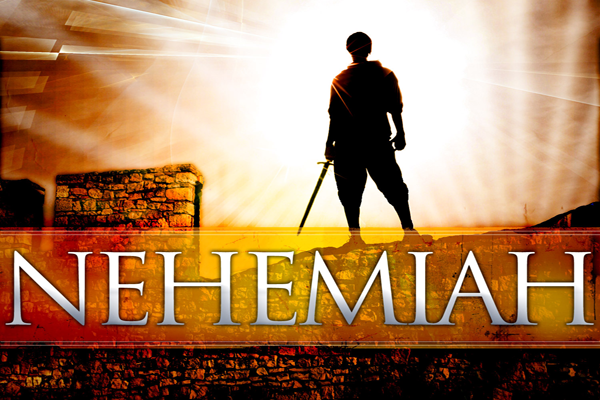
Two Supposed Nehemiahs: BC time and AD time

Nehemiah


 by

Damien F. Mackey


Human history is in need of a massive renovation!


I already knew this as far as BC time was concerned, having written two postgraduate theses; the one towards dismantling (http://hdl.handle.net/2123/1632) the conventional system, and then my effort later towards the reconstruction (http://hdl.handle.net/2123/5973) of BC time.
So, why should I now presume that AD time has been solidly established?
Most assuredly, I do not. Had I not written in my:


Osman’s ‘Osmosis’ of Moses
https://www.academia.edu/3690035/Osmans_Osmosis_of_Moses

that: “… one should nevertheless expect the chronological earthquake caused by [Dr. Immanuel] Velikovsky to be still transmitting aftershocks right down the line, so as to plunge late BC events into an AD time frame”.
And, indeed, a start has already been made to apply a Velikovskian revolution to AD time as well.  Thus certain Velikovskians, acutely aware of the problems posed by convention for the securing of BC time,  have now begun also to question the AD matrix, especially the so-called ‘Dark Age’ period.
To my mind, one of the great achievements of Dr. Immanuel Velikovsky in his pioneering Ages in Chaos series – {his system of revision is far from perfect, however} – was to have exposed the so-called ‘Dark Ages’ of antiquity (c. 1200-700 BC) as being an artificial padding to enable for an over-extended (Sothic-based) Egyptian chronology to harmonise with the shorter Greek (and other) chronologies.
See my summary of Sothic theory, in:


The Fall of the Sothic Theory: Egyptian Chronology Revisited
https://www.academia.edu/3665220/The_Fall_of_the_Sothic_Theory_Egyptian_Chronology_Revisited


Now some, mainly German, Velikovskians (e.g. Dr. Hans-Ulrich Niemitz, Heribert Illig, Uwe Topper) have applied the same sort of revisionist principles (e.g. real history’s need for an underlying stratigraphy) to the presumed Dark Age phase of AD 614–911 – in the early part of which the prophet Mohammed (c. 570-632) is supposed to have lived. Interested readers might like to peruse – for a handy summary of this revolutionary new approach to AD time – Jan Beaufort’s article, “Illig’s Hypothesis on Phantom Times – FAQ” (http://www.cybis.se/forfun/dendro/hollstein/hollstein0/beaufort/index.htm).
Whilst some, or most, of this new research may turn out to be just as extreme and flawed as was much of Dr. Velikovsky’s, I must agree with it at least in principle, that something is seriously wrong with many aspects of the received AD history. I, trying to make some sense of this, looking to find a reliable golden thread, so to speak – and especially interested in the case of the Prophet Mohammed who had begun to seem to me like something of a composite Israelite (or Jewish) holy man (traces there of Moses; Tobit; Job; Jeremiah; and Jesus Christ) – nearly fell off my chair when I read for the first time that there was a “Nehemiah” contemporaneous with said Prophet Mohammed.
OK, no big deal with that, insofar as there are, even today, people named “Nehemiah”.
But a “Nehemiah” doing just what the biblical Nehemiah had done?
I have previously written about this:


Now this is a very strange Afterglow of BC in AD time!
There is a strange interfacing (mirroring) of c. 600 BC [I picked this round figure for purposes of symmetry only] events with c. 600 AD events, particularly the appearance of [a] Nehemiah in both cases, serving the Persians in both cases, in relation to Jerusalem in both cases.
600 BC, approximately, has been sucked all the way forward to 600 AD!
…. One extraordinary case [reference to the Velikovskian aftershocks as quoted above] that has just come to light for me concerns Nehemiah (thought to be a Jew) of c. 600 BC.
Now I find that there was a Nehemiah, a Jew, supposedly in 614 AD (the era of Mohammed), to whom a Persian general had entrusted the city of Jerusalem (just as “Artaxerxes”, thought to have been an ancient Persian king, had allowed Nehemiah his cupbearer, the governor, to return to Jerusalem and to restore the damaged city). This supposedly later Nehemiah “offers a sacrifice on the site of the Temple”, according to Étienne Couvert (La Vérité sur les Manuscripts de la Mer Morte, 2nd ed, Éditions de Chiré, p. 98. My translation). “He even seems to have attempted to restore the Jewish cult of sacrifice”, says Maxine Lenôtre (Mahomet Fondateur de L’Islam, Publications MC, p. 111, quoting from S.W. Baron’s, Histoire d’Israël, T. III, p. 187. My translation), who then adds (quoting from the same source): “Without any doubt, a number of Jews saw in these events a repetition of the re-establishment of the Jewish State by Cyrus and Darius [C6th BC kings of ancient Persia] and behaved as the rulers of the city and of the country”.
Whilst this is quite a penetrating observation as far as it goes, I think that the conclusion ought actually to go far deeper even than this. This “Nehemiah, a Jew”, I now suggest, was none other than the original Nehemiah himself, “the governor”, of the OT Book of Nehemiah. He was not ‘repeating the re-establishment of the Jewish state by Cyrus and Darius’, but was the very one who had prophetically envisioned it!
He has been sucked all the way forward to 600 AD!
And Mohammed, orginally an Old Testament prophet, has been curiously metamorphosised into a C7th AD Arabian prophet.
[End of article]

A “Nehemiah” practically mirror-imaging the Nehemiah of about a millennium earlier!
And, what was the Persian empire doing there all over again about a millennium after it had been overrun by that irresistible conqueror Alexander the Great?
The incredible irony of it all, I believe, is that Islam does not know who its Prophet Mohammed really was!
The truth about the “Prophet Mohammed” is that he was originally a BC character of the era of the Chaldean and Persian empires, whose person and era have somehow (and the ‘mechanism’ whereby this has happened must await a proper understanding and revision of AD history) been projected into a (perhaps not inappropriately called) ‘Dark Age’, supposedly in AD time.
And the same comment applies to the biblical Nehemiah. (And to who knows who else?).
Down through the centuries (depending upon how many there actually are in real AD time), the Prophet, and the religion that he originally espoused – pure Yahwism, for sure – and the Bible, have filtered through Arabia (with its own unique flavours and interpretations), picked up Samaritan – and even, anachronistically, Christian – elements. Correspondingly, with the Hebrew Scriptures, that have re-emerged, metamorphosised and quite transformed, as the Koran (Qur’an) of Islam.


I intend to write much more about all of this.


Posted by AMAIC at 3:25 PM 0 comments
Labels: academia.edu, AMAIC, Australian Marian Academy of the Immaculate Conception, Esarhaddon Vassal Treaties Laws of Moses, Solomon Senenmut Out of Egypt prophet Nahum Shaphan C. Seow

Wednesday, April 8, 2015

King Solomon's pi measurement


Taken from: http://www.recoveredscience.com/const100solomonpi.htm


The political values of Solomon's wrong Pi


Most current textbooks on the history of science assert that ancient Near Eastern mathematics were too primitive for its practitioners to compute an accurate value for the circle circumference-to-diameter ratio pi. They even claim that the Bible gives the rather inaccurate value of  pi = 3 for this important mathematical constant. 

They refer to the reported dimensions of the “sea of cast bronze” which king Solomon placed before the Temple he built in Jerusalem, as described in 1 Kings 7:23:

“It was round in shape, the diameter from rim to rim being ten cubits; it stood five cubits high, and it took a line thirty cubits long to go around it.”

Indeed, the Rabbis who wrote the Talmud a thousand years after Solomon asserted this value based on those verses. They may not have been mathematicians, but they knew how to divide thirty by ten and get three. Accordingly, they affirmed as late as the middle of the first millennium CE:
“that which in circumference is three hands broad is one hand broad”.
Scholars of the Enlightenment era were glad to concur with that interpretation because it allowed them to wield this blatant falsehood in the Bible as an irresistible battering ram against the until then unassailable inerrancy of the religious authorities.
Their Colonial-era successors, in turn, embraced that poor value for Solomon’s pi to belittle the mathematical achievements and abilities of the ancient non-European civilizations, and to thereby better highlight those of their own modern Western group. One of the most effective steps in subduing a conquered nation is to deny or distort its historical achievements, so this poor value of pi in the ancient Near East became rich fodder for their mockeries.
This parochial attitude received a major blow when the Columbia University Professor of Comparative Literature Edward Said published in 1978 his book "Orientalism" in which he exposed the colonial roots of the then still common Western disdain for the abilities of "Orientals".  His influential comments changed the way some open-minded literary scholars regarded this biased legacy, but it seems that many mathematicians and historians of mathematics never got the memo.
In their domain, the biased views of those colonialist writers survive to the point that this purported lack of mathematical intelligence under the reign of a king renowned for his wisdom is still an article of faith among mainstream historians of science trained to read this obviously primitive value into the text.
One of the most popular books on "A History of Pi" even offers eight translations of that biblical passage into seven different languages, presumably to drive home the point with the powerful mainstream method of proof by repetition, that in every one of those translations the diameter remains ten cubit and the circumference thirty1
However, all these disparagers of Solomon’s pi omit half the evidence. The rest of the parallel passages they cite from 1 Kings 7:23 and 2 Chronicles 4:2 shows their dogma is based on a hit-and-run calculation of a type that would make any undergraduates flunk their exam.
It seems that none of those experts who so compared the diameter and circumference of Solomon’s Sea of Bronze ever bothered to read on. The next verses, 1 Kings 24 and 26, say that the circumference was measured under the rim, and that this rim was flared:
“All round the Sea on the outside under its rim, completely surrounding the thirty cubits of its circumference, were two rows of gourds cast in one piece with the Sea itself. (...) Its rim was made like that of a cup, shaped like the calyx of a lily. When full it held two thousand baths.”
The parallel account in 2 Chronicles 4:3 and 5 leaves out the rim and reads
"Under the Sea, on every side, completely surrounding the thirty cubits of its circumference, were what looked like gourds, two rows of them, cast in one piece with the Sea itself. (...) Its rim was made like that of a cup, shaped like the calyx of a lily. When full it held three thousand baths.”
Obviously, the gourds could not have been under the Sea if they were cast as part of its circumference on every side, and the measuring rope for the circumference would not be stretched around the rim where it would not stay up but only below it. The only practical way to measure such a flared vessel is to stretch the rope around the body below that rim.
Moreover, only this measure directly around the body is relevant for indicating the volume the vessel could hold, an important part of its description for which the rim diameter is clearly irrelevant. It seems therefore that the scribe of 2 Chronicles 4 was simply as careless in specifying the place of the measurement as in mis-copying the volume of the basin.
However, both accounts agree that the rim was flared. The ten-cubit diameter measured across its top from rim to rim was therefore larger than that of the vessel’s body which “took a line thirty cubits long to go around it”.
Solomons Pi 2
The circumference and diameter reported were thus not for the same circle, and deducing an ancient pi from these unrelated dimensions would be about as valid as trying to deduce your birth date from your phone number.

The volume and shape of Solomon's Sea

Moreover, the measuring unit conversions supplied by modern archaeology allow us to compute the inside volume of that vessel and to thereby find its shape. With the stated circumference, wall thickness, and height, only a cylinder can contain the volume of 2,000 bath given in 1 Kings 7:26.

The cubit length which had been used in various Jerusalem buildings and tombs of Solomon’s time was 20.67 inches2, according to the archaeological architect Leen Ritmeyer who investigated the standards used in those structures. Like the ancient Egyptian royal cubit of typically similar length, the sacred cubit used in Jerusalem was also divided into seven hand breadths of four fingers each.

The bath was a liquid measure of “approximately 22 liters”, as Harper’s Bible Dictionary states. It was one tenth of a “kor” in the well-known dry-measuring system which is described in Ezekiel 45:14. Its use for liquids is confirmed by eighth century BCE storage jars, found at Tell Beit Mirsim and Lachish, that were inscribed “bath” and “royal bath”3.  A liter is 61.0237 cubic inch, so 2000 bath equal 304.04 cubic cubit.

As calculated and illustrated in the above diagram, the 2000 bath of water from 1 Kings 7:26 fill that cylinder close to its top, to a height of 4.511 cubit above the inside bottom.  The outside height was five cubit, and the bottom was one seventh of a cubit thick, so the 2000 bath leave only a shallow rim of about 0.3461 cubit above the water level, or just over seven inches, depending on how accurate the "about 22 liter" conversion factor is.


Solomons Sea rim detail
The rim flare inscribed into the computed rectangle looks indeed like that of a cup, or like the calyx of a lily.
The height and width of that rim, computed with the actual value of pi, produce an elegant flare that matches the biblical description. The same holds true for approximations to pi from about 3 1/8 to 3 1/6 which all produce lily-like rims and are all closer to the proper value than the alleged but unsupported pi = three.
These conversions also make it clear that the copyist of the much later4 parallel history in 2 Chronicles 4:6 misread that volume when he gave it as 3,000 bath. No matter how much you fudge the math or try to squeeze the incompressible water, this volume does not fit into a vessel with those dimensions.
Mainstream bias against non-Western minds
Solomon’s mathematicians and surveyors, as well as their ancient teachers and colleagues throughout the ancient Levant, were therefore not necessarily the clumsy clods portrayed in current history books. 
The accuracies of transmitted lengths which Ritmeyer found in the actual dimensions those ancient builders left us in stone show that they worked with great care.  It strains credulity that their surveyors could have misread the rope around that vessel by almost two and a half feet in a circumference of less than 52 feet.
Nor is there any rational reason to assume that the ancient number researchers were so innumerate that they could not have computed a fairly good value of pi, as close to the real one as that which Archimedes (about 287 to 212 BCE) obtained later, or even closer.  They could wield the same mathematical tool, the theorem about the squares over the sides of a right-angled triangle which is now named after the sixth-century-BCE Greek Pythagoras and which Archimedes used in his pi-calculation many centuries after its real ancient Babylonian and/or Egyptian authors had discovered it.  They also had perhaps more patience and motivation than Archimedes to continue with the simple but repetitive calculations required for pointlessly closer approximations.
However, the backwardness of ancient Near Eastern mathematics has become a cornerstone of the prevailing prejudice against all pre- Greek accomplishments.  Examining that cornerstone exposes the scholarly bias on which it was founded.
The reason for the current denial of ancient pi seems to be that the calculation of pi requires analytical thinking, the same exalted mode of thought on which all the rest of so- called Western science is said to be based, and which must therefore be Western.
Most history books tell us that this superb achievement and gift to all humanity had to wait for the unique genius of the glorious Greeks, and that the invention of inquisitive and logical thinking was the decisive contribution from these purported founders of said science.
The Greeks were, in the words of a highly respected Egyptologist born at the height of the English Empire:
“... a race of men more hungry for knowledge than any people that had till then inhabited the earth”5 .
Reflecting the same then typical attitude which referred to those other people as “that” instead of “who”, another equally respected historian of science quoted approvingly Plato’s partisan remark :
“... whatever Greeks acquire from foreigners is finally turned by them into something nobler”6.
The skills displayed in Hezekiah's tunnel
This cultural bias led some of the "scholars" afflicted by it not only to disregard obvious facts, as in the case of Solomon’s pi, but even to fabricate the evidence they needed to support their supposed superiority. Take, for instance, the engineering achievement of king Hezekiah’s tunnel builders.
This biblical king needed to prepare Jerusalem for a dangerous siege because he expected a new invasion by the Assyrians who had conquered the area earlier and extorted from it a heavy tribute which Hezekiah planned to stop paying. To have any chance at all against this almost irresistible superpower of his day, he needed to protect the water supply of his city and so had a tunnel dug from inside the walls to the outside spring.
Because this life-or-death project was so urgent, the tunnelers started at both ends of that path to then meet about halfway underground. This unprecedented mid-way meeting in a more than 1,700-foot-long tunnel would have counted as a considerable achievement even if their tunnel had followed a straight line.  However, their surveying task was much harder.
At the spring end, the stone cutters started at an almost right angle to the shortest path towards their goal and took instead the shortest path towards the city wall. Maybe they wanted to bring this most vulnerable part of their dig as quickly as possible under the protection of that wall and of the high overburden in that area, and maybe they also wanted to take advantage of a few existing fissures in the rock that happened to run there for short stretches along their general direction. Then they veered back outside the wall under shallower terrain where no enemy risked to find the tunnel but where a postulated surface team hammering on the rock above would be easier to hear for confirmation that the diggers were not straying too far. However helpful and encouraging these presumed signals from the surface team may have been to the diggers below, they would have been too diffuse to determine precise locations.
On the town end of the tunnel, the diggers started northwards but then, instead of continuing north-north-east for the shortest path towards the other team, they went east and even south-east-east in a wide arc.
Archaeologists call this arc the "semicircular loop", and some of them suggest that the diggers took this long detour, adding about 50 percent to the expense and time for this urgent life-and-death project, to avoid any possible disturbance to the royal graves of King David and some of his successors who are said to have been buried in that area of the "City of David"6A.
The path so prescribed to the stone cutters became therefore an irregularly curved maximum challenge to the surveyors who had to multiply their triangulations while keeping the accumulated errors small enough to not miss the other team by too far in these two opposite stabs into the three-dimensional dark.
These ancient Hebrew surveyors solved this complicated task with such skill that we still don’t know how they did it. Some scholars have argued that they must have followed a karstic crack underground that went all the way through. However, the Jerusalem archaeologists Ronny Reich and Eli Shukron pointed out that the theory of simply following a pre-existing fissure is incompatible with the several “false” tunnels near the meeting point7.  These indicate some uncertainty about the path to follow until the teams actually met, and they are more compatible with the accumulated errors in a small spread of measuring results.
Moreover, a recent close examination of the tunnel walls shows that there was no such continuous fissure. To the contrary, over long stretches most of the cracks in the rock ran rather at right or almost right angles to the path of the tunnel8.
That theory about the continuous crack also ignores the famous inscription about how elated the cutters were when they at long last heard the voices of the other group just before they broke through, “axe against axe”. The joy and relief expressed in that short text would be hard to explain if the two underground teams had known beforehand that they were just following a pre-existing path.
Even the authors of the most recent survey of this tunnel, the ones who proposed the stone cutters might have been guided by the sounds of hammer tapping on the bedrock above the tunnel, do not think those signals were precise enough to pinpoint the exact locations underground. One of them admits
"Yet, all things considered, it is quite incredible how the two teams managed to meet almost head-on, at virtually identical elevations as evidenced in the very small difference in ceiling elevation at the meeting point."9
Correctly plotting such a complicated path underground implies calculating and measuring skills far better than those attributed to the people whose predecessors from just two and a half centuries earlier had allegedly misread so grossly the cord stretched around Solomon’s Sea. It also demonstrates a precision in their trigonometry that does not fit in at all with their tradition's supposedly so crude pi.
On the other hand, admitting those skills among Hezekiah’s people would have toppled the superiority of the Greeks who cut the mostly straight and longer tunnel of Samos about 170 years later.  This tunnel was much easier to measure but displays much more zig-zagging in the northern leg before the mid- tunnel meeting10.
So, to prove his contention that the Israelites worked “in a very primitive way”, vastly inferior to the “splendid accomplishment” of the Greeks, the above Plato-buying historian of science invented from whole cloth a series of vertical shafts he said Hezekiah’s workers had dug from the top to keep track of their confused and meandering path11.
This solved the problem of keeping the Greeks up on their pedestal.  Except, of course, that the veteran Jerusalem archaeologist Amihai Mazar reports Hezekiah’s tunnel was cut without any such intermediate shafts12.   The one and only shaft that is open to the surface near the southern end of the tunnel is a pre-existing natural feature and not man-made.13
There is still no published study that explores how Hezekiah’s surveyors could have achieved their stunning success, but the Mathematical Association of America offers in its 2001 Annual Catalog a video and workbook about “The Tunnel of Samos” which the Greeks dug less than two centuries later, also simultaneously from both ends. These discuss the methods the Greek tunnel builders might have used for “one of the most remarkable engineering works of ancient times”. And an even more recent article on this Greek tunnel still relies on the long debunked false assertion about the continuous carstic crack the ancient Hebrew stone cutters allegedly followed to belittle their even more remarkable achievement:
"The tunnel of Hezekiah required no mathematics at all (it probably followed the route of an underground watercourse)."14
Without this ad-hoc invention of the "carstic crack" and/or "underground watercourse", the mathematics required for plotting Hezekiah's tunnel must have been rather impressive.
(In 2011, the above cited archaeologists Ronnie Reich and Eli Shukron suggested that this tunnel was not cut during Hezekiah's reign but already under one of his predecessors, perhaps King Jehoash who reigned from 835 to 801 BCE14A. However, advancing the date of this feat by just over a century would not change the argument presented here that it required mathematics more impressive than what most modern scholars attribute to Hebrews of that early time.)
Compare those ancient tunnel-builders' skills with those used in the design and execution of the world's currently longest mountain-piercing tunnel, through the base of the Gotthard massif in Switzerland, and its final breakthrough on October 15, 2010.  The meeting between the two opposing sections in this 35.4-mile-long modern tunnel through very hard rock joined two 31.4-foot diameter bore holes within the specified tolerances of about 4 horizontal and 2 vertical inches, matching the ancients' claimed precision of having met "axe against axe", but in a much longer tunnel.
This spectacular modern precision was made possible by literally cutting-edge and space-age technologies developed and/or refined specifically for this project. This sophistication is only hinted at in the title of its summary description "The Gotthard Base Tunnel - a challenge for geodesy and geotechnics"
(http://www.geometh-data.ethz.ch/downloads
/eisenstadt98.pdf). 
These surveyors used an unprecedented array of 28 Global Positioning Systems to nail down the exact locations of their reference points, and the precision of their specially developed optical surveying instruments was such that the continuing rise of the Alps by about one millimeter per year became a factor addressed in the results.
In addition to all their advanced gyroscopic theodolites and opto-electronic X-Y pickups and other fancy gear, the modern tunnel plotters used also a midway control shaft to confirm their exact orientation and the elevation of the tunnel floor despite local variations in gravity, whereas the ancients made do without this help.
Moreover, unlike the ancients, the moderns credited supernatural help for the success of their enterprise.  Indeed, the inscription that celebrated the breakthrough meeting of Hezekiah's teams was secular and mostly technical. It conveys the human excitement of meeting "axe against axe", but at least the surviving part of this document from biblical and supposedly pious ancient Israel contains no mention of God or thanks for having blessed the project.
By contrast, the celebrations for the Gotthard tunnel breakthrough in Switzerland, the now reputedly secular birth country of two major protestant reformations by Zwingli and Calvin, included the prominent honoring of a statuette representing the Catholic and Eastern Orthodox Saint Barbara, a traditional protectress from thunder and lightning. This job associated her later also by default with explosives, and she thereby became the patroness of miners. Several of the official tunnel inauguration speakers also thanked that Saint for her guidance and supervision of the project.
Their hi-tech measuring instruments as well as this heavenly help may have given the modern stone cutters some advantages over their ancient counterparts so that they could match the claimed "axe against axe" precision even in their much longer tunnel.
However, the basic math for plotting their tunnels was identical for both teams. The moderns may perhaps have applied more powerful statistical methods for analyzing the scatter of their data points, but their timeless trigonometry and triangulation rules were still the same as those which Hezekiah's surveyors had clearly used in their work.
Yet, Orientalism-inspired and -misled scholars described Hezekiah's surveyors as allegedly innumerate dolts, and they made up imaginary control shafts, karstic cracks, or buried brooks just to avoid admitting the measuring and computing skills plainly displayed in the ancients' work. They presume to judge the richness of the mathematics practiced in the ancient Near East from only the few surviving and so far deciphered written scraps while excluding the large corpus of unwritten evidence which demonstrates that the ancients' knowledge was not limited to those few random tidbits.
Some Western scholars, from Plato on to this day, needed such fictions to belittle all pre-Greek achievements and to thereby prove their own and their fellow Europeans’ superiority over all the other and allegedly ignorant older civilizations. 
The myth of Solomon’s wrong pi is therefore by now so deeply entrenched in the Western cultural fabric that most of those who write on this subject continue to repeat it uncritically because that is what all their reference books say, no matter how obviously wrong these are.
If you can avoid the blinders created by this common academic prejudice, you will see in this book how the allegedly pi-challenged designer(s) of Solomon’s Temple incorporated in the main dimensions of its layout clear, repeated, and precise evidence that their pi was at least as good as that of Archimedes.
Moreover, their teachers, as well as the ancient Egyptian inventors of their mathematical methods, had also computed several other important mathematical constants with remarkable precision. And they had invested these transcendental numbers with transcendental meanings that revealed to them the inner workings of their world.
Continue
Posted by AMAIC at 11:13 PM 0 comments
Labels: academia.edu, AMAIC, Australian Marian Academy of the Immaculate Conception, specialtyinterests Solomon Senenmut Out of Egypt Suleiman the Magnificent Solon of Athens Lawgiver Statesman

Wednesday, April 1, 2015

Joseph of Arimathea in Britain

Image result for joseph of arimathea in britain

We encourage the reader to study this fascinating article by professor Daniel Scavone:


Joseph of Arimathea, the Holy Grail and the Edessa Icon


http://www.shroud.it/SCAVONE1.PDF


….


One may read more about this subject at:


http://www.biblearchaeology.org/post/2013/03/28/The-Shroud-of-Turins-Earlier-History-Part-Three-The-Shroud-of-Constantinople.aspx


….


Wilson’s landmark 1978 book [1979 The Shroud of Turin: Burial Cloth of Jesus? (Rev. ed.). Garden City NY: Image Books.] also reached into medieval romance literature recognizing a link between Byzantine rituals and Holy Grail legends.  These stories  began in the late 12th century right at the time when many western soldiers and fellow travelers were returning home after being exposed to the traditions and wonders of the Orthodox East. Grail stories were “…essentially about a dish or chalice of extreme holiness that forms the goal of a knightly quest.” The central point of some is “a very special secret vision of Christ” wherein a transformation of the vision occurs:
… the wafer of the host first changing into Christ as a child, then Christ as an adult, with, of course, the bleeding wounds (Wilson 1979: 162).
Other Grail readers, even some with no interest in the Turin Shroud, have endorsed thinly veiled Byzantine connections.  Professor Daniel Scavone has delved more deeply into this Eastern Christian/Byzantine link. In a major paper he opines:
Specific documents and rituals surrounding the Mandylion resonate closely with and provide precise sources for the chief attributes of the Holy Grail. Like the legendary Holy Grail, this cloth was linked to Joseph of Arimathea, resided in a place known as Britium [another name for Abgar’s residence in Edessa], was thought to have contained Jesus’s body, captured Jesus’s dripping blood on Golgotha, and was displayed only rarely and in a gradual series of manifestations from Christ-child to crucified Jesus (Scavone 1999: 1).
Scavone has traced the sources of early western Grail literature back to apocryphal NT books like the Gospel of Nicodemus (about 4th cen.), the book known as I, Joseph (5th cen.) and various “Latin Abgar” descriptions of a polymorphic (changing) Jesus strongly associated with the Edessa Image.  These were supplemented by elements from the newly learned Byzantine Greek Eucharist to provide the imagery and themes used in Holy Grail legends.  Although tempting to equate the Holy Grail with the Shroud, Scavone does not do so, seeing the Grail stories as confused derivatives of the latter.
….
Posted by AMAIC at 3:29 PM 0 comments
Labels: academia.edu Joseph Hellenic Gotterdammerung Thales Pythagoras Ptahhotep, AMAIC, australian marian academy of the immaculate conception Tertullian free Jerusalem from Athens Shroud of Turin

Monday, March 30, 2015

Pope Francis set to rile Turkey by recalling the Armenian genocide


 Image result for armenian genocide 


By Inés San Martín
Vatican correspondent March 30, 2015


ROME — One week after Easter Sunday, Pope Francis is scheduled to celebrate a service in the Armenian Catholic rite to commemorate the 100th anniversary of a mass killing of Armenians by Turks in the early 20th century that the pontiff defined two years ago as the “first genocide of the modern era.”


In a time of mounting anti-Christian violence in various corners of the Middle East, the pope’s act is likely to take on more than merely historical interest.


The April 12 papal liturgy is part of a broader campaign by Armenians to keep the memory of their suffering alive, which will feature the ringing of bells in Armenian churches around the world on April 23 at 19:15 (7:15 p.m.), the hour chosen to symbolically recall the year 1915. Bells will sound everywhere but Turkey, where the small number of churches still in operation will remain silent.


Francis has long been aware of the calamity that befell Turkey’s Armenian minority, having led an ecumenical service of remembrance in Buenos Aires in 2006.


“Today we come to pray for this people to whom human rights still don’t apply,” then-Cardinal Jorge Mario Bergoglio said on that occasion. He called for “the end of the empire’s silence,” referring to the Ottomans and their successors in today’s Turkey, saying that acknowledging what had happened would “bring peace to the Armenian people.”


Scholars believe that 1 million to 1.5 million Armenians died as a result of efforts to drive Armenians and other minorities from their homelands in present-day Turkey after World War I. It’s often acknowledged as the first genocide of the 20th century, and a forerunner to later atrocities such as those committed by Nazi Germany and Cambodia’s Khmer Rouge.


....


Taken from: http://www.cruxnow.com/church/2015/03/30/pope-francis-set-to-rile-turkey-by-recalling-the-armenian-genocide/
Posted by AMAIC at 3:25 PM 0 comments
Labels: AMAIC, Australan Marian Academy of the Immaculate Conception, Bernard Nathanson Lighthouse Catholic Media CD Aborting America academia.edu abortions throwaway society Andrew Bolt Daily Telegraph

Thursday, March 12, 2015

Jeroboam I and “Europa”. John R. Salverda comments.

Image result for rekhmire and aegeans


Jeroboam and Vizier Rekhmire in Egypt


If I were to look for an identification for Jeroboam in Thutmoside Egypt, I would have to point to the famous official, Rekhmire, at the time of Thutmose II (= Solomon?).


Chronologically, he fits perfectly, starting at the time of Thutmose II, and serving Thutmose III and Amenhotep II (the latter two being fully contemporaneous according to this article.


Jeroboam’s high rank as an official of King Solomon (I Kings 11:26) is fitting for Rekhmire, who was the Vizier of Thutmose III/“Shishak” – this would be after “Solomon tried to kill Jeroboam, but Jeroboam fled to Egypt, to Shishak the king, and stayed there until Solomon's death” (v. 40).


It was during this time, that Rekhmire could have made his impact upon Egypt.


And what an impact it was!


He claimed for himself virtual Solomonic wisdom. In fact, his very name, Rekhmire, probably means “knowing like [the god] Re”. And his legal judgements and purported works of charity towards the poor likewise recall those of Solomon (and Hammurabi).


http://www.greatmirror.com/index.cfm?navid=1211


John Gardner Wilkinson, father of Egyptology, wrote in 1835 that this tomb, of a vizier of Upper Egypt who was second in command to Thutmes [Thutmose] II, was "the most curious, I may say, of all the tombs in Thebes, since it throws more light on the manners and customs of the Egyptians than any hitherto discovered." Rekhmire wrote of himself as follows: there was "nothing of which he was ignorant in heaven, on earth, or in any quarter of the underworld." Not only that, Rekmire claimed that he "managed the vast royal estates, supervised temples, judged court cases, checked irrigation schemes...[and] judged impartially between the pauper and the wealthy. I rescued the weakling from the bully. I warded off the rage of the bad-tempered and I repressed the acts of the covetous.... I gave bread to the hungry, water to the thirsty, meat, beer, and clothing to him who had none." Still, he was ultimately disgraced and apparently never buried in the tomb prepared for him. (Quotes from Kent R. Weeks, The Treasures of Luxor, 2005, p. 392-3.)


Certainly Jeroboam I “was ultimately disgraced” and fell from grace.


I Kings 14:9-11 tells of it:  


‘You have done more evil than all who lived before you. You have made for yourself other gods, idols made of metal; you have aroused my anger and turned your back on me.


Because of this, I am going to bring disaster on the house of Jeroboam. I will cut off from Jeroboam every last male in Israel—slave or free. I will burn up the house of Jeroboam as one burns dung, until it is all gone. Dogs will eat those belonging to Jeroboam who die in the city, and the birds will feed on those who die in the country. The Lord has spoken!’


That fearful prophecy, uttered by Ahijah, would be fulfilled in the next reign.

....

For complete article, see:


From Rehoboam to Asa, Descendants of Solomon
https://www.academia.edu/11281808/From_Rehoboam_to_Asa


John R. Salverda has commented on this:


....
Exiles from Jeroboam's kingdom founded colonies in Mycenaean lands, including Greece (where the "virgin Israel" was likely even known by a feminine corruption of Jeroboam's name "Europa"); Where a famous set of twins fought in the womb, and one of the twins (Acrisius) set up a twelve tribe "Amphictyon" to maintain a special temple. This Greek temple was located at a place known as "Pytho" (a likely transliteration of the term "Bethel," also called Delphi) thought to be named for "Python" (a possible corruption of "Beth-Aven" or without the slur "Beth-On"), where Apollo (Identified by the Greeks with the Egyptian Horus) slew the great serpent (as Horus did Seth/Apophis). As the Bethel shrine was turned into a copy of the Jerusalem Temple, so the Pyhtian temple of Apollo shares many detailed coincidences with the Judean Temple. The "omphalos" as the "Eben Shetiyah" (the respective "center stones" of the Earth), the Adyton as the Holy of Holies (the sanctuary of forbidden entry), the goat sacrifice (complete with special treatment for the entrails), the fumigation (sweet smelling incense), and ritual bathing (in specifically "living water") ... there are many other corresponding ritualistic and anecdotal features shared by these two temple schemes too numerous to outline in this forum! Well, before going on too long, notice all of the "Egyptian" motifs in this narrative. ....
Posted by AMAIC at 3:15 PM 0 comments
Labels: academia.edu Joseph Hellenic Gotterdammerung Thales Pythagoras Ptahhotep, AMAIC, australian marian academy of the immaculate conception Tertullian free Jerusalem from Athens

Tuesday, January 27, 2015

British in 1918 Followed Jonathan’s Example at Battle of Michmash

untitled

Taken from: http://static.squarespace.com/static/5047782fe4b0dcecada
 
 
A Strange Occurrence at Michmash 1918
 
We owe to Major Vivian Gilbert, a British army officer, this description of a truly remarkable occurrence. Writing in his reminiscences [Chichikov: The Romance of the Last Crusade] he says : ‘In the First World War a brigade major in Allenby’s army in Palestine was on one occasion searching his Bible with the light of a candle, looking for a certain name. His brigade had received orders to take a village that stood on a rocky prominence on the other side of a deep valley. It was called Michmash and the name seemed somehow familiar. Eventually he found it in 1 Sam. 13 and read there: ‘And Saul, and Jonathan his son, and the people that were present with them, abode in Gibeah of Benjamin but the Philistines encamped in Michmash.’ It then went on to tell how Jonathan and his armour-bearer crossed over during the night ‘to the Philistine’s garrison’ on the other side, and how they passed two sharp rocks: ‘there was a sharp rock on the one side and a sharp rock on the other side: and the name of the one was Bozez and the name of other Seneh.’ (1 Sam 14). They clambered up the cliff and overpowered the garrison, ‘within as it were an half acre of land, which a yoke of oxen might plow’. The main body of the enemy awakened by the melee thought they were surrounded by Saul’s troops and ‘melted away and they went on beating down one another.’
Thereupon Saul attacked with his whole force and beat the enemy. ‘So the Lord saved Israel that day.’
The brigade major reflected that there must still be this narrow passage through the rocks, between the two spurs, and at the end of it the ‘half acre of land.’ He woke the commander and they read the passage through together once more. Patrols were sent out. They found the pass, which was thinly held by the Turks, and which led past two jagged rocks–obviously Bozez and Seneh. Up on top, beside Michmash, they could
see by the light of the moon a small flat field. The brigadier altered his plan of attack.
Instead of deploying the whole brigade he sent one company through the pass under cover of darkness. On Feb 18th 1918, The few Turks whom they met were overpowered without a sound, the cliffs were scaled, and shortly before daybreak the company had taken up a position on the ‘half acre of land.’
The Turks woke up and took to their heels in disorder since they thought they were being surrounded by Allenby’s army. They were all killed or taken prisoner.
‘And so,’ concludes Major Gilbert, ‘after thousands of years British troops successfully copied the tactics of Saul and Jonathan.’ “2
The trick used by both Jonathan and Allenby allowed for major turing points in the repelling of the Philistines as well as the movement towards Jericho some 2000 thousand years later. On the morning of February 21, 1918, combined Allied forces of British troops and the Australian mounted cavalry capture the city of Jericho in Palestine after a three-day battle with Turkish troops.
Commanded by British General Edmund Allenby, the Allied troops began the offensive on Tuesday, February 19, on the outskirts of Jerusalem. Despite battling adverse weather conditions and a determined enemy in the Turks, the Allies were able to move nearly 20 miles toward Jericho in just three days.
….
Posted by AMAIC at 3:00 PM 0 comments
Labels: Alpha and Omega series, AMAIC, Australian Marian Academy of the Immaculate Conception, Jesus Christ Lord of History biblico historical revision academia.edu Absalom Tamar Talmai king Geshur

Saturday, January 24, 2015

Virgil (or His Absence) in China and the Viability of Western Classics in Non-Western Context


Taken from: http://apaclassics.org/annual-meeting/145/abstracts/jinyu-liu
 
 
Jinyu Liu
 
Apart from a fleeting show of interest in Virgil in 1930 in connection with the Two-Thousandth Anniversary of his birth, Virgil has never incurred any serious scholarly or popular attention in China until the end of the twentieth century. First attempted in 1930, the Chinese translation of the complete Aeneid did not appear until 1984. The complete Chinese translation of Eclogues was first published in 1957, while no attempt has been made to translate Georgics into Chinese yet. The sporadic and limited introduction of Virgil and his works in China is in sharp contrast not only to Virgil’s literary fame and enduring influence in the West throughout the centuries but  also  to  the  general  popularity  of  the  Homeric  Epics  in  China,  which  were translated into Chinese numerous times since early twentieth century to this day.
What factors, then, might have hindered Virgil, who was proclaimed as “Father of the West” (Theodor Haecker) and “classic of all Europe” (T. S. Eliot), to gain some stature in China in the periods of intense Westernization? To what extent can the failure of Virgil to thrive on the Chinese soil be attributed to the lack of appeal of the many transcending values/themes, or varieties of universalism, that the Western scholars and readers saw in Virgil to the Chinese intellectuals? Since nation building and the destiny of Empire are among the salient themes in Virgil’s Aeneid, why were his works not appropriated more aggressively for discourses concerning imperialism and/or national identities in the colonial or semi-colonial society that was China from 1840-1949? Stepping out of the Euro-centric approaches to Virgil, this paper uses Virgil in China as a case study to tap into the broader issues of the viability of Western classics in a non-Western context, and the criteria or principles that have guided the selection of Graeco-Roman materials to translate into Chinese.
 
Session/Panel Title:
Classics and Reaction: Modern China Confronts the Ancient West
Posted by AMAIC at 5:30 PM 0 comments
Labels: AMAIC, Australian Marian Academy of the Immaculate Conception, blessing name of God Book of Job Tobias ‘Obadiah righteousness robe of salvation trials persecution sores Virgil the Aeneid Dido
Newer Posts Older Posts Home
Subscribe to: Posts (Atom)

Search This Blog

Hagia Sophia at Dusk

Hagia Sophia at Dusk

About Us

My photo
AMAIC
What is the Australian Marian Academy of the Immaculate Conception (AMAIC)? The Australian Marian Academy [AMA], as it was initially known, was formed in the early 1980s largely by a group of academics and teachers devoted to the Blessed Virgin Mary, particularly under her title of Our Lady of the Rosary (at Fatima). In May of 1988 this was the description of the Australian Marian Academy written into our Constitution (p. 19): As a recognized “aggregate of persons” [CJC Can. 115] the Academy “is a private association of Christ’s faithful striving with common effort to foster a more perfect life … and to promote Christian teaching” [Can. 298]. Its Constitution has been reviewed by the competent authority [Can. 299 §3]. It chooses to exercise its juridical personhood through an Executive of 7 members. [ Can. 115, §2].
View my complete profile

Subscribe To

Posts
Atom
Posts
All Comments
Atom
All Comments

Mount Zion

Mount Zion
"Mount Zion, true pole of the earth, the great King's city" (Ps 48:2).

Blog Archive

  • ▼  2026 (22)
    • ▼  September (2)
      • Jesus Christ as Lord of History
      • Scots and the Ku Klux Klan
    • ►  August (1)
    • ►  July (2)
    • ►  June (2)
    • ►  May (4)
    • ►  March (2)
    • ►  February (3)
    • ►  January (6)
  • ►  2025 (49)
    • ►  December (4)
    • ►  November (2)
    • ►  October (6)
    • ►  August (7)
    • ►  July (7)
    • ►  May (1)
    • ►  April (6)
    • ►  March (3)
    • ►  February (7)
    • ►  January (6)
  • ►  2024 (69)
    • ►  December (2)
    • ►  October (6)
    • ►  September (2)
    • ►  August (5)
    • ►  May (6)
    • ►  April (9)
    • ►  March (10)
    • ►  February (29)
  • ►  2020 (3)
    • ►  July (1)
    • ►  May (1)
    • ►  February (1)
  • ►  2019 (45)
    • ►  December (4)
    • ►  November (2)
    • ►  October (6)
    • ►  September (4)
    • ►  August (5)
    • ►  July (4)
    • ►  June (2)
    • ►  May (3)
    • ►  April (1)
    • ►  March (2)
    • ►  February (8)
    • ►  January (4)
  • ►  2018 (49)
    • ►  December (10)
    • ►  November (16)
    • ►  October (3)
    • ►  August (1)
    • ►  July (3)
    • ►  June (5)
    • ►  May (4)
    • ►  April (2)
    • ►  February (1)
    • ►  January (4)
  • ►  2017 (42)
    • ►  December (5)
    • ►  November (12)
    • ►  October (7)
    • ►  July (2)
    • ►  May (3)
    • ►  April (5)
    • ►  March (1)
    • ►  February (1)
    • ►  January (6)
  • ►  2016 (25)
    • ►  December (4)
    • ►  November (3)
    • ►  October (4)
    • ►  September (1)
    • ►  July (2)
    • ►  May (2)
    • ►  March (4)
    • ►  February (5)
  • ►  2015 (27)
    • ►  December (2)
    • ►  November (2)
    • ►  October (5)
    • ►  August (4)
    • ►  July (3)
    • ►  June (3)
    • ►  May (1)
    • ►  April (2)
    • ►  March (2)
    • ►  January (3)
  • ►  2014 (48)
    • ►  November (2)
    • ►  October (2)
    • ►  September (2)
    • ►  August (16)
    • ►  July (4)
    • ►  June (4)
    • ►  May (6)
    • ►  April (4)
    • ►  March (8)
  • ►  2013 (62)
    • ►  December (3)
    • ►  November (1)
    • ►  October (10)
    • ►  September (3)
    • ►  August (7)
    • ►  July (6)
    • ►  June (3)
    • ►  May (6)
    • ►  April (3)
    • ►  March (12)
    • ►  February (7)
    • ►  January (1)
  • ►  2012 (56)
    • ►  December (2)
    • ►  November (5)
    • ►  October (6)
    • ►  September (4)
    • ►  August (5)
    • ►  July (6)
    • ►  June (7)
    • ►  May (1)
    • ►  March (5)
    • ►  February (4)
    • ►  January (11)
  • ►  2011 (11)
    • ►  September (1)
    • ►  August (1)
    • ►  July (1)
    • ►  May (4)
    • ►  April (4)
  • ►  2010 (3)
    • ►  October (1)
    • ►  February (2)
  • ►  2009 (1)
    • ►  September (1)
Powered By Blogger

Translate

Total Pageviews

Other AMAIC Sites

  • AMAIC Administration
  • Lost Cultural Foundations of Western Civilisation

Popular Posts

  • Prophet Balaam Also Known As Priapus: John R. Salverda
    John R. Salverda is here commenting on an article on Balaam that can be found (e.g.) at: http://amaic-archaeology.blogspot.com.au/20...
  • The Genesis Flood and Hindu Matsya Purana
    .... The following account, taken from the Hindu Matsya Purana (Fish Chronicle), describes some of the people who, after a severe ...
  • Pope Francis targets deal with China in year of mercy
                                A Chinese Catholic choir at an Easter service in Beijing on March 30, 2013. Agence Fran...
  • Similarities of Ancient Hebrew and Greek Religion
    [The AMAIC considers the Middle East – West comparisons of John R. Salverda as interesting, with some of them we think being very li...
  • Neanderthals as Antediluvians
      by   Damien F. Mackey     “Dr Cuozzo's conclusions are that Neanderthals, the brutish 'cavemen...
  • Magi, Gentiles or Jews?
      by   Damien F. Mackey     After Jesus was born in Bethlehem in Judea, during the time of King Herod, Magi from the ...
  • Beyond the “Second Coming”
      by    Damien F. Mackey               Were Jesus Christ and his Apostles deluded about the Second Comin...

Labels

  • 2 Corinthians 3 face of Moses Israelites glory shining transitory (1)
  • 2016 (7)
  • Abraham Abram Ur of the Chaldees Terah (1)
  • Abram Abraham and Minyan Athamas (2)
  • Abram Abraham Genesis 14 four kings Amraphel Chedorlaomer Erioch Tidal Sodom Gomorrah (1)
  • academia.edu (26)
  • academia.edu AMAIC Australian Marian Academy of the Immaculate Conception BC to AD time revision Alpha and Omega series Jesus Christ Lord of History pharaonic Egypt Bible bending (1)
  • academia.edu Book of Judges Othniel Cushan rishathaim Syrian Mesopotamia oppression 8 years rest 40 years (1)
  • academia.edu Cain built Jericho (1)
  • academia.edu John R Salverda Jacob Ptah Hephaestus Cush Hermes (1)
  • academia.edu John R Salverda Pelops Ahab Achaeans (1)
  • academia.edu John R. Salverda Greek appropriations of Middle Easter folklore mythology Bellerophon Pegasus Joshua (1)
  • academia.edu Joseph Hellenic Gotterdammerung Thales Pythagoras Ptahhotep (5)
  • academia.edu Joseph Hellenic Gotterdammerung Thales Pythagoras Ptahhotep AMAIC Assumption August 15 australian marian academy of the immaculate conception Tertullian free Jerusalem from Athens (3)
  • academia.edu Turin Shroud (2)
  • Ahab Akhnaton Lab’ayu Hippodameia (1)
  • Ahab Queen Jezebel Nefertiti Macbeth Lady Macbeth Duncan Banquo (1)
  • Alpha and Omega series (5)
  • AMAIC (356)
  • amaic academia.edu Joseph Hellenic Gotterdammerung AMAIC Assumption August 15 australian marian academy of the immaculate conception Tertullian free Jerusalem from Athens (1)
  • AMAIC AUSTRALIAN MARIAN ACADEMY OF THE IMMACULATE CONCEPTIONBIBLICAL IDENTIFICATIONS DAMIEN F. MACKEY REVISED HISTORY ERA KING HEZEKIAH JUDAH POST-GRADUATE TIGLATH-PILESER JOHN R. SALVERDA (2)
  • amazing star map Senenmut Solomon (1)
  • Americas Argentinian Buenos Aires (1)
  • anti-Catholic (2)
  • Apologetics Press Alden Bass Yale University Ancient Origins Hinduism (2)
  • Appolonius of Tyana Philostratos Greek philosopher (1)
  • appropriation Hebrew hochmah sophia wisdom (1)
  • Argentine born Pope Francis dialogue Moslems offers olive branch to China (1)
  • Asia News (2)
  • August Gladisch Heraclitus Zoroaster (1)
  • Australan Marian Academy of the Immaculate Conception (37)
  • Australian Marian Academy of the Immaculate Comnception (3)
  • Australian Marian Academy of the Immaculate Conception (313)
  • australian marian academy of the immaculate conception Tertullian free Jerusalem from Athens (4)
  • australian marian academy of the immaculate conception Tertullian free Jerusalem from Athens Shroud of Turin (1)
  • Australian Marian of the Immaculate Conception (1)
  • authorship Pentateuch first five books (1)
  • bag and baggage (1)
  • Baruch 3 Hymn of Wisdom O Israel House of Gold how broad scope of His dominion (1)
  • Baruch Zoroaster Heraclitus Sirach Azariah Seraiah (2)
  • BC to AD time revision Alpha and Omega series (16)
  • Bengt Sage Noah and Human Etymology manu Proto Indo European language academia.edu (1)
  • Bernard Nathanson Aborting America academia.edu throwaway society Andrew Bolt Daily Telegraph (1)
  • Bernard Nathanson Angela Shanahan Eric Abetz Chinese women breast cancer abortion Aborting America academia.edu Daily Telegraph (1)
  • Bernard Nathanson Lighthouse Catholic Media CD Aborting America academia.edu abortions throwaway society Andrew Bolt Daily Telegraph (25)
  • Bernard Nathanson Lighthouse Catholic Media CD Aborting America academia.edu Claire Harvey Daily Telegraph PUP totalitarian China (1)
  • Beware of Greeks Bearing Gifts (1)
  • Beware of Greeks Bearing Myths Damien F. Mackey (2)
  • biblical identifications Damien F. Mackey Revised History Era King Hezekiah Judah post-graduate Tiglath-pileser John R. Salverda (90)
  • Bill Lavers Identity Melchizedek Shem son Noah (1)
  • Blessed Mother Teresa of Calcultta Lighthouse Catholic Media CD Face of God academia.edu (1)
  • Blessed Virgin mary rainbow dove Noah’s Ark Pope Pius XII Ad Caeli Reginam (1)
  • blessing name of God Book of Job Tobias ‘Obadiah righteousness robe of salvation trials persecution sores Virgil the Aeneid Dido (1)
  • blessing name of God Tobit Job (1)
  • Book of Job Tobias ‘Obadiah righteousness robe of salvation trials persecution sores Homer The Odyssey (1)
  • Book of Ruth genealogy King David Jesus Son of David Sam Shamoum exposing lies of Islam Shahid Bin Waheed (1)
  • Book of Tobit (1)
  • Book of Tobit Sennacherib Nebuchadnezzar Damien F. Mackey post-graduate thesis (3)
  • Campus Center Research specialtyinterests academia.edu (1)
  • Charlemagne Harun al-Rashid Hiram of Tyre (1)
  • China (2)
  • China Tchao-Wang dynasty Tcheou (1)
  • Chinese Sumerian Charles Ball Lecturer Assyriology University Oxford (4)
  • Chinese Sumerian Charles Ball Lecturer Assyriology University Oxford academia.edu (1)
  • Chinese Sumerian Charles Ball Lecturer Assyriology University Oxford Chinese Border Sacrifice Australian Aborigines from India (2)
  • Christian Anthropology John Paul II theology of body culture and civilisation Gift and Mystery priesthood (1)
  • constellations cosmogony (1)
  • cosmology epic equinoxes (1)
  • creationist flood model (7)
  • Danaans tribe Dan academia.edu mythology Mount Olympus Elohim Mount Zion (2)
  • Danaans tribe Dan Greek Ionia Asian Turkey (2)
  • Danaans tribe Dan John R. Salverda (3)
  • Danaans tribe Dan John R. Salverda academia.edu mythology Mount Olympus Elohim Mount Zion Joseph Sisyphus Jacob Asopus (1)
  • Danaans tribe Dan John R. Salverda mythology Mount Olympus Elohim Mount Zion academia.edu (2)
  • Danaans tribe Dan John R. Salverda mythology Mount Olympus Elohim Mount Zion Joseph Sisyphus Balaam Priapus Jacob Asopus academia.edu (1)
  • Daniel very dangerous China’s communists (4)
  • Darius the Mede even Cyrus the persian Book Daniel George R Law James B Jordan Handwriting on the Wall (1)
  • David Kaufman academia edu Did Ancient China Influence Olmec Mexico (1)
  • David Livingston Nimrod Gilgamesh Cush Kish Ethiopia (7)
  • David Livingston Nimrod Gilgamesh Cush Kish Ethiopia academia.edu (2)
  • David Livingston Nimrod Gilgamesh Cush Kish Ethiopia academia.edu Gilgamesh versus Genesis Gary Zeolla (3)
  • David Livingston Nimrod Gilgamesh Cush Kish Ethiopia academia.edu Gilgamesh versus Genesis Gary Zeolla Ovid Metamorphoses Apollo (1)
  • days of Noah Flood John R Salverda academia.edu Megasthenes (1)
  • Divine Son in Eucharist (1)
  • Dr Ed Metzler Mosaistics Ten Commandments Western Civilsation (1)
  • Dr Peter Kreeft Philosophy of Jesus (2)
  • Dr Peter Kreeft Philosophy of Jesus philosopher and apologist Douglas Groothuis (1)
  • Dr Stephanie Dalley Sennacherib Archimedes water screw (1)
  • eastern Persian Chinese Indian appropriation of Hebrew wisdom M L West East Face of Helikon academia.edu (1)
  • Eli Eli llama sabachthani Good Friday (1)
  • Emmet Sweeney Abraham and Egypt Thoth Dattatreya (1)
  • enlightened pagan Melchizedek Rahab Rachab Job Tobias Ruth Moabite Magi Achior Book Judith Ahikar (2)
  • enyclical letter Pope Francis Lumen fidei mary blessed is She who believed Hail Mary Daughter of Zion (6)
  • Esarhaddon Vassal Treaties Laws of Moses (6)
  • Fall of Troy Greeks legends moon precession stars sun Trojan War (1)
  • Family and the Church in the 21st Century ethical theological Mariological Christological book On Heaven and Earth: Pope Francis on Faith (1)
  • Fatima (1)
  • four rivers genesis (7)
  • Ganesha's birth Oedipus Freud (1)
  • Gene Matlock Hindu Matsya Purana Fish Chronicle Indian Noah Manu Far Eastern appropriation academia.edu (1)
  • genesis flood adam noah (7)
  • genesis geography modern geology academia.edu (6)
  • genesis geography modern geology academia.edu P. Seely (1)
  • Genesis Noah’s Flood (1)
  • Graham Hancock specialtyinterests Solomon Senenmut Out of Egypt prophet Nahum Shaphan (3)
  • Halloween pagan festival occult Russian Orthodox harshly condemns cult of death (1)
  • Haman and Mordecai both Jews well known to each other (5)
  • Haman Koran Mohammed Pharaoh Moses King Ahasuerus Emmet Sweeney Xerxes Sennacherib (1)
  • Hebrew hokmah wisdom Vedic rita Egyptian ma'at maat divine order of nature or creation (1)
  • Hieromonk Damascene Chinese Border Sacrifice (3)
  • Hindu seafaring Sir Chalres Eliot British diplomat colonial administrator (1)
  • Historicity Resurrection Christ Mark Musser Biblical worldviews Easter Sunday (1)
  • history philosophy biblical cultural ethical theological (1)
  • history philosophy biblical cultural ethical theological Mariological Christological biblically compatible archaeology stratigraphy (10)
  • Homer Iliad Odyssey (1)
  • Imhotep Joseph Step Pyramid material icon father Jacob’s vision stairway to Heaven (1)
  • immaculate conception (2)
  • immaculate conception. professor A. Yahuda tebah Ark Noah Flood Genesis (3)
  • Immanuel Velikovsky Ages in Chaos (1)
  • important questions about Church academia.edu (1)
  • Indian and Egyptian connections (2)
  • Indra Manu Ouranos Sanskrit (1)
  • Indra Manu Ouranos Sanskrit academia.edu (1)
  • Investiture of Pope Francis Patriarch Bartholomew I Istanbul based church (1)
  • Ionian philosophers ancient philosophy Empedocles Elijah (2)
  • Israelites fleet Japan DNA Arimasa Kubo (2)
  • Jacob and Joseph parallels Legends Jews Louis Ginzberg (1)
  • Japanese and Hebrew religion similarities (1)
  • Japheth Hesiod Iapetos (1)
  • Jason and the Argonauts academia.edu John R. Salverda prophet Jonah myth monday (1)
  • Jason and the Argonauts John R. Salverda prophet Jonah myth monday Gildas Hamel (1)
  • Jerome Corsi Shroud Codex David Kupelian (1)
  • Jerome Corsi Shroud Codex Sonja Corbitt (1)
  • Jesus Buddha Krishna Issa (4)
  • Jesus Christ Alpha Omega Beginning End Romano Guardini (1)
  • Jesus Christ alpha omega Lord of History (1)
  • Jesus Christ alpha omega Lord of History academia.edu (2)
  • Jesus Christ Lord of History (14)
  • Jesus Christ Lord of History biblico historical revision academia.edu (2)
  • Jesus Christ Lord of History biblico historical revision academia.edu Absalom Tamar Talmai king Geshur (5)
  • Jesus master teacher Wayne Jackson (1)
  • Jesus master teacher Wayne Jackson wikipedia Jesus tops list (1)
  • Jesus Suras Chinese dynasties John D Morris Institute of Creation Research ten ancestors Flood academia.edu (1)
  • Jewish thought Greek philosophy Persian religion (1)
  • Job Tobias academia.edu Herodotus and Bible Wayne Jackson (1)
  • John R Salverda Europa Jeroboam Israel whit bull Zeus God academia.edu (1)
  • John R Salverda Europa Jeroboam Israel white bull Zeus God academia.edu (1)
  • John R. Salverda Greek appropriations of Middle Easter folklore mythology academia.edu (3)
  • John R. Salverda Greek appropriations of Middle Easter folklore mythology Bellerophon Pegasus Joshua academia.edu (1)
  • John Salverda Moses Hermes Perseus Mopsus Musaeus Caduceus academia.edu (1)
  • Joseph as Sisyphus Jacob Asopus academia.edu John R Salverda Brit Am (1)
  • Joseph Egypt St Thomas Aquinas Angelic Doctor (1)
  • Jospeh as messiah figure Jesus Christ (1)
  • Judith Holofernes Sennacherib Xerxes Emmet Sweeney Simeonites Collins Thermopylae (1)
  • Judith Huldah Greek Sappho poet Lesbos Hypatia African heroine Gudit Judith Esato Jewish origin (1)
  • Judith Huldah Greek Sappho poet Lesbos Hypatia Alexandria (1)
  • Judith Huldah Greek Sappho poet Lesbos Hypatia Alexandria Joan of Arc (1)
  • Kevin Andrews Liberal MP Australia’s next family Minister breakdown marriage cancer greater threat than finabnicial crisis and Islam (1)
  • KEYWORDS: The Passion of the Christ movie Mel Gibson passions translation Mel Gibson’s Ancient Bible and Josephus Mel Gibson academia.edu (1)
  • King Solomon fleet Hiram Tyre Ophir Peru gold (1)
  • King Solomon fleet Hiram Tyre Ophir Peru gold Cortez Montezuma (1)
  • King Solomon fleet Hiram Tyre Ophir Peru gold Cortez Montezuma academia.edu (2)
  • Land of Punt King Solomon (1)
  • Lighthouse Catholic Media CD Admiral Jeremiah Denton Walking Through Valley of Shadow of Death academia.edu (1)
  • Lighthouse Catholic Media CD Archbishop Fulton J Sheen True Meaning Easter (1)
  • Lighthouse Catholic Media CD Curtis Martin From the Foundation of the World Fellowship catholic university Students FOCUS (1)
  • Lighthouse Catholic Media CD Dr Peter Kreeft Winning the Culture War (1)
  • Lighthouse Catholic Media CD Dr Scott hahn Abbah or Allah Christianity Islam Jesus Christ true prophet Messiah (1)
  • Lighthouse Catholic Media CD Dr Scott Hahn Prepare the Way of the King (1)
  • Lighthouse Catholic Media CD Sister Maria Stella Heroic Witnesses history Catholic priests sisters laity Russia from 1917 (1)
  • Lighthouse CD Dr Brant Pitre Jesus Jewish Roots Eucharist Lost Cultural Foundations of Western Civilisation academia.edu (1)
  • Lost Cultural Foundations Eastern Civilisation Campus Center Research specialtyinterests academia.edu (1)
  • Lost Cultural Foundations Eastern Civilisation specialtyinterests (1)
  • Lost Cultural Foundations Eastern Civilisation specialtyinterests academia.edu (1)
  • Lost Cultural Foundations Eastern Civilisation specialtyinterests Johnny Zwick (1)
  • Lost Jesus Sutras Taoist Christianity Martin Palmer Robert Hutchinson Chinese Christianity Father Dechanet academia.edu (1)
  • Louis Ginzberg Legends Jews Eugene Kaellis (4)
  • Louis Ginzberg Legends Jews Eugene Kaellis North Korea rejects papal Mass (1)
  • Louis Ginzberg Legends Jews Eugene Kaellis Syntipas Sinbad Lokman Koran (1)
  • Magi Star Bethlehem Buddhist Dalai Lama academia.edu (1)
  • mainland China (2)
  • Manu Noah just how global Noachic flood academia.edu Lost Cultural Foundations Eastern Civilisation (1)
  • many will come from east and west Matthew 8:11 academia.edu (1)
  • Maoist suffocation (2)
  • Marco Polo never visited China annoyzview Kublai Khan (1)
  • Matthew Kelly Rediscovering Catholicism Lighthouse Catholic Media CD (1)
  • Monsignor Daniel Deutsch History of Salvation Lighthouse Catholic Media CD Eden to Calvary academia.edu (1)
  • Moses baby in basket on river Sargon of Akkad revised history Moses has precedence Zeitgeist the Movie (1)
  • Moses burning bush perpetual virginity (1)
  • Mount Zion true pole eastern Persian Chinese Indian appropriation of Hebew wisdom John Hobson (1)
  • Naboth Nadab Tibni Jeroboam I Ginath Genubath John R Salverda academia.edu (1)
  • Nahuatl Ancient Egyptian academia.edu (1)
  • Nataraja Shiva Samson hair dance strength frenzy Nitin Kumar exotic Indian art education.edu (1)
  • Nations Flood Story academia.edu Damien Mackey Just How Global Genesis Flood (1)
  • Nephilim Pyramid Apocalypse days of Noah Flood China Olmecs Shang (4)
  • Nephilim Pyramid Apocalypse days of Noah transhumanism academia.edu (2)
  • new Pope 2013 Jorge Bergoglio Francis I first Jesuit (1)
  • Old Testament New Testament Christian Jewish appropriation Hebrew Bible Old Testament professor academia.edu (1)
  • Persecuted for Christ in India remember those in prison Hebrews 13:3 (1)
  • persecution (2)
  • Persian Influence on Greek thought (1)
  • Peter Craven passion core culture Australian Pope Francis marry Church modernity (1)
  • pharaonic Egypt Bible bending (14)
  • Phoenicians Hiram Tyre Aztecs Maya Bernardo Silva Ramos Lienhardt Delekat academia.edu (1)
  • Plato and Egypt (2)
  • Pope Benedict XVI Hajime Konno (1)
  • Pope Benedict XVI What is Truth? (4)
  • Pope Francis consecrates pontificate May 13 Our Lady Sheshan Mother of China and all Asia (1)
  • Pope Francis first homily cannot walk without Cross (1)
  • Pope Francis incomprehension Ukraine academia.edu Sviato-slav Shevchuk George Weigel (1)
  • Pope Francis to walk with him to build to witness (1)
  • Pope John Paul II civilisation of love culture of life academia.edu (1)
  • Pope John Paul II civilisation of love culture of life Fides et ratio Faith and Reason Indian and Eastern philosophy academia.edu (1)
  • professor Carol A Hill Eden four rivers of Genesis 2 Location of Paradise (1)
  • professor Joseph Davidovitz polymer liquid cement Michel Barsoum (1)
  • Professor Richard Weaver Ideas Have Consequences Eucharist Heart of Church Pope Benedict XVI (1)
  • prophetess Miriam sister Moses dances sings idea Amazons academia.edu John R Salverda Bellerophon Midgard Norse mythoogy Odin Thor Alfadur (1)
  • prophetess Miriam sister Moses dances sings idea Amazons John R Salverda Bellerophon academia.edu (1)
  • Queen Judith of Semien King Gideon Judith of Simeon King Gideon (1)
  • Rabbi Yehuda Shurpin Judaism Website Hannukah Maccabees Hellenistic Greeks Jesus master teacher Wayne Jackson (1)
  • Ramesses II as Jeroboam II Ashteroth Karnaim (1)
  • Ramses II and His Time Emmet Sweeney Hattusilis Alyattes Lydia (1)
  • re-orienting history ancient philosophy Moses Joseph Pythagoras Empedocles (1)
  • revised history Greek philosophy (2)
  • Robert Bowie Johnson Jr The Parthenon Code Atlas Adam (1)
  • Robert Goh Chinese Memories of Flood goddess Nukua academia.edu (1)
  • Sacred Heart of Jesus and Eucharist John the Evangelist Sister Faustina Divine Mercy Holy Year academia.edu July 5 (1)
  • Sacred Heart of Jesus and Eucharist John the Evangelist Book of Revelation Apocalypse Sister Faustina Divine Mercy Holy Year academia (1)
  • Sacred Heart of Jesus and Eucharist John the Evangelist Book of Revelation Apocalypse Sister Faustina Divine Mercy Holy Year academia.edu (18)
  • Sacred Heart of Jesus and Eucharist John the Evangelist Sister Faustina Divine Mercy Holy Year academia.edu July 5 (6)
  • Saint Michael Archangel academia.edu Mother Teresa Michael H. Brown devil Pope Francis gender ideology Austrian bishop Andreas Laun (2)
  • Saint of the West Messiah academia.edu (1)
  • saints and demons (1)
  • salvation is of Jews Jesus Messiah academia.edu (1)
  • September 11 (1)
  • Shattering Fall Queen Nefertiti specialtyinterests (1)
  • Similarities between Genesis and ancient flood accounts Chinese man through whom weed curse removed (1)
  • Solomon Senenmut Out of Egypt prophet Nahum Shaphan C. Seow (3)
  • Sothic Star Theory Oedipus and Akhnaton (1)
  • specialtyinterests Solomon Senenmut Out of Egypt Suleiman the Magnificent (2)
  • specialtyinterests Solomon Senenmut Out of Egypt Suleiman the Magnificent Solon of Athens Lawgiver Statesman (1)
  • Sri Bhakti Ananda Goswami Spartoi Spartans Jews Maccabees Abraham Cadmus Parashurama (1)
  • Stephen Ray Lighthouse CD academia.edu (1)
  • Tamar Bagrationi queen kingdom of Georgia biblical Tamar virgin beautiful Abishag Hatshepsut Queen of the South (1)
  • Templars Dan Brown Jacques de Molay King Philip the Fair King Ahasuerus Haman de Nogaret Queen Esther Our Lady of Fatima (1)
  • The Magi and how they recognised Christ’s Star (1)
  • Tim Martin Beyond Creation Science Preterism Global Flood (1)
  • Tim Martin Beyond Creation Science Preterism refutes Global Flood (1)
  • Tutankhamun Tut Howard Carter Jehoram Israel death chariot mummification lack of natron hurried burial Salima Ikram specialtyinterests (1)
  • US Creationists Flood model global local Creation Science professor Carol A Hill Timothy Martin Beyond Creationism academia.edu (1)
  • Vedic rita Egyptian ma'at maat divine order of nature or creation (1)
  • Vishwa Hindu Parishad (1)
  • W. Shea Adapa Epic Adam (1)
  • Walter Burkert Orientalizing Revolution academia.edu M L West East face of Helikon (1)
  • Western Logic Logos Dabar Pope Benedict XVI Lima Peru atheist Mario Vargas Llosa (1)
  • wisdom of Ptah hotep Joseph 3rd dynasty Hebrew wisdom equates to Egyptian ma’at goddess Dharma in India academia.edu (1)
  • Wolfgang Smith Esoterism Cosmoloogy Geocentrism Heliocentrism Copernicus Galileo academia.edu (1)
  • World Cup Brazil 2014 good of human person (1)
  • Worrying Duplications of Esarhaddon professor Gunnar Heinsohn (2)
Watermark theme. Theme images by -ASI-. Powered by Blogger.