Tuesday, May 28, 2019

A tilt at Copernicanism


“After all, even Copernicus' own system was by his own admission (read his original,
i.e. the first edition of De revolutionibus orbium coelestium) nothing more than a synoptic rehash of the already-existing diverse (part geocentric, part heliocentric, fire centric,
animal centric...) ideas of men like Hicetas, Ecphantus, Heraclides and Aristarchus”.


The "Rotating" Earth..
Theory, Fact or Fiction?
 
Oh what a tangled web we weave, when first we practice to deceive! --Sir Walter Scott
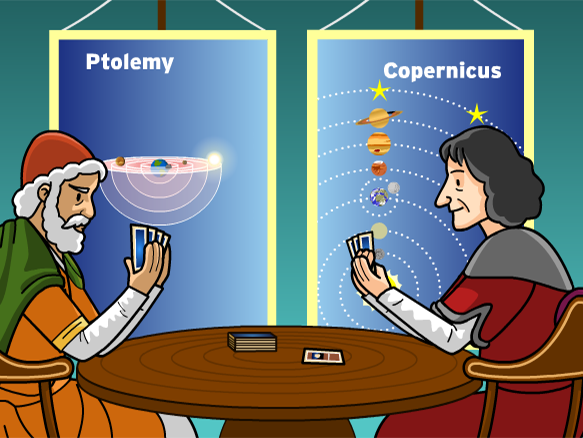
Throughout ancient times it was obvious that the moon went around the earth. This is still accepted today. But in the past it was just as obvious that the sun went around the earth as well. This was not because men in those days lacked fantasy and forgot to imagine non-existent movements of themselves and their surroundings. It is because they did their homework and examined all the evidence before them, that they came to the understanding that the earth was a firm, motionless sphere, neither in rotation around itself nor wandering through space around another body.
This geostatic and geocentric nature of the earth was repeatedly tested and verified as being factual for a quite some time (going back thousands of years) by knowledgeable, civilized, free people of all stripes, i.e. those who were supposed to know, like astronomers, natural philosophers (a.k.a. scientists), explorers, teachers, traders, seamen, navigators and various other free and educated men (as opposed to schooled, wage enslaved, homogenized, "experts" of modern times who wouldn't dare bite the hand that feeds them).
 
Then, all of a sudden, just 400 plus years ago, a band of court astrologers started pushing this idea that the earth was orbiting the sun this time, and that the sun was standing still at the center (hence the claim of the system being a 'solar' system). Nevertheless this new claim was not accompanied by any new proof. It was simply invoked and declarations were made that the fixed nature of earth needed to be disapproved.
 
Then, various kinds of earth movements were claimed to have existence and, subsequently abstract calculations were made of the speed and other attributes of these imaginary movements - presenting the results as if they have measured an actual motion. The major and in fact the only reason that was brought up for advancing this whole idea was that the then mainstream Ptolemaic model of the universe was deemed inconvenient in explaining and predicting the movements of the planets as they appear in the sky (especially one particular kind of movement: the retrograde motion of the planets in the sky).
 
But all along it was (and still is) a fact that a stationary earth, situated at the center of the universe also accounts for those retrograde motions, as shown by astronomer Tycho Brahe for example. And, although Ptolemy's epicyclical system was the long established one, it did not have exclusive monopoly. There were many ideas and models in circulation - like those of Pythagoras, Philolaus, Jean Buridan, Martianus Capella, Nicholas of Cusa and René Descartes to name a few.
 
After all, even Copernicus' own system was by his own admission (read his original, i.e. the first edition of De revolutionibus orbium coelestium) nothing more than a synoptic rehash of the already-existing diverse (part geocentric, part heliocentric, fire centric, animal centric...) ideas of men like Hicetas, Ecphantus, Heraclides and Aristarchus. So then, all those years - and right up to now - nobody has ever succeeded in showing or even detecting any movement of the earth in space.
 
However this complete lack of scientific evidence is not admitted. Instead a smokescreen of hearsays, popular opinions, organizational rulings, majority votes, superficial analogies, "expert" testimonies, personal convictions and such other means of persuasion (none of which qualify as scientific proof) are proposed and presented in order to support the heliocentric theory.
 
Heliocentricity is not a logically plausible (let alone irrefutable) theory that is based on scientific data but is actually, purely based on a series of assumptions that were built-up over the last 200 years. For example many (but not all) of the assertions regarding astronomical distances between celestial bodies are based on the necessary assumption that the earth must be revolving around the sun.
 
But at the same time, these assumed distances have another function whereby they are deployed as some sort of supportive argument for the "trueness" of the heliocentric hypothesis.
For example we are told that sun is too big to revolve around the earth, despite the fact that the sun's size was determined in the first place by assuming how big it must have to be in order to allow a heliocentric premise! Go figure. Other needed assumptions include:
 
■ the bendover earth (alleged 'tilt' of the earth's axis - a desperately needed heliocentric variable that has no basis in the physical world where the sun simply spirals from the Tropic of Cancer to the Tropic of Capricorn annually. Both of these tropic latitude lines are not tilted - they are at a 0° angle (= parallel) to the equator. The word "tropic" itself comes from the Greek term tropos, meaning turn, referring to the fact that the sun "turns back" at these lines that aren't tilted in any way,
■ the earth supposedly jittering around the sun at various speed levels (it orbits at a faster speed at one time, and then it goes relatively slower at another - then back faster again) but somehow, all this alleged speed-change remains unnoticeable),
■ the moon also being dragged along exactly at those same speed levels (100% complete synchronization with the wobbly earth despite being hundreds of thousands of miles away from it(!) Now how about that?,
■ even atmospheric gas (the air) being attached to the earth's surface (again completely synchronized but somehow (simultaneously) free-flowing enough to blow in every direction). These are just samples of the never shown, never detected, never scientifically observed absurdities that are required to save the appearances of the heliocentric model.
 
Facts are facts
 
Heliocentrists have been known to point to certain geophysical and astronomical features as arguments which they claim supports their sun-centered view. For example they claim that the Cape Canaveral area in Florida is chosen as a site for NASA's rocket launch center because it is one of the more southern points on the U.S. mainland and therefore closest to the equator. The same argument comes up regarding the reason why Europe's rocket launch center is located in French Guyana (in South America). There is supposed to be an advantage to being close to the equator when the goal is to get a vehicle into orbit: the "rotating" earth supposedly creates a centrifugal force that supposedly "lifts" the missiles. Well, the truth is that there is no real advantage: China's Jiuquan space center is found all the way up in the far north of the country (Inner Mongolia province). Why did the Chinese choose this site, when they have vast territory much further south which is closer to the equator? In fact, portions of southern China are closer to the equator than to the northern cosmodrome, from where they toss their taikonauts into orbit. The Russians are also reported to be developing a new space launch facility, which will be located much north of the current Baikonur Cosmodrome in Kazakhstan. This all means that a rocket launched tangentially from the Earth's equator doesn't really provide a more advantageous escape-velocity!
 
Getting closer to the supposed existence of an "equatorial centrifugal force" on the surface of the "rotating" earth (and other bogus heliocentric claims) is like getting closer and closer to an apparent pool of water in the desert: it dissolves and disappears right before your eyes in a spectacular fashion! Another bogus argument that some solar system advocates bring up from time to time is inertia and momentum. What is it that the moving-earth theorists believe is the substance (or the vector field) that supposedly exerts a huge gravitational force on air molecules which prevents the atmosphere around the earth from trailing behind the allegedly speeding earth (as is the case for comets)? Their answer?: Nothing. Instead, heliocentrists usually propose a fraudulent analogy of how the earth's motion is comparable with some person walking inside a moving train.
They claim that since the walker inside the train feels more or less the same as he or she feels when walking on the ground that somehow is supposed to reassure us that the earth could also be moving without we feeling it.
 
The problem with this analogy is of course the fact that once the person inside the train opens a window and faces the elements, he or she will feel it soon enough what the real speed is that the train is traveling at! Therefore the only correct analogy for someone walking on the ground of earth is someone walking in an open train or better yet - on the roof of a moving train. What will [happen] … then?
 
Well, the person will instantly encounter a force that is proportional and in opposite direction to the moving train. But why? Isn't the surrounding air supposed to be following the train, just as we are told the atmosphere is allegedly doing so by keeping-up with the supposedly faster-than-bullet rotating earth? Looks like heliocentrists have decided to suspend the laws of physics (aerodynamics) just for this case of a badly needed moving earth theory!
 
But still somehow, this law of motion is supposed to apply in all other cases of moving things in the universe?! This contradiction is quietly adopted in order to hide the fact that there is a force that is causing an air drag or friction that wasn't there before the train arrived. The friction with the earth's surface wasn't there because, unlike the train, the earth didn't move!
 
Getting to the top (and bottom) of it
 
The star whose location is closest to the point vertically above north pole (= celestial pole) is Polaris, a.k.a. the North Star, around which all the other stars appear to rotate (as visible during the night). Now, why is it that only one single star is a pole star throughout the whole year? All kinds of other stars should have taken turn to become pole stars if the earth was slinging around the sun. But since that is not the case and Polaris remains the most northerly of the stars all year round, as seen on photographs of star-trails (see below), it can only mean that the earth is not orbiting the sun. Moreover, a moving and orbiting earth would have caused the paths of stars to appear as (spiral) lines instead of fully circular tracks that we observe night after night, and consequently the shapes of the constellations would have changed considerably over the course of a single year. So what we're looking at is what is real - WYSIWYG: stars orbiting the Earth once a sidereal day, i.e. the time it takes for a celestial object to rotate 360°. For the stars around the Earth this is: 23 hours, 56 minutes and 4.091 seconds.
 
Truth has a way of being indestructible. It may or may not be popular at any given time, it may even be barely noticeable, but it is always there. And it turns out that the truth actually gets in the way of "science"! Modern theoretical (non-applied a.k.a 'pure') physics is not really science-driven but agenda-driven. It is populated with heavily politicized academia. It has become nothing much more than a sham propaganda-exercise of empty eloquence with false authority. The inventor of the electric world we live in, Nikola Tesla was spot-on when he remarked that modern non-applied science has become nothing more than manipulative indulgence in fancy "thought experiments" and abstract, fuzzy math which have no relation to reality. Instead of the theories being made to fit reality, what we have is the opposite: reality being adjusted or in fact completely overthrown, in order to fit agenda-driven theories and models. ….

Sunday, May 26, 2019

Lost Culture of the Chaldeans. Part Two (ii)


Part Two (ii):
A reader’s “different” version


by
 
Damien F. Mackey


“… as we extrapolate the observations into the past we immediately step out of the scientific method and into the area of historical assumption. This is not science but mere reasoned conclusions, however acceptable they may be to one’s reason”.
 
Dr. John Osgood


In response to my article:
 
Lost Culture of the Chaldeans. Part Two: Related to Sinites (Chinese)?
 
 
arguing for the origins of the Chinese with the (Hamitic-Canaanite) “Sinites” of Genesis 10:17, a reader has offered his alternative (‘book’), “different [heretical] account”, as he calls it. “The lords made the two Great Lights but before turning them on they instructed everyone to disperse to the ends of the earth..as far away as possible from Babylon”.
 
The ‘book’ is a presumed “history of man from 10,000 BCE”, which date the author sets as “the Pleistocene-Holocene boundary”.
I take this ‘book’ to be largely humorous, playful and light-hearted.
But since it follows the usual evolutionary-based dating system for supposed prehistory and even for Egyptian dynastic history, some comments may be in order.
 
It is this sort of methodology that I would query.
 
Whether or not the ‘book’ is “heretical”, it is, I believe, inherently incredible. It follows a typically evolutionary a priori pattern of approach, in which human history is stretched out in an ‘Indian file’ fashion, which does not accord with how things really are.
Dr. John Osgood has a lot to say about the fallacy of this sort of approach and of the so-called “Dating Techniques” (“A Better Model for the Stone Age”: https://creation.com/a-better-model-for-the-stone-age):
 
The scientific method can only work in the present, for it only has its artifacts in the present with which to experiment and to investigate. Reasonable scientific conclusions can be reached about those artifacts in the framework in which we find them, whether these be tools or cities or fossils. However, as we extrapolate the observations into the past we immediately step out of the scientific method and into the area of historical assumption. This is not science but mere reasoned conclusions, however acceptable they may be to one’s reason.
 
It follows naturally that if the scientific method cannot work in the past and conclusions about the past must rest on assumptions, then there is not today a dating method that can be scientifically substantiated as being correct, for every method will have built into it an assumption. Now when we come to the practical application of this theory we discover in fact that this holds true. ….
 
In reality, a primitive desert, or forest, people can be contemporaneous with – but perhaps even unknown to – a highly sophisticated modern civilisation.
 

Now, an evolutionary-minded palaeontologist or archaeologist in, say, a 1000 years’ time, would instinctively separate these two contemporaneous societies by tens, or even hundreds, of thousands of years in time.
Osgood again:
 
A society that is forced to hunt and gather because of insufficient time to plant crops will then be called a hunter/gatherer society. It will exhibit the tools of that trade. It is likely, therefore, in most cultures in new places, that the first stage would be a hunter/gathering society in order to gather whatever is available to survive and live. As they were able to come to terms with their environment, they would begin to farm and to herd animals. It would be assumed by the archaeologists later excavating such a site that there had been a development of culture. But this is not necessarily the case, for this particular society would have had all that culture available to them right from the start. The difficulties would simply have been those of making it a reality in their environment, until sufficient leisure allowed them to do so.

….
However, if a person or society had been driven only a short distance from Mesopotamia and had sufficient ability to take many of their cultural niceties with them, such as the implements and tools for metal making and metal culture, then they would possibly be able to enjoy culture from a much earlier time. This would result in the later excavation of a Chalcolithic type of culture. It would, of course, be assumed to be later than the Paleolithic hunter/gatherer society or the Neolithic farming society discovered in a more outlying region. However, this would not necessarily be the case. The Paleolithic, Neolithic and Chalcolithic could well be contemporary, and might simply be an indication of the different conditions and the different environment and distance from the centre point available to each of the different [cultures]. ….
 
Evolution, of necessity, needs long periods of time.
That a priori mentality has affected the arrangement of the Geological Ages; the Stone Ages; the Archaeological Ages. The sort of mentality has even affected ancient Chinese and Egyptian history, whose dynasties have been stretched out in a single file that does not accord with reality, or with such ancient testimony that - in the case of Egypt - tells of some simultaneous dynasties.
Dr. John Osgood will give evidence for at least the late Stone Ages to have overlapped.
And the same may need to be done for the Geological Ages, with the great Flood being a handy unifying factor, I would suggest, for the geology of the Fertile Crescent region of the world.
 
The massive Black Sea Flood had originally been dated to 5600 BC, but today 7400 BC is the preferred date.
That is a big shift.
But it is nothing compared to palaeontological shiftarounds.
For supposed pre-history, ‘Mungo Man’ in Australia, initially dated to 60,000 BC, was soon shifted (about a week later, in fact) to 40,000 BC. No one seemed to bat an eyelid about such an extraordinary situation. The unthinking just seem to fall in line with the new ‘expert’ dating.
What does this all mean?
It means that palaeontologists, in this regard, don’t have a clue!
 
The over-extension of the Egyptian dynastic history has made of it such an unwieldy beast that, for it now to be compatible with other nations, such as the Hittites or the Greeks, centuries of ‘Dark Ages’ (1200-700 BC) must be fudged in to the latter histories to force them to fit - even though these other civilisations exhibit a perfect sequential progression in art, architecture, laws, etc. either side of the supposed ‘Dark’ divide.
See e.g. P. James et al., Centuries of Darkness, 1990, for further enlightenment on all of this.


Tuesday, May 21, 2019

Sumerians merge into Chaldeans


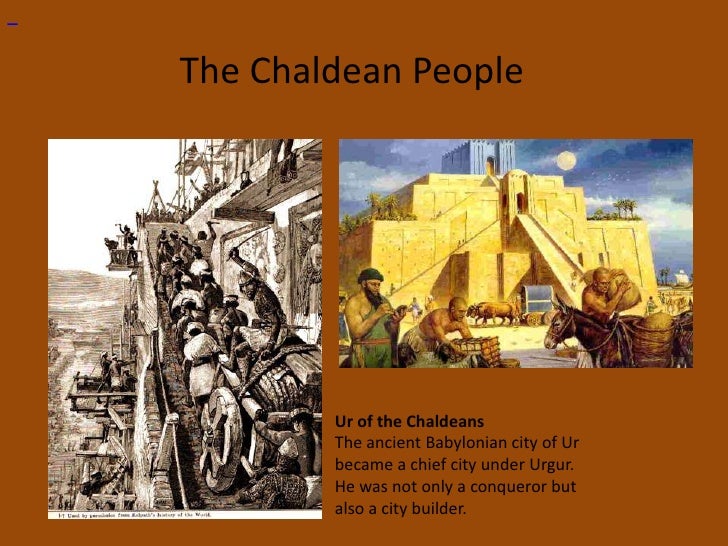
Image result for chaldeans
Lost Culture of
the Chaldeans
 
Part One (ii):
Sumerians merge into Chaldeans


by
 
Damien F. Mackey
 

“Why Berossos [Berossus] would draw on sources of the “Sumerians” to tell
Chaldean history remains as mysterious as the bewilderingly wanting scholarly and astronomical/astrological texts of the Chaldaeans whose erudition is famous all over Antiquity and “from whom the Greek mathematicians copy” (Flavius Josephus)”.
 
Gunnar Heinsohn


In this series, I am following Dr. John Osgood’s most helpful synchronization of the ‘erudite’ Chaldean people, “famous all over Antiquity”, with the ‘Ubaid culture of archaeology.
Dr. Osgood wrote tellingly, in “A Better Model for the Stone Age Part 2”:
https://creation.com/a-better-model-for-the-stone-age-part-2
 

1.     Arphaxad - Al Ubaid, the Early Chaldees

 
Josephus13 identifies the descendants of Arphaxad as the Chaldeans and this seems to be consistent with the biblical statements concerning them, for Abraham was a descendant of Arphaxad (Genesis 10 verse 24 and 11 verses 10-31). Abraham left Ur of the Chaldees to eventually travel to the land of Canaan.
 
Now Ur of the Chaldees, that is, the southern Ur found in the region south of the Euphrates River, has been excavated by Woolley. Woolley found that the earliest layers in Ur were built by the Al Ubaid people. (Al Ubaid is the early pottery culture of this region.)
 
Now if the Al Ubaid people built Ur, then Ur would be an Al Ubaid city originally, and as it was known as Ur of the Chaldees, this allows us to equate the Chaldees with the Al Ubaid people. This fits what we know of the Chaldean people. Certainly, it was in that region of the world that the later Chaldeans were known to live. It is also clear that this area had an influence on the north by the naming of such cities as Harran associated with the same religions that were known in the region of Ur of the Chaldees.
 
It is certain that Joan Oates has shown the contemporaneity of northern Halaf and southern Ubaid, a fact that bears well with the Table of Nations in Genesis 10.14
 
The Al Ubaid culture of Southern Mesopotamia was centred around the cities of Ur and Eridu, and its earliest [manifestation] … the Hajj Muhammad pottery, appears to be the first culture on the soil of this area of southern Iraq:
 
‘At all sites so far investigated in the South the Ubaid rests directly on virgin soil, and there seems little doubt that the people who bore this culture were the first settlers on the alluvium of whom we have any trace.’15
 
From this region at a later epoch came the now famous Nebuchadnezzar II of Babylon, the Chaldean. ….
[End of quotes]
 
Professor Gunnar Heinsohn has added a further important (cultural) dimension to the Chaldean peoples by identifying them with the most ancient, and enigmatic, Sumerians:
http://www.cais-soas.com/CAIS/History/empires_lost_found.htm
  

Classical Historiography confirmed

 
The Chaldaean priest Berossos, around 278-290 B.C.E., writes, in Greek, a history of his homeland for the Macedonian/Seleucid king Antiochus I Soter (281 -261). The work becomes known under the title Babyloniaka of which fragments are preserved in ancient Greek writings. In his section on the Deluge, Berossos, surprisingly, calls the flood hero Xisuthros (Alexander Polyhistor) or Sisithrus (Abydenus). This is a Greek transliteration of Ziusudra. Yet, Ziusudra is the protagonist of the “Sumerian” version of the Flood. That Berossus does not leave us the Chaldean name of the flood hero has never stopped to stun Orientalists. After all, Berossos tells us nothing about the “Sumerians” who, since Jules Oppert’s coining of the term 1868, are thought to have created mankind’s first civilization in his very homeland. All ancient Greek writers who cite Berossos take him for a Chaldaean expert of Chaldean history.
Therefore, they list his records under headings like “Chaldaean History” (Alexander Polyhistor), “Of the Chaldaean Kings” (Apollodorus) or “Of the Chaldaean Kings and the Deluge” (Abydenus).
 
Like Berossos, ancient Greek authors never give the slightest hint of a “Sumerian” civilization though Greek transliterations of cuneiform texts, called “Sumerian” by modern scholars, are produced as late as the 2nd or even 3rd century AD (so called Graeco-Babyloniaca). Thus, ancient Greeks are able to read and write “Sumerian” for nearly half a millennium but fail to recognize the “Sumerian” people not to speak of a “Sumerian” cradle of civilization. What they know is a Chaldean civilization with some 900 larger and smaller settlements which supposedly did not leave a single grave, brick or even potsherd.
 
Why Berossos would draw on sources of the “Sumerians” to tell Chaldean history remains as mysterious as the bewilderingly wanting scholarly and astronomical/ astrological texts of the Chaldaeans whose erudition is famous all over Antiquity and “from whom the Greek mathematicians copy” (Flavius Josephus). This enigma is aggravated by the fact that the “Sumerians” themselves, who have left countless astronomical/astrological texts, never employ the word “Sumer” or “Sumerians”. In their own cuneiform writing they call their country Kalam (e.g., Sumerian Kinglist) and its inhabitants people of Kalam (e.g., the Nippur poem Praise of the Pickax).
 
Yet, not only the term Kalam fits Chaldea well—as do the Mitanni fit the Medes or the Martu the Mardoi­—but also its stratigraphic location just two strata groups below Hellenism where one would look for the predecessors of the Akhaemenids in Babylonia. ….
 
Damien Mackey’s comment: For my own take on Medo-Persian (or Achaemenid) archaeology, see my article:
 
Persian History has no adequate Archaeology
 
https://www.academia.edu/31113083/Persian_History_has_no_adequate_Archaeology
 
Professor Heinsohn continues:
 
Therefore, beginning in 1987, this author has been suggesting that certain empires of the ancient near east did not really exist, and should therefore be removed from modern textbooks (in English see Heinsohn 1991. 1996 and 1998).  At the same time realms and empires well-known since antiquity should be restored to the place they once held in the history and chronology of the ancient world.   
 
Damien Mackey’s comment: Sometimes Heinsohn goes rather too far in all this I believe.
He continues, here beginning with a very true and important statement:
 
The logical basis for this proposal is that in order for great empires and civilizations that appear in modern textbooks to be accepted as genuine there must be evidence of their existence in the archaeological layers of the earth. 
If textbook empires are without such layers, then there are two possibilities: (1.) these empires should disappear from the pages of modern textbooks. (2.) the existence of these empires must be affirmed by using archaeological layers that are currently assigned to other empires, thus causing these latter empires to disappear.  
 
The author prefers a conservative solution, i.e. possibility 2. Otherwise we would have to throw out teachings and empires that have dominated historical writings for two and a half millennia.  We would have to punish thus countless authors of antiquity—Jews, Greeks, Romans and Armenian—by calling them liars, without being able to explain why, in their own time, they had no doubt that the realms described by them were real.  Despite their rather quarrelsome dispositions they were united in agreement about the imperial succession—starting, quite in tune with proven Chinese chronology, around -1000—of Assyrians, Medes (with Chaldeans and Scythians), Persians and Macedonians: "Assyrii principes omnium gentium rerum potiti sunt, deinde Medi, postea Persae, deinde Macedones” (Aemilius Sura, -2nd century). ….
 
…. The 2nd option produces the following results:
 
….
(C)  The more than 900 cities and towns of Chaldaea, known to the Greeks as "the cradle of civilization" but seen as non-retrievable by modern Assyriologists, returns to the textbooks.  To Chaldaea are given the archaeological layers that not until 1868 began to be called "Sumer" (albeit Kalam in its own language), which disappears accordingly.
…..


Wednesday, April 17, 2019

Alexander the Great and HernĂ¡n CortĂ©s


Part One (ii):

Justin Lyons’ parallels


Alexander the Great and HernĂ¡n CortĂ©s

Ambiguous Legacies of Leadership (2015)


Justin D. Lyons


This is a biographical pairing of two of the greatest conquerors in human history, drawing its inspiration from Plutarch’s Parallel Lives. Like Plutarch, the purpose of the pairing is not primarily historical.

While Plutarch covers the history of each of the lives he chronicles, he also emphasizes questions of character and the larger lessons of politics to be derived from the deeds he recounts. The book provides a narrative account both of Alexander’s conquest of the Persian Empire and CortĂ©s’s conquest of the Aztec Empire while reflecting on the larger questions that emerge from each. The campaign narratives are followed by essays devoted to leadership and command that seek to recover the treasures of the Plutarchian approach shaped by moral and political philosophy. Analysis of leadership style and abilities is joined with assessment of character. Special emphasis is given to the speeches provided in historical sources and meditation on rhetorical successes and failures in maintaining the morale and willing service of their men.


Part Two: Would a C16th AD Spaniard likely have encountered an Aztec empire?


“When Worlds in Collision was published, four Yale University professors had collaborated in preparing a rebuttal in the American Journal of Science, where one of them ridiculed the suggestion that the Mesoamerican civilization appeared to be much older than conventional history allowed. Five years later, the National Geographical Society announced: "Atomic science has proved the ancient civilizations of Mexico to be some 1,000 years older than had been believed." The Chief of the Bureau of American Ethnology at the Smithsonian Institution declared this to be the most important archeological discovery in recent history”.

James P. Hogan


James P. Hogan wrote this paragraph in his book, Kicking the Sacred Cow: Questioning the Unquestionable and Thinking the Impermissible.


I recently wrote to a Canadian correspondent along the lines that:

My own view is that a Cortes, had he really gone to Meso-America in the 1500's AD, would have had as much likelihood of encountering a thriving Aztec civilisation as would Napoleon have had of encountering a full-blown Ramesside civilisation when he rode up to the pyramids on his camel around 1800 AD.


Part Three: Cortes a composite character


In this series HernĂ¡n CortĂ©s will emerge as a composite character based upon

some great luminaries of the BC past: Moses; Alexander the Great; even Saint Paul.


Matthew Restall introduces his article, “Moses, Caesar, Hero, Anti-hero: The Posthumous Faces of Hernando CortĂ©s” (2016):


‘There is so much to say about the prowess and invincible courage of CortĂ©s that on this point alone a large book could be written.’ 1 These  words, written by Toribio de MotolinĂ­a, one of the first Franciscans in Mexico, were more far-sighted than the friar could have imagined.  


When MotolinĂ­a penned that prophecy, Hernando CortĂ©s (1485-1547) was still alive, and his secretary-chaplain, Francisco LĂ³pez de GĂ³mara  was soon to begin composing a ‘large book’ on the famous conquistador that would first see print a decade later as The Conquest of Mexico. 2 Using CortĂ©s’s own so-called ‘Letters to the King’ as crucial building material, GĂ³mara laid the foundation for a literary tradition that combined a narrative of the Spanish-Aztec War of 1519-1521, styled as a glorious, predestined Conquest of Mexico, with a life of the conqueror as a hagiography, hero-worshiping and legend-forming. GĂ³mara’s book and CortĂ©s’s Second and  Third Letters were thereby planted as the urtexts, the trunk from which all branches of the traditional Conquest narrative grew. 3


Blooms of intense popularity have periodically blossomed, but the topic’s essential popularity has remained deeply rooted for five centuries. 4


Serious attempts to uproot the legend, or see ‘beyond’ it (to quote the subtitle of one recent biography), are few and far between; almost every book has sought to lionize or demonize, to celebrate the hero or denounce the anti-hero. As the author of that recent biography noted, CortĂ©s was long ago transformed from a man into a myth,


a myth whose aspects have always been disputed by concurrent schools of thought and ideological rivals, in such a way that allowed each one to think of ‘their’ CortĂ©s: demigod or demon, hero or traitor, slaver or protector of the Indians, modern or feudal, a greedy or great lord.  5


To see ‘beyond the legend’, its nature must first be understood. To that end, the discussion that follows traces the posthumous development of CortĂ©s as Caesar, Moses, Hero, and Anti-Hero. The latter pair are two sides to the same coin, for the Anti-Hero image has tended to maintain the CortĂ©s myth rather than undermine or shatter it. I suggest that two mythical Cortesian qualities (identified at the essay’s end) underpin his legend; upending them might lead to a deeper understanding of both the historical CortĂ©s and the era of the Spanish-Aztec War of 1519-1521. ….


Part Four:

Cortes to Mexico ‘like a new Moses to Egypt’


As an historical revisionist I cannot help being suspicious whenever I read of a supposed historical character being described as a ‘second’ or ‘a new’ version of someone earlier.

A ‘second David’, or ‘a new Solomon’, ‘a second Judith’, and so on.

In this case, HernĂ¡n CortĂ©s - considered to have been ‘like a new Moses’.


Matthew Restall points out some comparisons between Moses and Cortes in his article, “Moses, Caesar, Hero, Anti-hero: The Posthumous Faces of Hernando CortĂ©s” (2016): https://www.academia.edu/32132886/Moses_Caesar_Hero_Anti-hero_The_Posthumous_Faces_of_Hernando_Cort%C3%A9s_Restall_2016_


Moses


Following the logic of the CortĂ©s legend, political disunity among Mesoamericans has traditionally been read as the conqueror’s achievement,  with the question being whether his ‘divide and rule’ strategy was influenced more by Julius Caesar, Cesare Borgia and Machiavelli, or the Bible. 20 The Christian element (Solana’s ‘mystical crusader’) inevitably gave CortĂ©s the moral edge over any of his possible influences (the Bible aside). Thus beginning with the earliest writings on the Conquest by Franciscans and other ecclesiastics, CortĂ©s was promoted as a pious version of a classical general, better than the ancients because he carried the true faith with him.


‘I do not wish to deride the noble achievements of the Romans,’  wrote Diego ValadĂ©s in 1579. ‘Yet one must exalt with the highest praise and with new and illuminating phrases the unprecedented fortitude of Hernando CortĂ©s, and the friars who came to these new worlds.’ Comparing the possessions of the Roman Empire with ‘the parts of the Indies that have come into our hands, ours are infinitely greater.’ But for  ValadĂ©s, it was not just a question of size. The Cortesian achievement was a religious one, and thus ‘the sign of how CortĂ©s exercised his power for the good’ was how he and the earliest friars destroyed temples, expelled priests, and prohibited ‘diabolic sacrifices.’ It was thus the nature, as well as the magnitude and speed, of the enterprise that made it ‘the most heroic.’ 21


ValadĂ©s, the son of a Spanish conquistador and a Nahua mother from Tlaxcala, was the first mestizo to enter the Order of Saint Francis. 22 His perspective was thus as much colonial Tlaxcalan as it was Franciscan.  ValadĂ©s was one of the earliest to articulate the invented tradition that  Tlaxcalans were the very first – at CortĂ©s’s urging – to receive baptism as new Christians in Mexico. Another Tlaxcalan mestizo, Diego Muñoz Camargo, likewise the offspring of a Spanish conquistador and Nahua mother, also contributed to this core element of the CortĂ©s-as-Moses legend. His History of Tlaxcala, completed in 1592, recounted a meeting that supposedly took place in 1520 between CortĂ©s and the four rulers of  Tlaxcala in the middle of the Spanish-Aztec War. At the meeting, CortĂ©s delivered a virtual sermon, confessing that his true mission in Mexico was to bring the true faith. Explaining Christianity and its rituals, he urged the lords to destroy their ‘idols’, receive baptism, and join him in a vengeful campaign of war against Tenochtitlan. The lords then persuaded their subjects, who all gathered for a public mass baptism, at which CortĂ©s and Pedro de Alvarado acted as godfathers. 23


This incident, part of a mythistory that survived into the modern era, 24 was likely a combination of Muñoz’s imagination and Tlaxcalan folk history. 25 But it took root as fact, because it placed both Tlaxcala and CortĂ©s in positive light, promoting one as the voluntary starting point for Christian baptism, and the other as an effective agent of proselytization. This CortĂ©s  was a pacifier, not a violent conquistador, a spiritual conqueror who deployed the word not the sword, inspiring conversion without coercion.  


This Franciscan promotion of CortĂ©s as a New World Moses, both during and long after his lifetime, had three roots. First, the twelve founding fathers of Catholicism in Mexico were Franciscans, arriving in 1524 with CortĂ©s’s support. Second, many of the Twelve shared a millenarian vision of their mission; their goal was to convert indigenous Mexicans in order that Christ could return, a holy task made possible by CortĂ©s. 26

Third, the Cortés-Franciscan alliance became cemented by the political schism that divided Spanish Mexico in the 1530s. The Franciscans were forced to compete in Mexico with secular clergy and rival orders, especially the Dominicans, who aligned themselves with the first royal officials sent to govern New Spain, all critical of Cortés; the Franciscans penned narratives that praised him. 27


One such Franciscan was fray GerĂ³nimo de Mendieta. He spent the last quarter of the sixteenth century composing his Historia EclesiĂ¡stica Indiana in the Franciscan convent in Tlatelolco, once part of the Aztec capital and in Mendieta’s day a Nahua neighborhood of Mexico City.  Although Mendieta’s history of the evangelization in Mexico was denied publication permission, it reflected opinion of the day and influenced subsequent chronicles and accounts of the Spiritual Conquest.


Mendieta believed that Martin Luther and CortĂ©s were born the same year, and that this was part of God’s plan for the Spaniard. This providential numerology was reinforced by the bloody orgy of human sacrifice that Mendieta thought occurred in Tenochtitlan that same year. God’s remedy for ‘the clamor of so many souls’ and ‘the spilling of so much human blood’ was CortĂ©s, dispatched to Mexico ‘like a new Moses to Egypt.’ 28 ‘Without any doubt,’ wrote the friar, ‘God chose specifically to be his instrument this valiant captain, don Fernando CortĂ©s, through whose agency the door was opened and a road made for the preachers of the Gospel in this new world.’ Mendieta’s nineteenth-century editor printed in the margin: ‘CortĂ©s chosen as a new Moses to free the Indian people.’ Proof of CortĂ©s’s role, divinely appointed since birth, was another meaningful synchronicity with Luther: in the same year that the German heretic ‘began to corrupt the Gospel,’ the Spanish captain began ‘to make it known faithfully and sincerely to people who had never before heard of it.’ 29 No less a ‘confirmation of the divine election of CortĂ©s to a task so noble in spirit’ was the ‘marvelous determination that God put in his heart.’ 30


Down through the centuries, authors writing in multiple languages  wove these threads of CortĂ©s’s religious devotion and the evidence of God’s intervention in the Conquest story. The conquistador guided indigenous people to the light so effectively that ‘the reverence and prostration on their knees that is now shown to priests by the Indians of New Spain was taught to them by don Fernando CortĂ©s, of happy memory’ (as GarcĂ­a put it in 1607).

31 In the hands of Protestant authors in later centuries, the Moses leitmotif shifted into something slightly different – ‘religious fanaticism,’ one American historian put it in 1904 – but the core legendary element persisted. Upon assuming command of the expedition to Mexico, CortĂ©s took up his ‘heavenly mission’ with the zeal of ‘a frank, fearless, deluded enthusiast.’ His destiny was ‘to march the apostle of Christianity to overthrow the idols in the halls of Moctezuma, and there to rear the cross of Christ.’ 32 In the less judgmental words of another turn-of-the-century historian, CortĂ©s’s ‘religious sincerity’ was ‘above impeachment.’ Indeed, he  was virtually a saint, ‘a man of unfeigned piety, of the stuff that martyrs are made of, nor did his conviction that he was leading a holy crusade to win lost souls to salvation ever waver.’ 33

….


Part Five:

Cortes as a Caesar, Julius or Cesare?


“Meanwhile, CortĂ©s was promoted inside and outside the

Spanish world as a model, modern Caesar”.

Matthew Restall


Comparisons of anyone - or any supposed someone - with Julius Caesar are not helped by the fact (that is, if I am right) that ‘Julius Caesar’ and certain other legendary and most famous Roman Republicans (and don’t even start me on the Roman Imperialists) were composite, non-historical characters. See e.g. my article:


Horrible Histories. Retracting Romans


In what follows, Matthew Restall will point to some comparisons between the historically most dubious Cortes and Julius Caesar (and even with Cesare Borgia and others) in his article, “Moses, Caesar, Hero, Anti-hero: The Posthumous Faces of Hernando CortĂ©s” (2016):


Caesar


The motto chosen by CortĂ©s for his coat of arms was Judicium Domini apprehendit eos, et fortitudo ejus corroboravit bracchium meum (The judgement of the Lord overtook them, and His might strengthened my arm). Taken from an account of the siege of Jerusalem by Titus Flavius Josephus, the line implied that CortĂ©s had besieged and captured a second Jerusalem. 6 The reference reflected CortĂ©s’s own embrace of the exalted notion that his actions in Mexico were divinely guided, that his role was that of a universal crusader. It also reflected the Spanish tendency, commonplace in the early modern centuries, to compare Spain’s imperial achievements to those of the ancient Greeks and Romans. 7  


A specific leitmotif developed, within that larger pattern, whereby CortĂ©s was compared to Julius Caesar. CortĂ©s made no such claim, the purpose of his Letters was, after all, to display his undying loyalty to a king  who, as Holy Roman Emperor, was the Caesar of the day. But the clerics and intellectuals who formed the pro-CortĂ©s, anti-BartolomĂ© de Las Casas faction in Spain during the conquistador’s final years pointed out three supposed similarities: both men were remarkable generals; both were unique literary figures for recording detailed accounts of their greatest campaign (CortĂ©s’s Letters; Caesar’s Gallic Wars); and both had administrative vision, guiding the Mexican and Roman worlds respectively into new eras. Comparisons were not restricted to Julius Caesar – in his ode to CortĂ©s of 1546, for example, Francisco Cervantes de Salazar also compared CortĂ©s to  Alexander the Great and to St. Paul – but, the Caesar reference tended to predominate. 8


GĂ³mara made much hay with the comparison to ancient Rome, featuring CortĂ©s’s coat of arms in the frontispiece to his Conquest of Mexico, and in his larger History of the Indies (see Figure 1). ‘Never has such a display of wealth been discovered in the Indies, nor acquired so quickly,’ enthused GĂ³mara; not only were CortĂ©s’s


many great feats in the wars the greatest [of any Spaniard in the New  World] but he wrote them down in imitation of Polybius, and of Salust when he brought together the Roman histories of Marius and Scipio. 9


GĂ³mara used his giddy comparisons of CortĂ©s to the great generals of ancient Greece and Rome – and to their historians – as buildings blocks for his construction of the exemplary conquistador. By contrast, the other famous conquistador, Francisco Pizarro, was portrayed as illiterate, ignoble, and avaricious. This allowed GĂ³mara to better promote CortĂ©s as the noble, pious model of a literate man-at-arms, and his invasion of Mexico as ‘a good and just war.’ 10 GĂ³mara went a little too far–his criticism of the Conquest of Peru prompted his History to be quickly banned in Spain. But by century’s end there were ten Italian editions, nine in French, and two in English, making it ‘so widely read that it served, almost by default, as the official history of the Spanish New World.’ 11


The Cortés-Caesar leitmotif lasted for centuries.

In his 1610 account of the Spanish conquest campaigns in New Mexico, composed as an epic poem, Gaspar de VillagrĂ¡ repeatedly invoked CortĂ©s as the paradigmatic conquistador. When, in VillagrĂ¡’s telling, CortĂ©s’s efforts to campaign in northwest Mexico were opposed by Viceroy Mendoza of New Spain, the conflict had classical echoes: ‘Greed for power, like love, will permit no rival. Even as Caesar and Pompey clashed over their rival ambitions for  world power, so now CortĂ©s met with opposition.’ 12 Similarly, the splendors and religious devotion of Mexico City were


‘all due to the noble efforts of that famous son who set forth to discover this New World, whose illustrious and glorious deeds, after the years have passed, will surely be seen as no less great and admirable than those of the great Caesar, Pompey, Arthur, Charlemagne, and other valiant men, whom time has raised up.’ 13


The theme was prominent too in Bernal DĂ­az’s history, as in Antonio de SolĂ­s’s–the latter prefaced with the assertion that ‘whoever will consider the Difficulties he overcame, and the Battles he fought and won against an incredible Superiority of Numbers, must own him little inferior to the most celebrated Heroes of Antiquity.’ 14 SolĂ­s’s book was a bestseller in multiple languages for well over a century. 15 Meanwhile, CortĂ©s was promoted inside and outside the Spanish world as a model, modern Caesar. For example, in his History of the Conquest of Mexico, By the Celebrated Hernan Cortes (first published in 1759 but seeing dozens of editions into the twentieth century), W. H. Dilworth sought to improve and entertain ‘the BRITISH YOUTH of both Sexes.’ The book claimed to contain ‘A faithful and entertaining Detail of all [CortĂ©s’s] Amazing Victories,’ with a story ‘abounding with strokes of GENERALSHIP, and the most refined Maxims of CIVIL POLICY.’ 16


From Dilworth to Prescott to modern authors (who have devoted entire books comparing CortĂ©s to Caesar or to Alexander) the Spaniard has generally come off well in relation to ancient generals, 7 be the focus on military logistics, governmental vision, or moral justification. For a 1938 Mexican biographer of the conqueror, Julius Caesar was more self-interested than CortĂ©s: the Spaniard was not only glorified, but also sanctified, an ‘epic boxer’ and ‘mystical crusader’ who embodied his age more than his own personal ambitions. 18


Other Latin American intellectuals suggested that CortĂ©s ‘was a Caesar, but more like Caesar Borgia than Julius Caesar’ – meaning Cesare Borgia, the duke made famous by Machiavelli in The Prince – and that CortĂ©s’s ‘political vision’ was so similar to Machiavelli’s that one imagines him reading The Prince. That is an impossible scenario, for the now-classic political treatise was not published until 1532, as literary scholars acknowledge. But some have argued that Machiavelli’s ideas were circulating before his book saw print, allowing CortĂ©s to be ‘the practical Spaniard’ to Machiavelli’s ‘theoretical Italian.’ 19
….


Part Six:


Juan Diego and the tilma image


“In a post-conciliar era which featured the excising of certain saints from the Church's official calendar of saints, the proposed action of canonizing Juan Diego seemed to resurrect the historical peccadilloes of previous centuries. Canonizing Juan Diego, they argued, would be akin to canonizing the Good Samaritan. Some pro-apparitionist interlocutors impugned the anti-apparitionists' motives as racist”.


As a Catholic, Marian devotion (to Mary) is an essential aspect of my piety and prayer life.


A New or Second Adam (1 Corinthians 15:45), Jesus Christ, would seem to necessitate also a New Eve. See e.g. my article:


Necessity of Virgin Mary


And, although the Church does not command that we follow any private revelations:


“When the Church approves private revelations, she declares only that there is nothing in them contrary faith or good morals, and that they may be read without danger or even with profit; no obligation is thereby imposed on the faithful to believe them”….


I have accepted as authentic and cosmically significant the Marian revelations of both Fatima and Lourdes. In fact, I gave up professional work as a Librarian at the University of Tasmania in 1976 to join a Fatima apostolate (“Fatima International”) in Canada and the US.


And I have long accepted, together with Fatima and Lourdes, the apparition to Juan Diego at Tepeyac in 1531 by Our Lady of Guadalupé, whilst vehemently rejecting unapproved apparitions, such as Garabandal, Bayside and Medjugorje. See e.g. my multi-part series:


Medjugorje and the Mad Mouthings of the ‘Madonna of the Antichrist’


commencing with:


I have also written a book on Fatima:


The Five First Saturdays of Our Lady of Fatima


Lately, though, with my view of the Cortesian Conquest of Mexico being historically impossible and derived from a concoction of ancient people and events, see e.g. my multi-part series:


Alexander the Great and HernĂ¡n CortĂ©s


commencing with:


and also my multi-part series:


Hysterical AD 'History'


commencing with:


then I have had seriously to reconsider as well Juan Diego whose historical background was, supposedly, this very Conquest of Mexico.


Coupled with all this are some strong arguments against the authenticity of Juan Diego, especially those raised by Fr Stafford Poole (CM).


We read, for example, this review of Fr. Poole’s book, by Jalane D. Schmidt:


The Guadalupan Controversies in Mexico. By Stafford Poole


“Mexico was born at Tepeyac,” says an aphorism about the legends surrounding the apparition of the Virgin of Guadalupe to a poor Indian neophyte named Juan Diego. But senior historian Stafford Poole disputes the historical veracity of these apparition narratives and their subsequent embellishments.


Poole previously penned Our Lady of Guadalupe: The Origins and Sources of a Mexican National Symbol (University of Arizona Press, 1995), which, with David Brading's more recent Mexican Phoenix: Our Lady of Guadalupe (Cambridge University Press, 2001), offers the most authoritative English-language historical reckonings of the origins of the cult. The Guadalupan Controversies is written for specialists of Latin American religious history, and offers a historiographical account, from early colonial-era New Spain to present-day Mexico, of the scholarly disputes, ecclesial politics, and journalistic imbroglios surrounding the investigation and promotion of devotion to Mexico's national patron, the Virgin of Guadalupe.


Poole's book highlights controversies among elites, and his reliance upon clerical sources eclipses attention to the popular role in the cult. Of course, there is no shortage of theological and anthropological interpretations of the popular cult, and in any case, the presumed autonomy of “popular” from “elite” devotions should not be too sharply drawn. But Poole could have included an analysis of the lay devotions that also played a part in the Guadalupan controversies that the book examines. For instance, Poole gives scant attention to the early colonial-era objections of Franciscan missionaries to the “new” Marian devotion under the name of Guadalupe at Tepeyac (40). Franciscan friars in the 1550s denounced the “false miracles” attributed to the shrine's Marian image, which was reportedly painted by a local Indian artist. Fray Bernardino de SahagĂºn deplored as “idolatry” the fact that Indians flocked to Tepeyac—a site that, according to SahagĂºn, had formerly hosted festivals dedicated to TonantzĂ­n, an indigenous goddess (210–212, 216). Unfortunately, such reports appear only in an appendix written by another historian, and Poole does not examine these data—other than to caution readers against collapsing these sixteenth-century accounts of Marian devotion at the Tepeyac shrine with the apparition legends that emerged a century later (172). Guadalupan devotion, Poole maintains, originated with the circulation of seventeenth-century apparition legends that were written by clergymen (ix).


The history of devotion to Our Lady of Guadalupe, as Poole's book amply documents, is replete with initiatives from the church hierarchy (201), rather than being the chiefly bottom-up development that is often imagined. One of the most important clerical nudges came with Luis Laso de la Vega's 1649 publication of the Nahuatl document known as the Nican Mopohua, which reported a previously “forgotten” 1531 apparition of the Virgin of Guadalupe to a humble Indian neophyte named Diego (5). Laso de la Vega's mid-seventeenth century account was clearly aimed at an indigenous audience, and reported that the 1531 apparition had spurred the conversion of many Indians. The problem for historians such as Poole is that, prior to 1648, no archival source—whether written by Mexico's first archbishop, ZumĂ¡rraga (to whom Diego supposedly appealed in 1531), or by his ecclesial successor (a known champion of Guadalupan devotion in the 1550s), nor any documents left by the Spanish viceroys and their coterie of colonial administrators, nor writings by the prolific Dominican “defender of the Indians” BartolomĂ© de las Casas, nor the fervent Franciscans on the lookout for dubious miracles—mentioned the report of a Marian apparition at Tepayac or anywhere else in New Spain. Furthermore, the data do not demonstrate a spike in native conversions, but rather depict an evangelization process that was sporadic in nature: while baptism eventually became widespread in many Indian communities, this was not necessarily accompanied by a wholesale “conversion” of indigenous religious practice and orientation (120, 198–199). ….


Then there is this question and answer set:


Question: I have been challenged by a Catholic regarding the supposed miracle of "Our Lady of Guadalupe"


March 1, 2010


TBC Staff


Question: I have been challenged by a Catholic regarding the supposed miracle of "Our Lady of Guadalupe" and the image of the Virgin Mary that appeared on the cape of the peasant Juan Diego. They said that the endurance of this account and Diego's canonization by John Paul II (July 31, 2002) is evidence enough of the truth of this story. What do you say?


Response: Even those described as devout Catholics have long questioned "Our Lady of Guadalupe." The head of the Spanish Colony's Franciscans, Francisco de Bustamante read a sermon in 1556 before the Spanish Viceroy and the Royal Audience. Bustamante disparaged the origins of the image and contradicted Archbishop Alonso de MontĂºfar's previous sermon of two days earlier. Bustamante stated: "The devotion that has been growing in a chapel dedicated to Our Lady, called of Guadalupe, in this city is greatly harmful for the natives, because it makes them believe that the image painted by Marcos the Indian is in any way miraculous" (Stafford Poole, Our Lady of Guadalupe:The Origins and Sources of a Mexican National Symbol, 1531-1797. Tucson: University of Arizona Press, 1997). The name "Marcos" may have meant Marcos Cipac de Aquino, an Aztec painter active in Mexico when the icon first appeared.


The fourth viceroy of Mexico, MartĂ­n de LeĂ³n, a Dominican, condemned the "cult of the Virgin of Guadalupe" in 1611 as a syncretized worship of the Aztec goddess Tonantzin (Ibid.). Catholic missionary and anthropologist Bernardino de SahagĂºn agreed with de LeĂ³n's judgment, writing that the Tepeyac shrine, although popular, remained a concern because shrine visitors called the Virgin of Guadalupe, "Tonantzin." SahagĂºn recognized that some worshipers believed "Tonantzin" meant "Mother of God" in the native Nauatl language, but he pointed out this was simply not true.


The existence of Juan Diego (the Spanish equivalent of "John Doe") is also suspect. During the 1800s, Mexico City Bishop Labastida appointed historian Joaquin Garcia Icazbalceta, another devout Catholic, to investigate.


Icazbalceta's confidential bishop's report clearly doubted the existence of Juan Diego (Joaquin Garcia Icazbalceta, "Juan Diego y las Apariciones del Tepeyac," Mexico City: Publicaciones para el Estudio Cientifico de las Religiones, 2002, pages 3-8). David Brading of Cambridge University (among others) points out that the image of the virgin was supposed to have been miraculously imprinted on Juan Diego's cape in 1531 (Steinfels, "Beliefs: As sainthood approaches for Juan Diego, some scholars call his story a 'pious fiction,''' New York Times, July 20, 2002). Nevertheless, the first recorded mention of the image of the Virgin of Guadalupe doesn't appear until 1555 or 1556.


Further, Stafford Poole of Los Angeles, another Catholic historian/priest, points out that Juan Diego himself doesn't appear in any account until 1648 (Stevenson, "Canonization Of First Indian Saint Draws Questions In Mexico," Associated Press, 7/1/02), the date when Miguel Sanchez, a Spanish theological writer in Mexico, mentions Diego in his book The Apparitions of the Virgin Mary.


Father Poole stated in Commonweal, a Catholic biweekly, "More than forty documents are said to attest to the reality of Juan Diego, yet not one of them can withstand serious historical criticism'' (Vol. 129, June 14, 2002).


Whilst Stuart M. McManus will write: https://doi.org/10.1215/00182168-7288182


Our Lady of Guadalupe: The Origins and Sources of a Mexican National Symbol, 1531–1797


Stuart M. McManus


University of Chicago


Search for other works by this author on:


Hispanic American Historical Review (2019) 99 (1): 160-162.


Originally published in 1995 at the height of the controversy surrounding the beatification (1990) and eventual canonization (2002) of Juan Diego, Stafford Poole's study of the historical evidence in both Spanish and Nahuatl for the apparition of Our Lady of Guadalupe to Juan Diego in 1531 is now available in a revised edition. As well as showing definitively that the standard account of the apparition was an invention of the mid-seventeenth century, Poole also makes a number of other important claims. Despite Bernardino de SahagĂºn's statement that the Virgin of Tepeyac was dangerously pagan, she was, Poole argues, not a syncretic product of a European Marian devotion and the pre-Columbian cult of Tonantzin (if this word ever referred to a particular Mesoamerican deity at all). Furthermore, the devotion to the apparition story was largely restricted to the ethnically Spanish, not the indigenous population. In other words, the real early modern Guadalupe was not the mestizo mother of the nation that modern Mexican popular religion, the church hierarchy, and the historiography have made her out to be.


As in the original edition, from which this revised edition differs only in the addition of a new introduction, the occasional discussion of a new document, and updated bibliographical references (including citations of the important work of David Brading and Jeanette Favrot Peterson), the focus throughout is on the precise evidence for the apparition and the relationship between the cult and the rise of creole patriotism. This means that those looking for an introduction to the life and times of the antiquarians and ecclesiastics who helped build and then eventually began to critique the apparition story should look elsewhere. The focus here is on the precise content and significance of the surviving documentation.


When compared to the original edition, the main novelty is the new introduction, a significant proportion of which is taken up with a demolition of the work of Richard Nebel, Serge Gruzinski, Timothy Matovina, and a number of Mexican theologians and ecclesiastics (including Cardinal Norberto Rivera Carrera), whom Poole takes to task for either their blinkered piety or their uncritical acceptance of standard narratives about the apparition. He also dismisses as a “clumsy forgery” the Codex Escalada, a purportedly sixteenth-century document signed by SahagĂºn and Antonio Valeriano (who many claim wrote the Nican mopohua) brought to light by a Mexican Jesuit in 1993 (p. 14). In this jeremiad against historical credulity and devotional works masquerading as serious history, Poole does, however, find time to praise the work of Xavier Noguez, Ana MarĂ­a Sada LambretĂ³n, and, to some extent, David Brading.


If the book were written de novo today, it would no doubt take a fuller account of the archival work of Cornelius Conover on Mexico City's eighteenth-century cabildo and the recent reframing of the creole patriotism debate by Peter Villella, Tamar Herzog, and me. Indeed, on the latter subject, while Poole makes clear that the devotion was largely restricted to those who claimed and were assigned an identity as Spaniards, the book has a tendency to fixate on the role of a supposed nascent Mexican identity in the formation of the apparition myth. This is a historical development that Poole rather takes for granted, in contrast to the current scholarly consensus that such a historiographical framework can all too easily blend into teleology. While the creole authors discussed in the book certainly celebrated the specific “Mexican” location of the apparition, echoing and citing the words of Psalm 147 (“non fecit taliter omni nationi”), the connection between any embryonic political identity and the gradual rise of the Virgin of Tepeyac is not as self-evident as Poole makes out, which leads him to neglect important countervailing evidence. For instance, he dismisses the foundation of a Guadalupan congregation in Madrid by Philip V in 1743 as an aberration: “Why a criollo devotion would have appealed to a Spanish king is not clear, unless it was an attempt to blunt its political potential” (p. 5). If the book were written today, it would probably also include discussions of the devotion in the Philippines, where it had a significant following among both the Novohispanic diaspora and peninsular missionaries like Gaspar de San AgustĂ­n. Considering the historiographical context in which it was written, however, the book as it stands is unimpeachable.


In sum, Poole's account remains required reading for all historians of early modern and modern Mexican religion, society, and culture. This revised edition represents the single most comprehensive and most thoroughly researched work on the origin of the apparition story and the rise of what would become a lodestar of Mexican and Chicano culture. This book is the product of a lifetime of careful scholarship and is likely to last several more.


 adulatory, arguing that CortĂ©s and his colleagues were, ‘so far as religion was concerned, simply products of their times.’ But many remained convinced that CortĂ©s’s character and goals were, above all, religious, and that no other