Tuesday, November 26, 2019

Saint Augustine and Luther


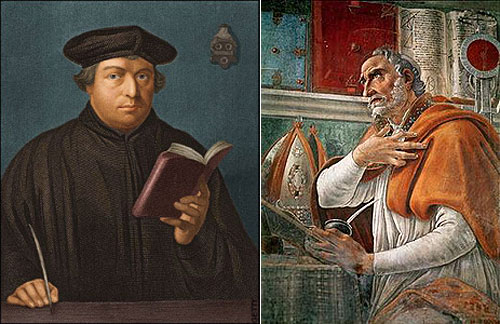
Martin Luther and Augustine of Hippo

Nehemiah and Martin Luther


Part Two:
Saint Augustine and Luther


“Actually, Augustine and Luther were similar in many ways.
Both achieved fame and influence from the geographical and political edge of the known civilized world …. Both were self confident and self reflective at the same time.
Both were well educated and exceptional in the use of language.
Both enjoyed and even reveled in controversy, and a good bit of what each wrote was against something or someone.
Both were troubled and sought a sense of self that would bring a measure of peace”.
 
Farley Snell


Farley Snell thus introduces his paper, “Augustine and Luther: A Tale of Two Worlds” (2014): https://olliasheville.com/sites/default/files/Instructor_Handouts/SnellFarley/AUGUSTINE%20AND%20LUTHER--A%20TALE%20OF%20TWO%20WORLDS.pdf
 
Introduction
Augustine and Luther Compared and Contrasted
 
Augustine of Hippo (354-430 CE) and Martin Luther (1484-1546 CE) are not only two of Western Christianity’s most influential thinkers. Their lives and views provide a window into the times in which they lived, and an opportunity for us to embrace, alter or reject what they thought.
 
Augustine was a bishop of the Roman Catholic Church in North Africa from 395 until his death in 430. He is most widely remembered for his autobiographical meditation Confessions in which he tells of his various personal struggles culminating in his conversion in 386, while in Italy for the only time in his life. What has attracted the most attention is his sexual struggle (people often quote his prayer, “Grant me chastity and continence, but not yet”), and what has drawn the most blame is his consequent view on sex and human nature. His ideas on sexuality and marriage-- understood by few, and dismissed by many-- have fomented debate, especially in the modern era.
 
But his significance lies beyond this narrow (and even inaccurate) focus. His ideas have persisted, been debated, altered, rejected by some, affirmed by others. This is especially true of his own version of the idea of original sin (whereby all persons are born with a defective moral nature and with guilt). The same can be said of his ideas on grace and free will, accompanied by his teaching on predestination, which were reworked over the centuries, and which played a major role in Reformation thought. When Thomas Aquinas, the great Catholic thirteenth century theologian, stated that “grace does not destroy nature, but completes it,” he drew on the newly rediscovered works of Aristotle to discuss “nature,” and on Augustine to discuss “grace.” 2
 
Augustine’s understanding of God influenced most subsequent forms of western mysticism, as well as Anselm’s ontological proof of the existence of God in the eleventh century.
His treatment of the two “cities” in City of God formed a basis for western monasticism. It played out in the medieval struggles between emperor and pope, and to some extent in discussions of church and state. His discussion of time (Confessions, XI) and his effort at a Christian philosophy of history in City of God have had continued influence. His version of the just war theory has been appealed to in many instances, but considered an oxymoron by many critics.
 
Luther was an Augustinian monk who taught at a newly formed university in Wittenberg in what was then Electoral Saxony (part of present day Germany). In 1517 his criticism of papal indulgences eventually led to the breakup of western Christianity (eastern and western Christianity parted ways in 1054), a breakup that had dramatic and continuing political and social impact on Europe and subsequently the New World.
 
In popular imagery he is remembered for being the champion of individual conscience (as a result largely of his “Here I stand” speech before the imperial Diet at Worms in 1520). He is credited with wresting authority from the papacy by appealing to Scripture alone (sola scriptura). In like manner, he is appreciated for having made the Bible available to common folk (he translated both Testaments into German). His idea of the “priesthood of all believers” is seen as freeing the individual from the domination of the clergy. His views of the “two realms” (the distinction between the political and religious realms) and his words on the peasants’ revolt have been seen as supporting the totalitarianism of the Third Reich. The holocaust in like manner has been traced to his anti-Semitism. His central teaching—justification apart from works of the law—has been embraced by many, but attacked by others.
 
Actually, Augustine and Luther were similar in many ways. Both achieved fame and influence from the geographical and political edge of the known civilized world (Augustine in Hippo in North Africa and Luther in Wittenberg in Electoral Saxony). Both were self confident and self reflective at the same time. Both were well educated and exceptional in the use of language.
 
Both enjoyed and even reveled in controversy, and a good bit of what each wrote was against something or someone. Both were troubled and sought a sense of self that would bring a measure of peace. Consequently, both—though in distinctive ways—had a negative appraisal of human effort and championed divine initiative or grace.
One could say that both ended their lives embittered. All of this within an understanding of scripture and Christian teaching.
 
But they lived in different worlds. For one thing, Augustine lived in a time when the Roman Empire sought with some success unity and stability, and a coherent and unified Christian doctrine and church to be the foundation of the Empire’s goals. By Luther’s time, what was left of the old imperial aspiration—in the form of the Holy Roman Empire—was weakened by external threats from the Ottoman Empire and by disintegration from within. And the Roman Church was itself beset by forces such as the conciliar movement.
 
More to the point, however, was that each struggled to give definition to the self in radically different intellectual settings. Augustine records his long search (ending in his conversion) in his historic autobiographical meditation, the Confessions. His experience of being driven by external satisfactions (what has traditionally been called “lusts the flesh”) left him unsatisfied, as did his preoccupation with what is partial, epitomized by the individual. Augustine felt the need, within himself and within the reality of which he was a part, to discover what is lasting rather than passing, and what is whole rather than what was partial—and to find his place within it. (This is one of the meanings of “mysticism.”) This was his “world.” 3 ….
 
[End of quote]
 
 
Likewise, we read at:
 
Luther and Augustine
 
 
That Augustine was an influence on Martin Luther is undeniable; different historians and theologians, however, vary in opinion as how great this influence actually was. Luther joined the Order of Saint Augustine at Erfurt in July 1505, and received a spiritual formation that focused on “Great Father Augustine” (which also was the title of a hymn then in Augustinian use).
 
The Order used Augustine’s thought in the theological preparation given to its candidates. One of Augustine’s superiors, Johann von Stauptiz O.S.A. (1468-1524), gave Augustine especial emphasis. It is certain, therefore, that Luther had read and studied many of Augustine’s writings, that he memorised passages from Augustine, and that he cited Augustine more than any other non-Scriptural source.
 
It is known, for example, that Luther used a copy of the printed collection of some works by Augustine that had been published in Strassburg by Martinus Flach in 1489 under the title of Opuscula plurima, for Luther with his own hand wrote annotations on its margins in 1509. And in 1516 Luther was known to have been studying the eighth volume of the Opera Omnia (the world's first complete printed collection of Augustine's works) edited by Johannes Amerbach in eleven volumes in Basel in 1506
 
Specialist studies of Luther’s writings have determined the wide range of Augustine’s works that Luther cited. Luther was one of the first major figures to have readily available to him the ‘entire Augustine’ in the Johann Amerbach printed edition of Augustine’s Opera omnia ("Complete Works") mentioned above. Luther was not only trained in a theology that was heavily Augustinian, but also found resonance in Augustine’s thought for some of the theological issues with which he himself struggled, e.g., sin, grace, predestination, the interpretation of Scripture, and faith.
 
He initially made his own the basic tenets of Augustine’s theology. This is most evident in his work as a professor at the University of Wittenberg before the time he posted his now-famous ninety-five theses on the castle church there on 31st October 1517. Luther encouraged his fellow professors to read Augustine’s works. Augustine was the patron saint of the university. With the public eruption of the Protestant Reformation in 1517, Luther did not abandon Augustine, but used him selectively and sometimes out of context in an effort to support the changed direction of his own line of thought.
 
There became large areas of thought where Luther diverged from Augustine, e.g., in matters regarding the authority and magisterium of the Church. Even so, Augustine’s thought was still frequently used as the base from which Luther’s theology proceeded. As Luther matured, his theology became increasingly independent of Augustine, but he continued to praise Augustine. Further historical and theological research remains to be done on Augustine’s influence on Luther at various stages of the latter’s life.
 
In the development of his theology, Martin Luther turned to the writings and thought of Augustine more than to any other individual source except the Bible. In Augustine of Hippo (354-430) there was a firm position on many of the issues that were to become the focus of controversy during the Protestant Reformation. Indeed, for this reason Augustine has been regarded as a determinative church source for the theology that constituted the Protestant Reformation.
….
It has been demonstrated that Luther began studying Augustine as early as 1509, when he was twenty-six years of age and in his third year as a member of the Order of Saint Augustine. He quickly became enthralled by the writings of Augustine. Luther became thoroughly acquainted with them. This was not merely because he was a member of the Order of Saint Augustine, but rather because of the intrinsic value and truth he found in them. Later he wrote, "I do not defend Augustine because I am an Augustinian. Before I began reading his works he meant nothing to me." The theology of Augustine was held in great esteem by Luther, and promoted widely while he was at Wittenberg. Luther even described Augustine as a leading advocate for reform in the church.

Even so, further specialist study needs to be done on the thought of Luther at various periods of his life, for there were times when he used Augustine's writings possibly only because they were a convenient resource. There are also instances wherein Luther quoted Augustine quite selectively to suit his own purpose, and suggested that Augustine resonated with Lutheran reasoning when the fuller context of Augustine's writing in fact would demonstrate that this was untrue.
 
As Luther grew older and more independent in his thought, Luther turned less to Augustine. Even in his early writings at the time when the Reformation erupted, Luther did not merely reproduce Augustine's thought. It is true to say that sometimes the germ of Luther's ideas were already present in Augustine's writings, but it is not correct to attribute to Augustine more credit for Luther's own thinking than that. Even in the writing of the most mature Luther, Augustine was often the starting point, but only that.


….
 
Link
 
Was Luther Augustinian? This blog says that this question is difficult to answer from a historical perspective because more concrete evidence must be documented to show that Luther was influenced by Augustine. ….


For Part One of this series see:
 
Nehemiah and Martin Luther
 

Sunday, November 3, 2019

Neolithic Cretan Origins in Anatolia


PREHISTORY, Evolution of houses- Catal Hüyük in Anatolia, Turkey (6250-5400BC)
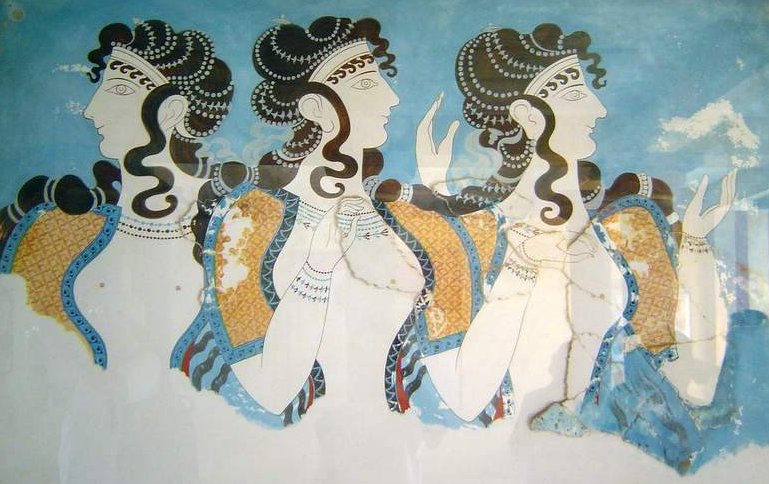
So-called “Minoans”
were the Philistines


Part Three:
Neolithic Cretan Origins in Anatolia


by
 
Damien F. Mackey


“... genetic researchers connected the source population of ancient Crete
to the well-known Neolitihic sites in Anatolia ...”.
 
Gavin Menzies and Ian Hudson


Gavin Menzies and Ian Hudson, in The Lost Empire of Atlantis: History's Greatest Mystery Revealed, introduce us to professor Constantinos Triantafyllidis of Thessaloniki’s Aristotle University and his important DNA studies of the Cretan so-called ‘Minoans’ (ch. 7):
 
Now that scientists are able to test genetic theories with rigour, I was here because of the new study reported by The Times. New work by an international group of geneticists showed that a section of Crete's Neolithic population (i.e. pre-Bronze Age) did indeed go there by sea from Anatolia – modern-day Turkey. Professor Constantinos Triantafyllidis of Thessaloniki’s Aristotle University had published the findings of a research group led by geneticists from Greece, the United States, Canada, Russia and Turkey. Professor Triantafyllidis states that their analysis indicated that the arrival of these new people on Crete had coincided with a social and cultural upsurge that had led to the birth of the Minoan civilisation around 7000 BC. Specifically, genetic researchers connected the source population of ancient Crete to the well-known Neolitihic sites in Anatolia:
 
The earliest Neolithic sites of Europe are located in Crete and mainland Greece. A debate persists concerning whether these farmers originated in neighbouring Anatolia and over the role of maritime colonisation. To address 171 samples were collected from areas near three known early Neolithic settlement areas in Greece together with 193 samples from Crete. An analysis of Y-chromosome hectographs determined that the samples from the Greek sites showed strong affinity to Balkan data, while Crete shows affinity with central/ Mediterranean Anatolia. Haplogroup J2bM12 was frequent in Thessaly and Greek Macedonia while haplogroup J2a–M410 was scarce. Alternatively, Crete, like Anatolia showed a high frequency of J2a-M410 and a low frequency of J2b-M12. This dichotomy parallels archaeobotanical evidence, specifically that white bread wheat (Triticum aestivum) is known from Neolithic Anatolia, Crete and southern Italy; [yet] it is absent from earliest Neolithic Greece ....
[End of quote]
 
From a biblical point of view, I think, the estimated date for “the birth of the Minoan civilisation around 7000 BC” would be very roughly 5000 years too early.
But the origin of the Neolithic ‘Minoans’ in Anatolia would be perfectly in order, considering that post-Flood man must have spread out from ancient Urartu (Kurdistan), eastern Anatolia:   
 
Mountain of landing for the Ark of Noah
 
https://www.academia.edu/35414295/Mountain_of_landing_for_the_Ark_of_Noah
 
and on to “Shinar” (NE Syria and northern Mesopotamia), and to “central/ Mediterranean Anatolia”.
 
Along the same lines, we read at:
https://mathildasanthropologyblog.wordpress.com/2008/04/14/the-minoans-dna-and-all/
 

The Minoans, DNA and all.

Posted on April 14, 2008 | ....
....

Starting with the breaking DNA news, and this rather sinks the ‘Black Athena’ theory from Bernal…
 

....
Crete’s fabled Minoan civilization was built by people from Anatolia, according to a new study by Greek and foreign scientists that disputes an earlier theory that said the Minoans’ forefathers had come from Africa.
The new study – a collaboration by experts in Greece, the USA, Canada, Russia and Turkey – drew its conclusions from the DNA analysis of 193 men from Crete and another 171 from former neolithic colonies in central and northern Greece.
The results show that the country’s neolithic population came to Greece by sea from Anatolia – modern-day Iran, Iraq and Syria – and not from Africa as maintained by US scholar Martin Bernal.
The DNA analysis indicates that the arrival of neolithic man in Greece from Anatolia coincided with the social and cultural upsurge that led to the birth of the Minoan civilization, Constantinos Triantafyllidis of Thessaloniki’s Aristotle University told Kathimerini.
“Until now we only had the archaeological evidence – now we have genetic data too and we can date the DNA,” he said.
Archeological dates for the colonisation of Crete are about 7,000 BC.
In more detail
The most frequent haplogroups among the current population on Crete were: R1b3-M269 (17%), G2-P15 (11%), J2a1-DYS413 (9.0%), and J2a1h-M319 (9.0%). They identified J2a parent haplogroup J2a-M410 (Crete: 25.9%) with the first ancient residents of Crete during the Neolithic (8500 BCE – 4300 BCE) suggesting Crete was founded by a Neolithic population expansion from ancient Turkey/Anatolia. Specifically, the researchers connected the source population of ancient Crete to well known Neolithic sites of ancient Anatolia: Asıklı Höyük, Çatalhöyük, Hacılar, Mersin/Yumuktepe, and Tarsus. Haplogroup J2b-M12 (Crete: 3.1%; Greece: 5.9%) was associated with Neolithic Greece. Haplogroups J2a1h-M319 (8.8%) and J2a1b1-M92 (2.6%) were associated with the Minoan culture linked to a late Neolithic/ Early Bronze Age migration to Crete ca. 3100 BCE from North-Western/Western Anatolia and Syro-Palestine (ancient Canaan, Levant, and pre-Akkadian Anatolia); Aegean prehistorians link the date 3100 BCE to the origins of the Minoan culture on Crete. Haplogroup E3b1a2-V13 (Crete: 6.7%; Greece: 28%) was suggested to reflect a migration to Crete from the mainland Greece Mycenaean population during the late Bronze Age (1600 BCE – 1100 BCE). Haplogroup J1 was also reported to be found in both Crete and Greece (Crete: 8.3%; Greece: 5.2%), as well as haplogroups E3b3, I1, I2, I2a, I21b, K2, L, and R1a1. No ancient DNA was included in this study of YDNA from the Mediterranean region. ....

Sunday, October 27, 2019

More to the Iliad and the Odyssey than meets the eye?


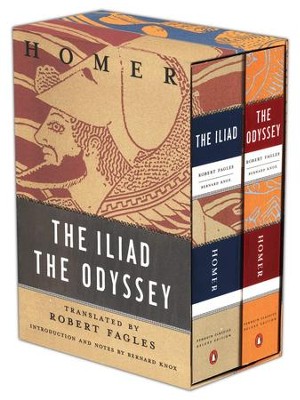
Homer: The Iliad And The Odyssey Box Set    -     Edited By: Robert Fagles
    By: Homer, Bernard Knox

 
by
 
Damien F. Mackey


Scholars variously find Homer’s classics to be replete with astronomical detail,
or bursting with biblical allusions, or serving as accurate navigational guides. 
Perhaps they encompass all of this and more.


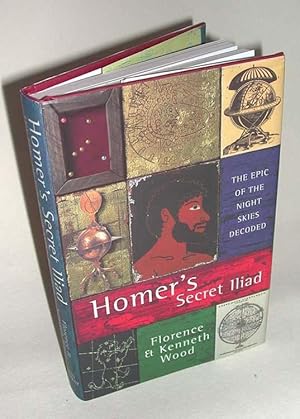
I must admit to having been completely enthralled by Florence and Kenneth Wood’s:
 
Homer's Secret Iliad
 
The Epic of the Nights Skies Decoded.
 

 Homer's Secret Iliad: The Epic of the Night Skies Decoded: WOOD, Florence and Kenneth
 
According to one review of this book:
 
Not New Age Kookery
 
Homer's Secret Iliad is rich in the elaboration of its hypotheses, such as its discussion of the gods and goddesses as planets, able to wander throughout the ecliptic band of the skies and, thus, influence the fate of the mortals, who are the fixed stars, and hence fixed in their actions. The book provides dozens of examples to bolster each of its arguments, which are extensive. Florence and Kenneth Wood spent years, following the death of Edna Leigh in 1991, working through her hypothesis, and fitting [hundreds] …. of examples into the architecture which Leigh had created.
 
In the introduction to the book, Kenneth Wood describes the cold reception received by himself and his wife, when they presented their analysis to establishment academia. Fortunately, they came in contact with serious scholars, such as Giorgio de Santillana and Hertha von Deschend, authors of the 1983 Hamlet's Mill, who are themselves investigating how the knowledge of precession shaped ancient civilizations; their studies have already pushed the calendar of civilization much farther back than the oligarchy would like.
 
Work of this sort is very different from the school of outright New Age kooks, who have many popular books currently in circulation, which present the evidence of ancient societies' knowledge of precession and astronomy, as magical, mysterious, or even coming from aliens from outer space. (One might call this the "Edgar Cayce" school of history, after the agent who claimed that his knowledge of the extreme antiquity of Egypt came from his ability to "channel" the knowledge directly from ancient Egyptians.) Instead, Homer's Secret Iliad joins the growing list of serious contributions in many disciplines piling up each year, which demonstrate that mankind has advanced, through his powers of cognition and discovery, throughout tens of millennium--rather than stumbling from one cultish civilization to the next over the last 2,500 years. ….
 
[End of quote]
 
One ought to acquire and read this terrific book.
 
My own little contribution has been of a biblical nature, regarding mainly The Odyssey:


this fortuitous apparent connection (Job and Tobit) seeming also to support my view that the prophet Job was Tobias, son of Tobit. See e.g. my article:
 
Job's Life and Times
 
 
Much earlier:
 
St Jerome saw resemblance of Tobit to Homer's 'The Odyssey'
 
 
Felice Vinci (in Athens Journal of Mediterranean Studies - Volume 3, Issue 2 – Pages 163-186) has, for his part, argued for:
 
The Nordic Origins of the Iliad and Odyssey: An Up-to-date Survey of the Theory
 
The Northern Features of Homer’s World
 
Northern Features of Climate, Clothes, Food, and Vessels
 
Homer’s world presents northern features. The climate is normally cold and unsettled, very different from what we expect in the traditional Mediterranean setting. The Iliad dwells upon violent storms (i.e., in Il. IV: 275-278, XI: 305-308, XIII: 795-799), torrential rain and disastrous floods (Il. V: 87-91, XI: 492-495, XIII: 37-141, XVI: 384-388), and often mentions snow (Il. XII, 156-158), even on lowlands (Il. XII: 278-286, X: 6-8, XV: 170-171; XIX: 357-358, III: 222). Fog is found everywhere, e.g., in the "misty sea" (Od. V, 281), and also in Troy (Il. XVII: 368), Scherie (Od. VII, 41-42), Ithaca (Od. XIII: 189), the Cyclopes’ land (Od. IX: 144), and so on.
 
As regards the sun, the Iliad hardly ever refers to its heat or rays; the Odyssey never mentions the sun warmth in Ithaca, though it refers to the sailing season. As to the seasons, there is a parallel between Homer, who mentions only three seasons: winter, spring and summer, and Tacitus’s Germans, for whom "winter, spring and summer have meaning and names, but they are unaware of the name and produce of autumn" (Germania, 26: 4). Vol. 3, No. 2 Vinci: The Nordic Origins of the Iliad and Odyssey... Clothes described in the two poems are consistent with a northern climate and the finds of the Nordic Bronze age. In the episode of the Odyssey in which Telemachus and Peisistratus are guests at Menelaus’s house in Sparta, the two young men get ready for lunch after a bath: "They wore thick cloaks and tunics" (Od. IV: 50–51). The same is said of Odysseus when he is a guest at Alcinous’s house (Od. VIII: 455-457). Similarly, Nestor’s cloak is "double and large; a thick fur stuck out" (Il. X: 134) and, when Achilles leaves for Troy, his mother thoughtfully prepares him a trunk "filled with tunics, wind-proof thick cloaks and blankets" (Il. XVI: 223-224). Those "thick cloaks and tunics" can be compared to the clothes of a man found in a Danish Bronze Age tomb: "The woolen tunic comes down to the knees and a belt ties it at the waist. He also wears a cloak, which a bronze buckle pins on his shoulder" (Bibby 1966: 245). Also Odysseus wears "a golden buckle" (Od. XIX: 226) on his cloak, and "a shining tunic around his body like the peel on a dry onion" (Od. XIX: 232-233); all of this fit what Tacitus says of Germanic clothes: "The suit for everyone is a cape with a buckle (…) The richest are distinguished by a suit (...) which is close-fitting and tight around each limb" (Germania 17: 1).
 
Regarding food, it’s remarkable that fruit, vegetables, olive oil, olives, figs never appear on the table of Homer’s heroes. Their diet was based on meat (beef, pork, goat, and game), much like that of the Vikings, who "ate meat in large quantities, so much so that they seemed to regard the pleasure of eating meat as one of the joys of life" (Pörtner 1996: 207). Homer’s characters had a hearty meal in the morning: "In the hut Odysseus and his faithful swineherd lit the fire and prepared a meal at sunrise" (Od. XVI: 1–2), like Tacitus’s Germans: "As soon as they wake up (…) they eat; everyone has his own chair and table" (Germania 22: 1). This individual table (trapeza) is typical of the Homeric world, too (Od. I: 138).
 
One should also note that, while pottery tableware was prevalent in Greece, the Nordic world was marked by "a stable and highly advanced bronze founding industry" (Fischer-Fabian 1985: 90), which squares with Homer’s poems, which mention only vessels made of metal: "A maid came to pour water from a beautiful golden jug into a silver basin" (Od. I, 136-137); wine was poured "into gold goblets" (III: 472) and "gold glasses" (I: 142). When a vessel felt to the ground in Odysseus’ palace, instead of breaking it "boomed" (bombēse, Od. XVIII: 397). Also lamps (XIX: 34), cruets (VI: 79), and urns (Il. XXIII: 253) were made of gold. As to the poor, Eumaeus the herdsman pours wine for his guests "into a wooden cup" (kissybion, Od. XVI: 52), like the cup Odysseus gives Polyphemus (Od. IX: 346). Wood, of course, is the cheapest material in the north (Estonia and Latvia have an ancient tradition of wooden beer tankards). Athens Journal of Mediterranean Studies April 2017
 
Nordic Customs and Archaism of Homer’s World
 
There are many remarkable parallels between the Homeric Achaeans and the Nordic world, in the fields of their social relations, interests, lifestyles, and so on, despite the time gap.
E.g., Homer’s habit of giving things and slaves a value in "oxen" – a new vase, decorated with flowers, was worth "the price of an ox" (Il. XXIII, 885); a big tripod was worth twelve oxen (Il. XXIII: 703); Ulysses’ nurse Eurycleia had cost twenty oxen (Od. I: 431), and so on – is comparable to the fact that, during the first Viking Age, cows were still used "as the current monetary unit" (Pörtner 1996: 199). A statement from Tacitus bridges these two distant epochs: "Cattle and oxen (...) are the Germans’ only and highly valued wealth" (Germania, 5, 1). Besides, the prominence of oxen in the economy of the Homeric world is another argument in favour of the Nordic setting, while in the Greek world other kinds of livestock are more important (one should also consider how important were beef and pork in Achaeans’ diet).
 
Still on Tacitus, Karol Modzelewski, by quoting a custom reported in Germania, 11, writes: "The mention of assembly decisions taken by a peculiar acclamation method, consisting in brandishing spears, is confirmed by the codifications, dating back to the 12th century, of the Norwegian juridical traditions, where this rite is called vapnaták" (Modzelewski 2008: 33). It is remarkable that the custom of going armed with spear to the assembly is found in Homer: Telemachus "went to the assembly, he held the bronze spear" (Od. II: 10). Thus a custom dating back to the Homeric world was still present in Viking Norway of the 12th century.
 
One should also note that Odysseus’ ship had a removable mast, a feature typical of all Homeric vessels: both the Iliad (I: 434, 480) and Odyssey (II: 424, VIII: 52) confirm that setting up and taking down the mast were customary at the beginning and the end of each mission. This feature was also typical of the Viking ships, which lowered the mast whenever there was the risk of sudden gusts or ice formation, which could cause the ship to capsize. Another structural feature typical of Viking ships, the flat keel, is found also in Homeric ones, as one can infer from the passage narrating Ulysses’ arrival in Ithaca, where the Phaeacian ship "mounted the beach by half the length" (Od. XIII: 114).
 
Another peculiar custom of the Homeric heroes is that they got off the chariots and left them aside during the duels: e.g., the Trojan hero Asius used to fight "on foot in front of his puffing horses, which the charioteer kept all the time behind him" (Il. XIII: 385–386). Scholars agree that this way of using the chariots seems to be absurd and senseless: "No one has ever fought like the heroes of Homer. They are led to battle in chariot, then they jump off to fight against the enemy. All that we know about the battle chariots in Eastern Mediterranean protests against this view of things" (Vidal-Naquet 2013: 573). However, what looks odd in the Mediterranean fits the Nordic world: according to Diodorus of Sicily, the Celts "employed two-horse chariots, each with his coachman and warrior, and, when they confronted each other in war, Vol. 3, No. 2 Vinci: The Nordic Origins of the Iliad and Odyssey... they used to throw the javelin, then they came down from the chariot and fought with the sword" (Historical Library 5: 29). Still Diodorus writes that "Brittany is said to be inhabited by native tribes conforming to their ancient way of life. In war they use chariots, like the ancient Greek heroes in the Trojan war" (Historical Library 5: 21). Julius Caesar adds other details upon the Britains: "When they have worked themselves in between the troops of horse, leap from their chariots and engage on foot. The charioteers in the mean time withdraw some little distance from the battle, and so place themselves with the chariots that, if their masters are overpowered by the number of the enemy, they may have a ready retreat to their own troops. Thus they display in battle the speed of horse, together with the firmness of infantry" (De bello Gallico IV: 33).
So, the chariot fightings narrated by the Iliad are not absurdities due to the supposed ignorance of the poet; instead, Homer must be considered the only extraordinary witness of the Nordic Bronze Age, whose archaic customs survived in Britain until Caesar’s age.
This confirms what Stuart Piggott writes: "The nobility of the [Homeric] hexameters should not deceive us into thinking that the Iliad and the Odyssey are other than the poems of a largely barbarian Bronze Age or Early Iron Age Europe. There is no Minoan or Asiatic blood in the veins of the Grecian Muses (...) They dwell remote from the Cretan-Mycenaean world and in touch with the European elements of Greek speech and culture (...) Behind Mycenaean Greece (...) lies Europe" (Piggott 1968: 126). Besides, according to Geoffrey Kirk, the Homeric poems "were created (...) by a poet, or poets, who were completely unaware of the techniques of writing," (Kirk 1989: 78) and "a recent linguistic argument suggests that the Homeric tmesis, i.e. the habit of separating adverbial and prepositional elements that were later combined into compound verbs belongs to a stage of language anterior to that represented in the Linear B tablets. If so, that would take elements of Homer’s language back more than five hundred years before his time" (Kirk 1989: 88-89).
 
That’s why "there is an absolute difference both in extension and quality between the Mycenaean society and Iliad’s" (Codino 1974: IX): Homer’s civilization appears more archaic than the Mycenaean one. There is also the odd case of Dionysus, who is an important god both in the Mycenaean period and in classical Greece, but is almost unknown in Homer: Homer’s world, therefore, probably preceded the Mycenaean civilisation, instead of following it. ….