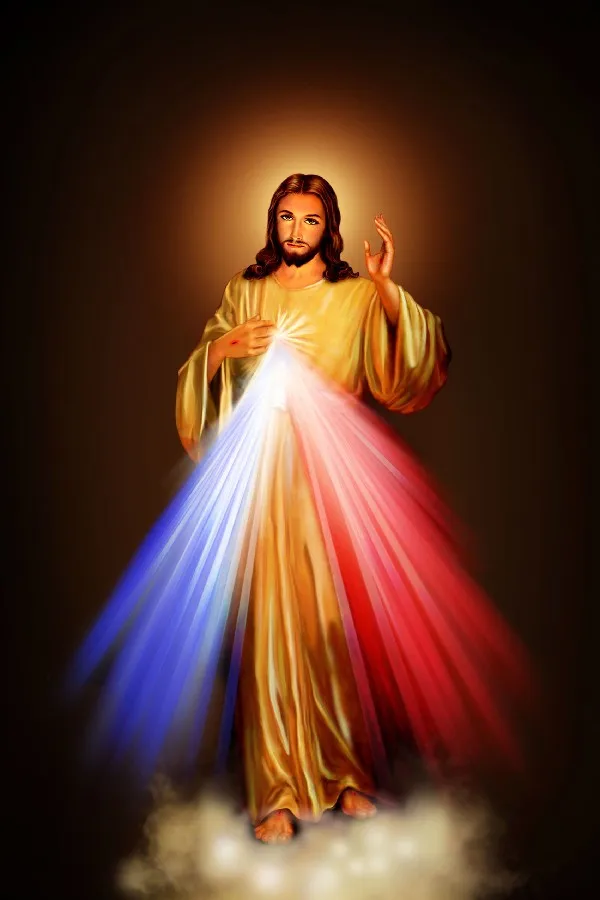
by
Damien
F. Mackey
Were Jesus Christ and his Apostles deluded about the Second Coming?
Did they pass on to us the wrong time-table?
Introduction
When we compare what Jesus Christ, St.
John, the author of Revelation, and Paul the Apostle had to say about the
“coming” of the Lord with what modern-day Christians have to say about it, we
encounter a radical difference in time concept.
In the first case, the pre-modern one,
the emphasis is upon the shortness of
time.
Jesus stated
emphatically (Matthew 16:28; cf. Luke 9:27): ‘Truly,
I say to you, there are
some standing here who
will not taste death until they see the Son of Man coming in his kingdom’.
According
to John (Revelation 1:1a, 3): “This
is the revelation of Jesus Christ, which God gave Him to show His servants what
must soon [Gk. tachos] take
place .... Blessed is the one who reads the words of this prophecy, and blessed
are those who hear it and take to heart what is written in it, because the time is near”.
Paul wrote similarly in various places.
Here I take just 1 Thessalonians 5:23: “Now may the God of peace himself sanctify you wholly, and
may your spirit, and soul, and body, all together be preserved blameless at the
appearing of our Lord Jesus Christ”.
Typical of the modern view is the
‘slingshot’ effect, sling-firing these prophecies right away from the time of
Christ and squarely into our modern era. For example, Fr. William Saunders has written
(in “The Second Coming of the Lord and the Last Judgment”): https://www.ewtn.com/faith/teachings/judga2.htm
As Catholics, we are mindful
and profess in our Creed that Christ will come again to judge the living and
the dead. The Second Vatican Council's "Dogmatic Constitution on the
Church" states, "Already the final age of the world is with us and
the renewal of the world is irrevocably under way; it is even now anticipated
in a certain real way, for the Church on earth is endowed already with a
sanctity that is real though imperfect" (No. 48). To try to grasp the
when, what and how of this Second Coming and last judgment, we really need to
glean the various passages in Sacred Scripture to see how our Church has interpreted
them. They are united in one drama.
Our Lord in the Gospel spoke
of His second coming. He indicated that various signs would mark the event.
Mankind would suffer from famine, pestilence and natural disasters. False
prophets who claim to be the Messiah will deceive and mislead people. Nations
will wage war against each other. The Church will endure persecution. Worse
yet, the faith of many will grow cold and they will abandon the faith, even
betraying and hating one another. (Confer Mt. 24:4-14; Lk 17:22-37) St. Paul
describes a "mass apostasy" before the Second Coming, which will be
led by the "son of perdition," the "Man of Lawlessness,"
the "adversary who exalts himself above every so-called god proposed for
worship." This "lawless one" is part of the work of Satan, and
with power, signs, wonders and seductions will bring to ruin those who have
turned from the truth. However, "the Lord Jesus will destroy him with the
breath of His mouth and annihilate him by manifesting His own presence."
(Cf. 2 Thes 2:3-12) The Catechism affirms, "God's triumph over the revolt
of evil will take the form of the last judgment after the final cosmic upheaval
of this passing world" (No. 667). Our Lord will come suddenly. "The
Son of Man in His day will be like the lightening that flashes from one end of
the sky to the other" (Lk 17:24). St. Peter predicts, "The day of the
Lord will come like a thief and on that day the heavens will vanish with a
roar; the elements will be destroyed by fire and the earth and all its deeds
will be made manifest" (2 Pt 3:10).
Death will be no more. The
dead shall rise and those souls who have died will be united again to their
bodies. All will have a glorious, transformed, spiritualized body as St. Paul
said, "He will give a new form to this lowly body of ours and remake it
according to the pattern of His glorified body..." (Phil 3:21).
At this time, the final, or
general judgment will occur. Jesus said, "Those who have done right shall
rise to life; the evildoers shall rise to be damned" (Jn 5:29). Our Lord
described this judgment as follows: "When the Son of Man comes in His
glory, escorted by all the angels of heaven, He will sit upon His royal throne
and all the nations will be assembled before Him. Then He will separate them
into two groups, as a shepherd separated sheep from goats" (Mt 25:31-32).
Here each person will have to
account for his conduct and the deepest secrets of his soul will come to light.
How well each person has responded to the prompting of God's grace will be made
clear. Our attitude and actions toward our neighbor will reflect how well we
have loved our Lord. "As often as you did it for one of My least brothers,
you did it for Me" (Mt 25:41).
Our Lord will judge us
accordingly. For those who have died and already have faced the particular
judgment, their judgment will stand. Those living at the time of the Second
Coming will receive judgment. Those who have rejected the Lord in this life,
who have sinned mortally, who have no remorse for sin and do not seek
forgiveness, will have condemned themselves to hell for all eternity. "By
rejecting grace in this life, one already judges oneself, receives according to
one's works and can even condemn oneself for all eternity by rejecting the
Spirit of love” (Catechism, No. 678). The souls of the righteous will enter
heavenly glory and enjoy the beatific vision and those who need purification
will undergo it.
We do not know when the Second
Coming will occur. Jesus said, "As to the exact day or hour, no one knows
it, neither the angels in heaven nor even the Son, but only the Father. Be
constantly on the watch! Stay awake! You do not know when the appointed time
will come" (Mk 13:32-33).
[End of quote]
This appears to
me to be a confusing of the “Second Coming”, or at least of the “coming”
predicted by Jesus Christ in Matthew 16:28: ‘Truly, I say to
you, there are some standing here who will not
taste death until they see the Son of Man coming in his kingdom’, with the “Final
Coming”.
(For
Catholic readers, in particular, this latter was spoken of by Jesus, the Divine
Mercy, to Sister Faustina: “You will prepare the world for My final
coming”. (Diary 429).

As the Americans say, Let’s do
the math.
First: “In the Gospel the Lord shows us that His first coming was
in humility, as a Servant, to free the world from sin”. http://www.ewtn.com.au/devotionals/mercy/coming.htm
Second: His soon-to-take-place “coming” as gleaned from the quotes
above, follows that one. And it is this particular “coming” that I would
designate the “Second Coming”.
Last: There is yet to be a Final Coming, as indicated by the Catechism: “God's triumph over the
revolt of evil will take the form of the last judgment after the final cosmic upheaval
of this passing world” (No. 667). The Last Judgment.
“Must Soon Take Place”
Revelation is a
book of urgency. The events it describes were to happen soon. When the Bible
says “soon”, it means soon, as in the case of the birth of Isaiah’s Immanuel -
not in the Third Millennium! We learn that lesson when we start reading
Revelation at its beginning. Plato, in The Republic, had stated an
important maxim: “The beginning is the most important part of the book”, and
this principle holds a special significance for the would-be interpreter of
Revelation.
“Unfortunately”,
as Kenneth L. Gentry Jr. has rightly noted (TEMPORAL EXPECTATION IN REVELATION): https://postmillennialismtoday.com/2013/12/02/temporal-expectation-in-revelation/ “too many prophecy enthusiasts
leap over the beginning of this book, never securing a proper footing for the
treacherous path ahead”.
The key to
Revelation is found in St. John’s beginning, as quoted above.
But, in case we
missed it, John repeats this soon-ness at the very end (22:6):
The angel said to me, ‘These
words are trustworthy and true. The Lord, the God of the spirit of the
prophets, sent His angel; to show His servants the things that must soon take
place’ .... Then he told me, ‘Do not seal up the words of the prophecy of this
book, because the time is near’.
Just as it would
have been senseless for Isaiah’s “sign” for king Ahaz to have been something
that would not occur until 700 years later, so would John the Evangelist, according
to Gentry: “... be taunting [the churches] mercilessly if he were discussing
events two thousand or more years distant. God answers the anxious cry “How
long?” by urging their patience only a “little while longer” (6:10-11).
Revelation promises there will no longer be “delay” (10:6).
The angel’s command
to St. John not to seal up the scroll is also tellingly in favour of this
“soon” interpretation. The prophet Daniel, by contrast, had been commanded by
the angel to keep his “words secret and the book [scroll] sealed until the time
of the End”, because the things Daniel was shown were not to happen for a long
time in the future - in fact several hundred years later, in the time of the
Apostles’ generation. For Our Lord himself had, during his important Olivet
Discourse when facing the Temple of Jerusalem, referred to the “abomination
that makes desolate of which the prophet Daniel spoke” (Matthew 24:15; cf. Mark
14:13).
We know from
Josephus’s history that the Roman armies of Cestius Gallus, that came up to
(and surrounded) Jerusalem in 66 AD, and had all but conquered the city, had
suddenly, most strangely, retreated. Even Josephus recognised the hand of
Providence in this most unexpected turnabout. Many Jews, he said, fled the city
at the time - no doubt e.g. those obedient to Jesus Christ’s Olivet warning.
And Josephus is correct in seeing this intermission as only intensifying the
pressure ultimately, so that with the return of the Roman armies the final
destruction of Jerusalem, when it came (in 70 AD), would be total. Thus would
be fulfilled Our Lord’s prophecy that ‘Jerusalem will be trampled on by the
Gentiles until the time of the Gentiles are fulfilled’ (Luke 21:24).
St. John recalls
this in Revelation 11:2: “But exclude the outer court [of the Temple]; do not
measure it, because it has been given to the Gentiles. They will trample on the
holy city for 42 months”.
As Kenneth Gentry
has observed: “... the trampling of the temple in AD 70 (Dan. 9:26-27) after
its “abomination” (9:27; cf. Matt. 24:15-16; Luke 21:20-21) ends the Gentiles’
ability to stamp out the worship of God. In Daniel 9:24-27, Matthew 23:38-24:2,
and Revelation 11:1-2, the “holy city” and its Temple end in destruction”.
But how do the
“times of the Gentiles” relate to the forty-two months of Revelation 11:12)?
Well, the period would range from the spring of 67 AD - when Emperor Nero sent
his general, Vespasian, to put down the revolt of the Jews - to August 70 -
when the Romans breached the inner wall of Jerusalem, transforming the Temple
and city into a raging inferno: a period of forty-two months.
The five months
of Revelation 9:5 pertain specifically to the period when the Jewish defenders
held out desperately (one might say, fanatically), from April 70 - when Titus
began the siege of Jerusalem - until the crescendo at the end of August.
According to Gentry (61): “This five months of the Jewish war happens to be its
most gruesome and evil period” (cf. Wars, 5.1.1, 4-5; 10:5; 12:4; 13:6).


